
SBU dismantles coffee shop network selling banned THC disguised as CBD
Law enforcement detained 17 individuals who sold vapes containing narcotics through "Bob Marley" venues and online stores, disguising them as legal supplements.
Law enforcement detained 17 individuals who sold vapes containing narcotics through "Bob Marley" venues and online stores, disguising them as legal supplements.

According to the authors of the publication, an establishment providing intimate services may be operating in the Delmar residential complex in central Dnipro. It concerns an apartment on the 15th floor of the building at 72B Dmytro Yavornytskoho Avenue.
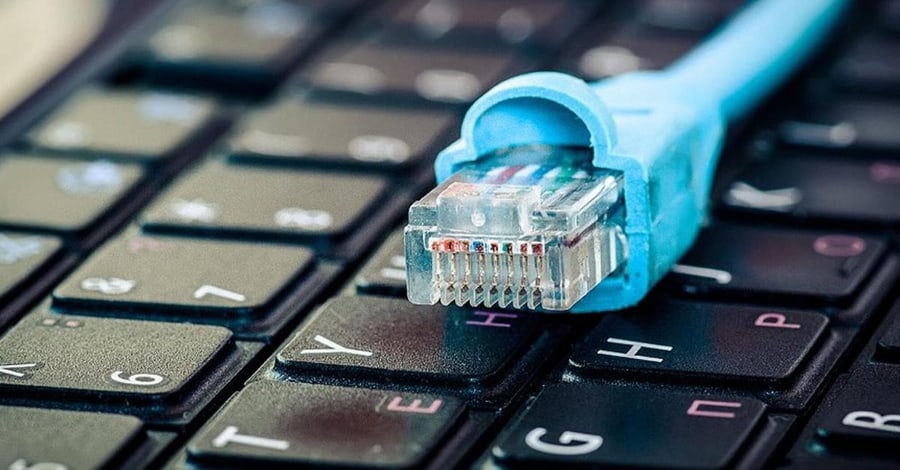
Internet provider "Mereja Lanet" announced the temporary closure of its Customer Service Centre in the capital. The company assured that technical works and user support continue in online mode.

A Russian journalist reported the appearance of a dish priced at 270 rubles in a menu, which is effectively a classic Kyiv cutlet but under a different name.
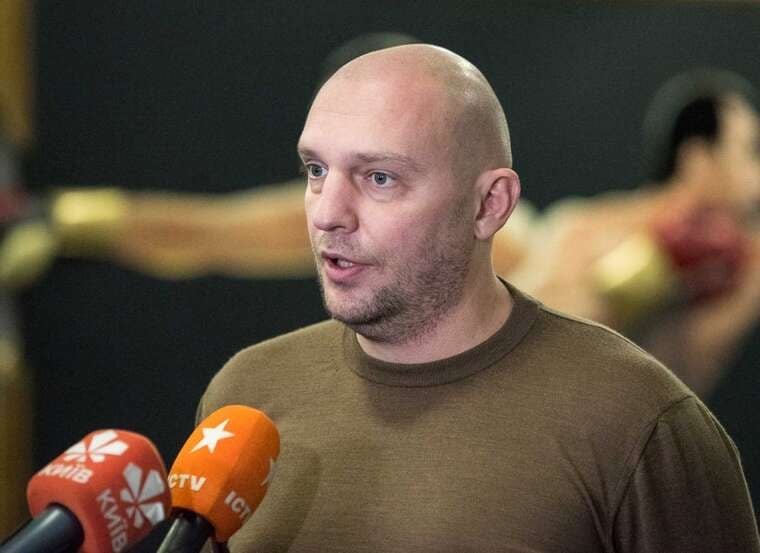
Former Vice President of the Kyiv Boxing Federation, Volodymyr Mykulenko, revealed details of the scheme by which Kyrylo Shevchenko and his associates seized assets of Swiss investors on the Desna River using forged documents.
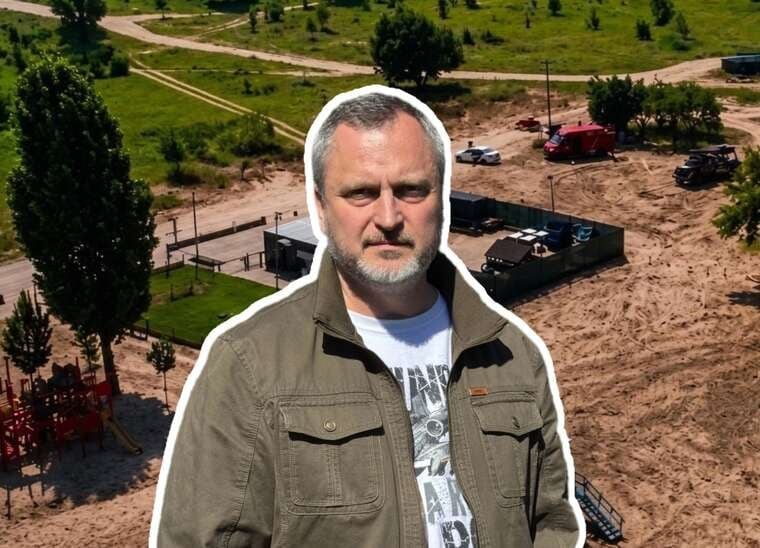
Investigation revealed work costs inflated by 475,700 UAH and overpayment for modular structure of 1.74 million UAH. Suspicion served to former utility head and contractor executives.
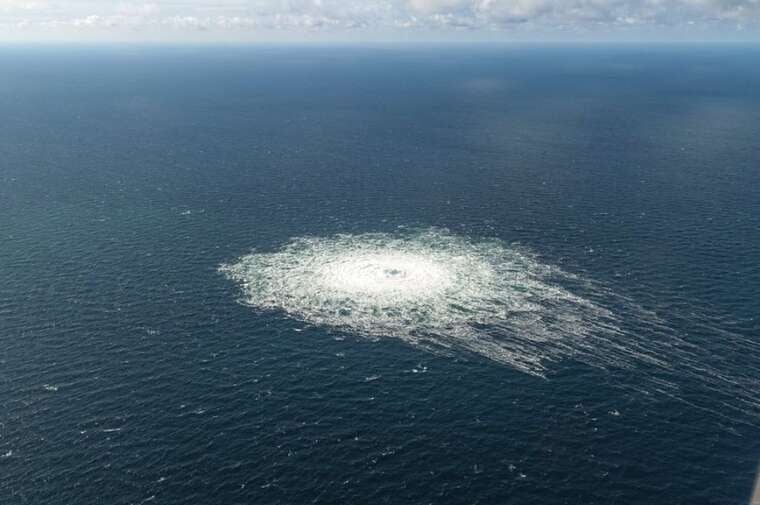
Vladimir Zhuravlyov's lawyer said his client has applied to Croatian authorities for political protection, citing the lack of guarantees of a fair trial in Germany.
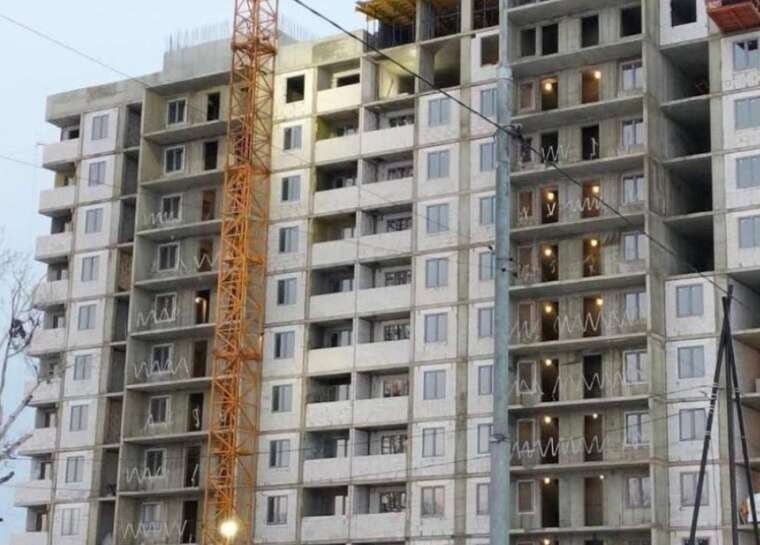
According to an expert, Russian citizens are actively buying housing in the occupied city thanks to preferential credit programmes.
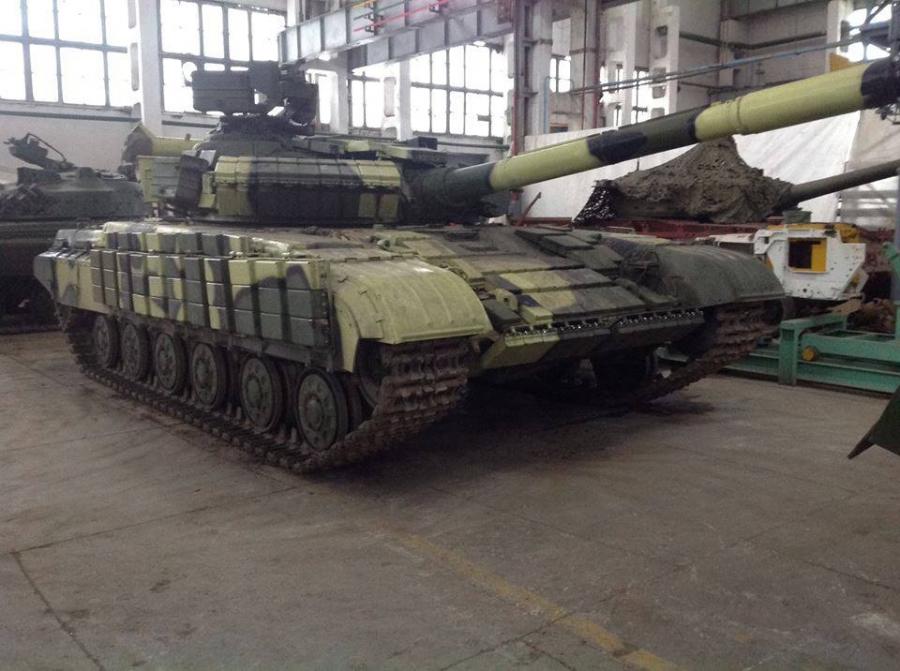
For months, people on social media have been outraged that military equipment is sitting idle at our factories and warehouses, despite being desperately needed at the front. Anton Gerashchenko, an advisor to the Minister of Internal Affairs, decided to investigate the situation personally.
"Все для фронта ! Все для победы!" (Everything for the front! Everything for victory!)
A few days ago, I was in my hometown of Kharkiv to study the situation with the work of military factories that manufacture and repair armoured vehicles.
Initially, this initiative arose after I once again saw photos on social media of hundreds of tanks standing at the Kharkiv Armoured Vehicle Repair Plant (hereinafter KhBTZ), with the implication that there are 300 tanks there which, due to someone's malicious intent, are not being sent to the front.
And so, a few days ago, I managed to get to Kharkiv to put things in perspective and understand the essence of the issue – what is actually happening with the supply of main battle tanks to the front.
First, a brief overview of what tanks we inherited from the USSR and what Ukraine is capable of producing.
In the USSR, with its command-administrative economy, competition was created between state factories to somehow develop scientific thought and implement innovations.
Tanks were produced by two giants of Soviet industry: one was the Nizhny Tagil Wagon-Building Plant, which produced the T-72 tank and now produces its modernised versions, the T-90.
And the second was the Malyshev Plant in Kharkiv and the Morozov Design Bureau, which designed the T-64 and later the T-80 with an innovative gas turbine engine at the time, to outdo the Americans and their M1 Abrams tank.
A tank has three crucial components – the turret, the engine plus transmission, and the running gear.
Yes, indeed, more than 500 tanks are stored at the Kharkiv Armoured Vehicle Repair Plant. Of these, 86 are tanks of the last Soviet model, the T-80, produced by the Malyshev Plant with gas turbine engines that were manufactured in Russia and cannot be repaired now. They need to be replaced with diesel engines produced by the Malyshev Plant.
There are also T-72 tanks produced in Russia for which we do not have repair kits. All that remains is to dismantle a small number of interchangeable parts from them. Or to bury them in the ground as static firing points, which is ineffective in modern manoeuvre warfare, as movement is the guarantee of survival, while standing still is the guarantee of death.
To turn hundreds of combat vehicles that have been frozen in place for decades into a modern battle tank, time and money are required.
An old tank is disassembled to the bone, the engine, transmission, and running gear are overhauled, replacing all rubber parts, gaskets, and other quickly deteriorating components.
The entire armoured hull, turret, and gun are sandblasted to a metallic shine, primed, and repainted.
In the best case, this requires a minimum of three months and thousands of man-hours of heavy work with metal.
The cost of restoring one old T-64 is from 2 to 4 million hryvnia.
Compared to the price at which the Malyshev Plant makes "Oplot" tanks for Thailand ($5 million), this is a pittance.
Or make 1 new tank for the Ukrainian army or restore thirty old ones. That is how the question stands today in the armoured vehicle industry.
But unlike new tanks equipped with modern, expensive thermal imagers, laser sights, and active dynamic protection systems, an old repaired tank will be almost completely blind and deaf.
This means that we must not only restore old tanks so they can drive and shoot, but also ensure they shoot accurately in the dark and in any weather.
Old tanks, to be brought in during winter, require a ten-minute engine preheat with a special boiler. In the modern conditions of hybrid warfare with the massive use of drones and sudden fire strikes, a tank must be able to start up like a passenger car – with a turn of the key – and leave a position targeted by the enemy.
For this to be the case, engineers at the Morozov Design Bureau in Kharkiv have designed and are installing a system on new tanks to keep the engine constantly in a state of combat readiness.
It needs to be ordered and installed on restored tanks to improve their combat capabilities!
Our defence industry must and should restore the combat readiness of armoured vehicles in reserve and equipment damaged on the battlefield in the shortest possible time.
However, not only well-repaired or new equipment is the guarantee of victory in battle.
It is important to train high-quality, well-coordinated crews and commanders of armoured formations.
Without a crew, a tank is just a piece of dead metal.
Training crews is already a task for the structures of the Ministry of Defence, not the defence industry. I plan to study this issue in detail in the near future.
Overall, Ukraine can supply itself with weapons and military technologies to the extent of approximately 35-40%. The rest needs to be purchased abroad.
Europe has effectively declared an unofficial embargo on the supply of any weapons to Ukraine. The Czech Republic, which previously supplied primers for pistol cartridges, has refused to supply them as well.
The USA has delivered only a small number of counter-battery stations to Ukraine, which has not fundamentally changed and could not have changed the situation at the front.
Meanwhile, Putin's Russia continues to supply tanks, armoured personnel carriers, multiple rocket launchers, artillery, and all types of material and technical support to Donbas at an alarming pace.
On the one hand, we must do everything necessary to fully launch all of the country's defence factories that produce the weapons, equipment, and means of protection and destruction required by our army.
It is for this purpose that I have visited Yuzhmash, the Fort plant in Vinnytsia, the Malyshev Plant, the 115th Armoured Vehicle Repair Plant, and other military enterprises in recent weeks.
For the same purpose, I am flying to the United Arab Emirates today for the IDEX-2015 arms exhibition.
I hope to help find non-cowardly suppliers of weapons and special equipment for the Ukrainian army there.
I will make several posts from there about the equipment that our army so desperately needs and which we may possibly receive this year.
In the photos – hundreds of tanks frozen in place for decades at the Kharkiv Armoured Vehicle Repair Plant, a photo of a tank restored from old stocks, a photo of a tank hull disassembled for restoration, and a new "Oplot" tank produced by the Malyshev Plant", reports Anton Gerashchenko.
Comments
No comments yet. Be the first!