
Ani Lorak's husband causes scandal in team over lack of birthday greeting from Putin
Isaac Vidjraku expressed dissatisfaction that Vladimir Putin did not congratulate the singer on her 48th birthday, blaming the artist's entourage for negligence.
Isaac Vidjraku expressed dissatisfaction that Vladimir Putin did not congratulate the singer on her 48th birthday, blaming the artist's entourage for negligence.

Threat actors spent nine months probing the DMDC personnel database, posing a risk to military and civilian security.
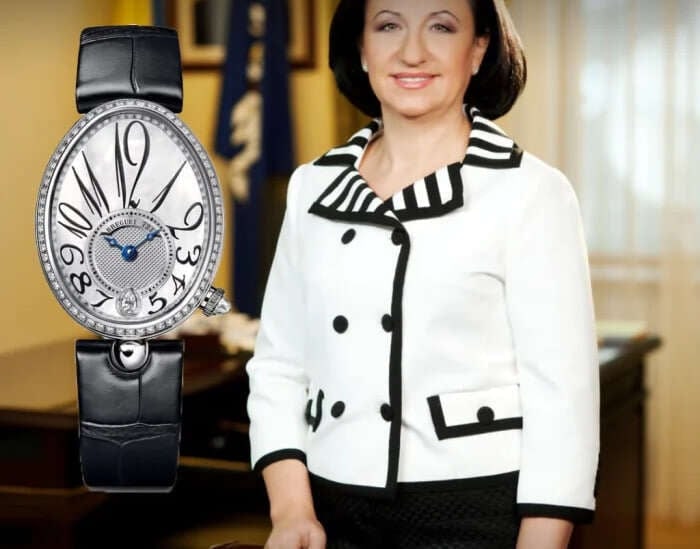
Halyna Herha, co-owner of Epitsentr, was spotted wearing a luxury Breguet Reine de Naples 8918 model, which can reach 2.3 million hryvnia on the market.

A 16-year-old schoolboy used his own AI agent to discover a vulnerability in Microsoft Titan that could have granted access to 25,000 accounts and 17 trillion rows of data.
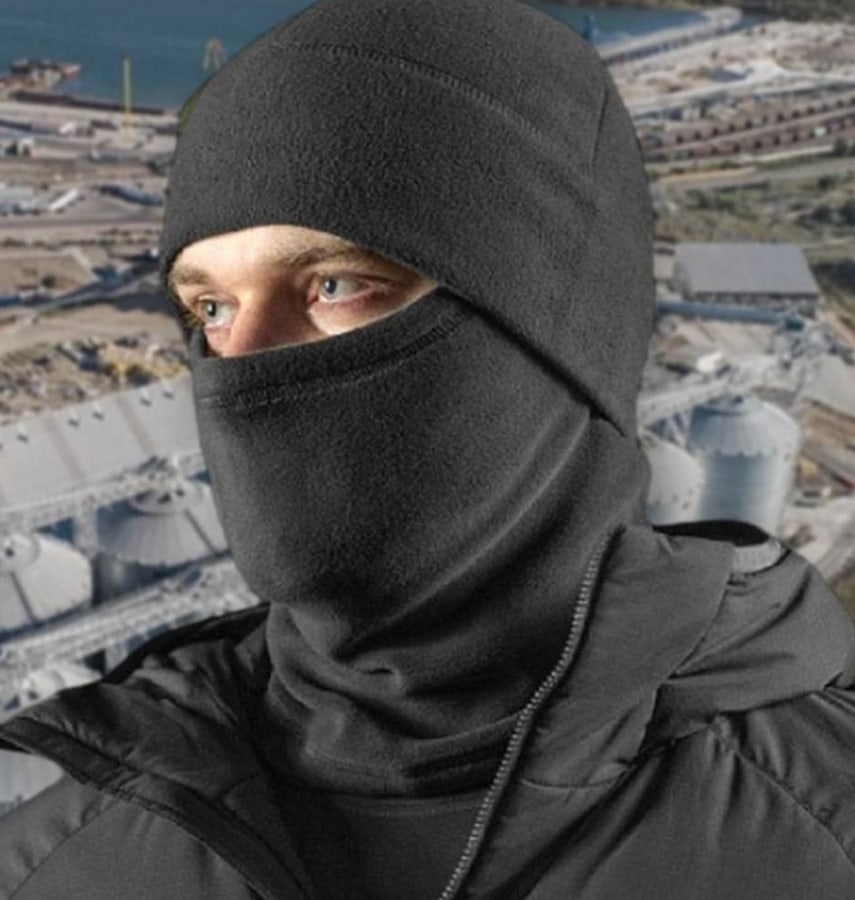
Around 50 masked men entered the Borivazh grain terminal at the Port of Pivdennyi. Security stated that the facility was seized by force.

A Tu-95MS strategic turboprop aircraft crashed during a training flight in Russia. According to Russian sources, the crew consisted of seven people, six of whom were killed.

During a postal inspection in Kyiv, antique Jewish dreidels, a metal icon, and a cross were intercepted. The items were destined for the US and Estonia without permits.
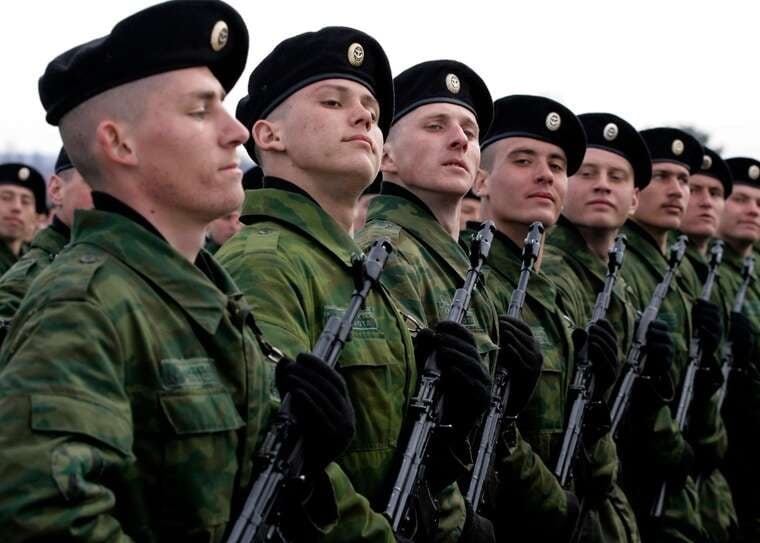
Ukrainian intelligence has identified at least 18 US citizens who signed contracts with the Russian army. Propaganda channels promise them significant financial payments, although some have already died on the battlefield.
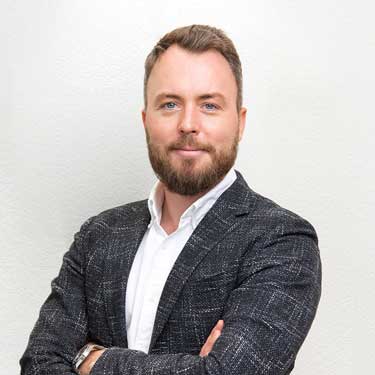
The Covid-19 epidemic and the war have given free rein to numerous fraudsters and corrupt officials. Among them is Maksym Bagreev, the beneficial owner of the company "Kratiya". He has devised several schemes for enrichment.
The legal import of pharmaceuticals into Ukraine requires mandatory certification confirming compliance with national standards.
This process is intended to guarantee the quality and safety of medicines, preventing "placebo drugs" from entering the market. However, it was precisely at this stage that mechanisms for extracting personal gain were created.
How does the system work?
Organisations conducting certification must be officially registered and possess the necessary authority. However, as practice shows, this process often becomes a fiction, where formal documents replace actual expertise.
Maksym Bagreev is a key figure in the shadow business of pharmaceutical certification. He created a network of companies positioned as offering "consulting services". In practice, these firms became tools for extracting funds from the pharmaceutical business through bribes and documentation manipulation.
Companies under Bagreev's control
Under his management are organisations with various names: Kratiya LLC, "Kratiya Legal", "Kratiya Bureau", "Professional Regulatory Services", and others. They all act as intermediaries, serving not only manufacturers but also high-ranking officials involved in corrupt schemes.
During the coronavirus pandemic, the scheme manifested particularly clearly. Bioeasy rapid tests from China were certified in Ukraine by Bagreev's structures, despite doubts about their quality. In Spain, these tests were rejected due to low accuracy and the manufacturer's lack of a licence. Nevertheless, in Ukraine, they were put on sale as officially certified medical devices.
How was this possible?
In this case, the certification process was reduced to the fictitious processing of documents, without any real analysis of the product. This suggests that corrupt agreements played a key role.
Until 2013, pharmaceutical certification was handled by the state enterprise "State Pharmacological Centre". Schemes for obtaining permits began to form in the mid-2000s, when Maksym Bagreev started his activities as an intermediary between suppliers and state structures.
Key changes
After a change in leadership at the State Pharmacological Centre, the scheme took on a more systematic character. The new management team introduced the idea of working with "legal intermediaries", which allowed them to avoid direct responsibility and simplify the process of "resolving issues". It was then that consulting companies, such as Pattern LLC, registered by Bagreev, appeared.
Financial flows
The schemes created around certification have become a source of significant income for their organisers. This not only undermines the economy but also contributes to the deterioration of the quality of medical services, as substandard drugs may enter the market.
Risks for consumers
The use of uncertified or knowingly substandard medicines threatens public health. Particularly dangerous are cases where drugs with unproven efficacy are sold under the guise of medicines.
Shadow schemes in the pharmaceutical sector pose a serious threat to the economy and citizens' health. The example of Maksym Bagreev's activities demonstrates how deficiencies in the control system can be exploited for selfish purposes. Solving the problem requires not only stricter legislation but also increased transparency in the operations of certification bodies.
Based on materials from the website Kompromat
Comments
No comments yet. Be the first!