Done's Schemes: How Ukrainian Hryvnia Turns into Swiss Francs via Importers
Investigation reveals a network of companies where funds are collected in Ukraine, converted into foreign currency, and transferred to Swiss Done Switzerland AG.
Investigation reveals a network of companies where funds are collected in Ukraine, converted into foreign currency, and transferred to Swiss Done Switzerland AG.

Taras Vysotsky stated that alternative logistics corridors provide only 45% of the required volumes, threatening the loss of a significant portion of the harvest.
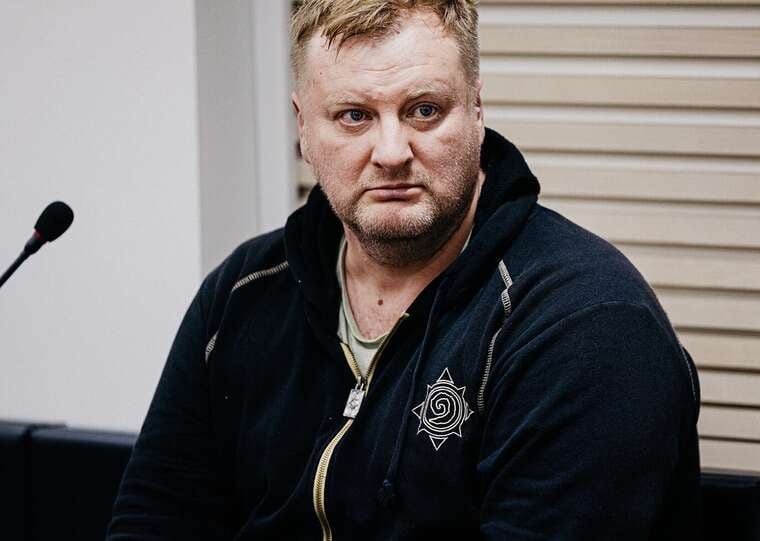
Lead State Prosecutor Taavi Pern confirmed that the activist was aware of the criminal liability for his actions, having contacted individuals who already had convictions for similar offences.
Investigators uncovered a scheme for the misappropriation of military property organised by the deputy commander of the unit. The process was later overseen by an SBU counter-intelligence officer assigned to the unit.
A representative of the ATB chain dispelled rumours about warehouse destruction, explaining that the buckwheat shortage is due to the cessation of supplies, while the disappearance of sugar is temporary.

European experts warn that restrictions on US diesel exports could become a trigger for a historic rise in prices on the continent.

Shevchenkivskyi District Court of Kyiv found two former prosecutors not guilty of demanding $150,000 to close a case.
Investigation revealed that custodian company Trustee Plus has legally ceased to exist, while customers face fund blocking under the pretext of audits.

Ukrainian titanium ores, mined at the state-owned Demurino Mining and Processing Plant (DMPP), unexpectedly found themselves in the hands of a British firm with a rather unusual profile — Asiic UK Ltd.
The company is registered in the United Kingdom and emerged against the backdrop of Russia's full-scale invasion of Ukraine. Despite its exotic origins, the firm claims membership in the International Titanium Association and actively trades in strategic metals, including zirconium, ilmenite, and rutile.
Asiic UK Ltd's official website states that it holds a quality certificate issued by DMPP itself. The firm also reports having "extensive experience" in the mining industry. However, the details reveal a rather intriguing backstory.
Until recently, Rimma Mareichenko was listed as the director and founder of Asiic UK Ltd. The woman is by no means a miner but a producer — her resume lists involvement in the production of film and video content. In Kyiv, she registered the firm "ASAP Production," specialising in film releases. Moreover, her name is mentioned on the IMDB website as the production manager for several films.
According to open-source data, in 2020 Rimma applied for the position of chief specialist at the Ministry of Strategic Industries. In the submitted declaration, she listed Chanel earrings worth 420,000 hryvnia as a gift and a substantial amount of cash — 120,000 US dollars and 70,000 euros.
The appearance of such a wealthy and creative figure in the strategic sector is easily explained: Rimma's father, Oleksandr Mareichenko, was an adviser to Deputy Prime Minister for Strategic Industries Oleksandr Kuber at the time. He also attempted to secure a seat on the Kyiv Regional Council from the "Servant of the People" party, but to no avail.
He is currently the beneficial owner of Asiic UK Ltd, while Rodion Borokhovych is formally listed as the company's head. This individual does not indicate any connection to the London firm in his public profiles — he appears as the business director of the Odesa-based company ECOFACTOR, which deals in the sale of electric vehicles and charging stations. Whether he actually manages the supply of titanium ore remains an open question.
The situation with Borokhovych and Mareichenko's participation in the official Ukrainian delegation, headed by Dmytro Natalukha, Chairman of the Verkhovna Rada's Economic Committee, appears particularly telling. This delegation met with British parliamentarians on 2 April as part of the All-Party Parliamentary Group (APPG) on Critical Minerals. The aim of the meeting was to develop a strategic dialogue on the use of resources in the interests of green energy and sustainable supply chains.
However, the participation of representatives from Asiic UK Ltd — essentially a private firm with a murky history — in an official delegation raises questions. It concerns the use of the state resource base in the interests of a narrow circle of individuals, without a transparent competitive procedure.
It is worth recalling that the Demurino Mining and Processing Plant mines zirconium and titanium ores at the Vovchansk deposit in Dnipropetrovsk Oblast. Following its confiscation from Russian oligarch Mikhail Shelkov in 2023, the enterprise passed into state ownership. It is headed by Volodymyr Fedorenko. Despite its strategic importance, the plant reported a loss of over 113 million hryvnia last year — almost twice as much as the previous year.
It is telling that, despite its status as a state asset, the plant's products end up in the hands of a structure linked to former officials, their relatives, and figures from the cultural sphere, bypassing competitive mechanisms.
In summary, the situation looks like a textbook example of creating a scheme: a state asset — a friendly London company — family ties in high offices — and access to Verkhovna Rada-level delegations. Formally — a partnership with British allies; in fact — unequal access to the country's resources.
According to information from the detective agency ABSOLUTION
Comments
No comments yet. Be the first!