
Drone hits enterprise in Khmelnytskyi district, fire breaks out
A hostile Shahed-type drone damaged an enterprise in Khmelnytskyi district. Emergency services are operating at the scene of the incident.
A hostile Shahed-type drone damaged an enterprise in Khmelnytskyi district. Emergency services are operating at the scene of the incident.
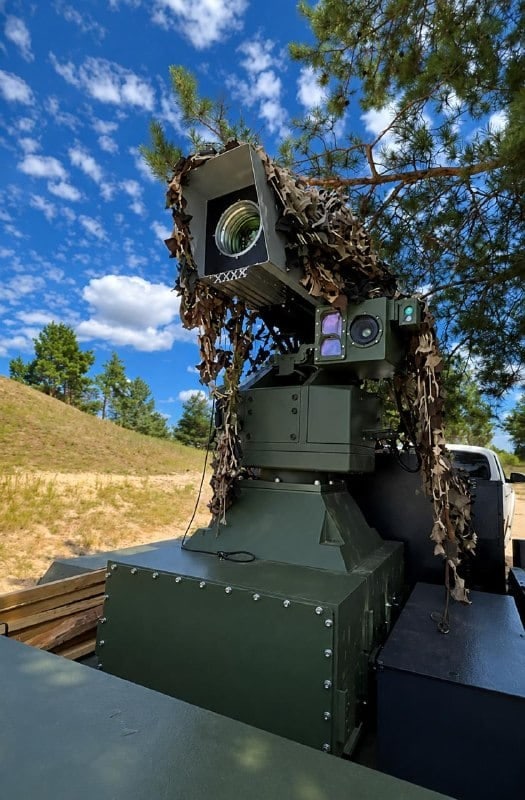
Manufacturer Celebra Tech announced that the first unit of the Armed Forces of Ukraine has been using the laser system to destroy drones and other threats since September 2026.

Owner in the UK reveals the secret to his 31-year-old pet's longevity, as she eats seafood and drinks mineral water.

The Ukrainian Himera project, in partnership with Denmark's GomSpace, launched the OBRIA NANO spacecraft. The deployment of its own satellite network to ensure 24/7 coverage is beginning.

The US President made amendments to the document's text, adding Ukraine to the list of parties that must avoid escalation.

Ukrainian clothing manufacturer DIADIA has launched a campaign during which some customers find cash gifts in the pockets of their purchased jackets.

Investigation revealed a chain of companies linked to a former official that exported road bitumen from Poland and inflated its price for state contracts.

Alliance representatives doubt the effectiveness of the US proposal to provide Kyiv with protection analogous to Article 5 of the North Atlantic Treaty without formal accession.
The Ukrainian Himera project has officially begun implementing its own satellite infrastructure. Together with its Danish partner GomSpace, it has launched OBRIA NANO into space — the first test spacecraft operating in low Earth orbit.
The experimental satellite currently launched weighs 10 kilograms. Future serial units will weigh 250 kilograms. The developers have not disclosed specific technical specifications, such as orbital altitude, data transmission speed, or signal latency.
The main goal of the project is to create a network that will provide 24/7 coverage of the entire territory of Ukraine. According to Himera's plan, this requires launching more than 100 satellites into orbit. The estimated timeframe for the full deployment of such a network is 2 to 5 years.
One of the key factors prompting the development of its own satellite system was the restrictions on the operation of the Starlink service in Ukraine.
Comments
No comments yet. Be the first!