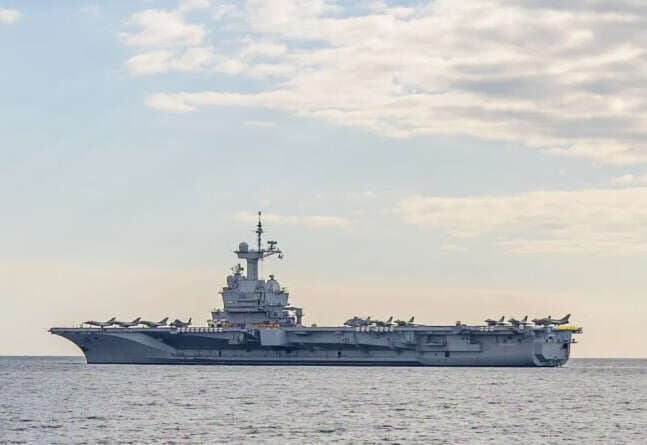
Fire breaks out on Charles de Gaulle aircraft carrier during maintenance in Toulon
French naval forces stated that the fire on the country's only nuclear-powered aircraft carrier did not affect nuclear systems, and no casualties have been reported.
French naval forces stated that the fire on the country's only nuclear-powered aircraft carrier did not affect nuclear systems, and no casualties have been reported.
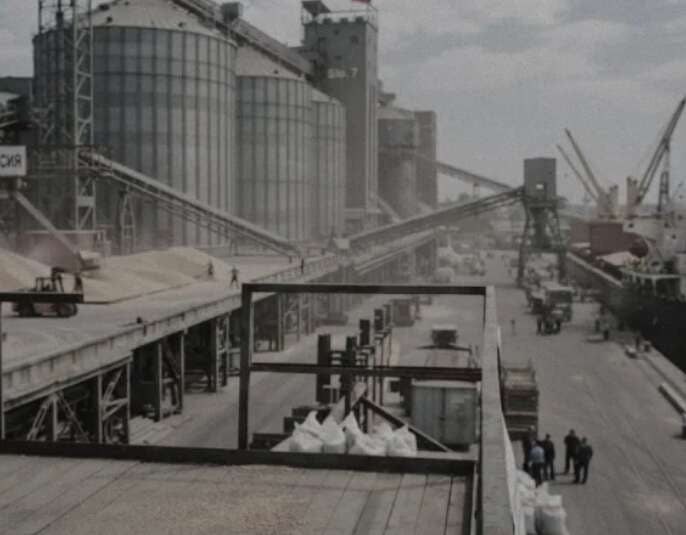
The Ukrainian Foreign Intelligence Service reported a sharp drop in the volume of Russian Federation grain shipments via the Black Sea and Moscow's attempts to compensate for the losses through other ports and land corridors.

Iran's Foreign Ministry handed a note of protest to the Norwegian ambassador, accusing Norway of failing to fulfil its obligations regarding Starlink registration with the ITU.

Investigations revealed systemic issues in drug quality control, personnel connections, and questionable financial operations by the regulator's leadership ahead of its liquidation.

Eva Korshyk, together with her team, is likely trying to get a stream by blogger skibitru, dedicated to Skalnitska and her public accusations against her ex-husband Bohdan Skalnitsky, removed from YouTube.
Despite record-high Urals oil prices, Russia's hydrocarbon revenues declined due to production cuts, port issues, and a stronger rouble.

Budapest is ready not to obstruct the start of new talks on Ukraine and Moldova's EU accession if the Verkhovna Rada passes a law on minority education.
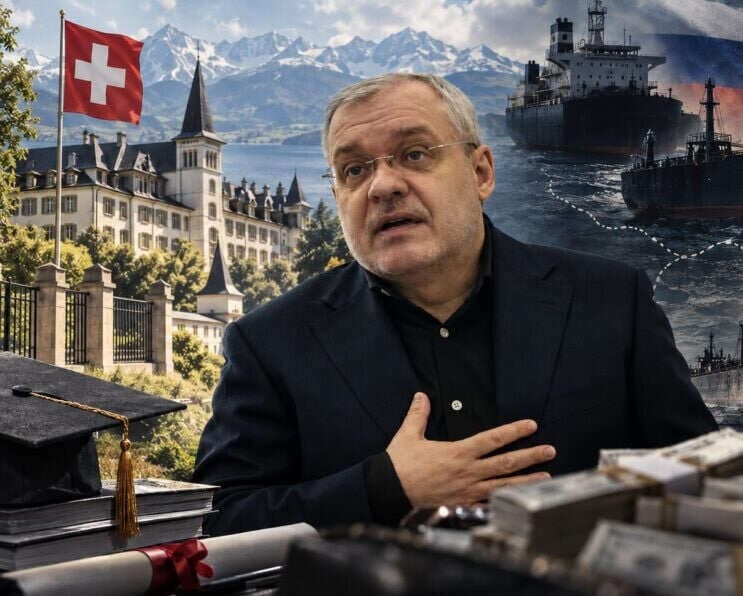
Materials from the audit of former minister Herman Galushchenko's declaration indicate that Viktor Artemov, who is under US sanctions and linked to the "shadow fleet", paid for his children's education at a Swiss school.
The Ukrainian Foreign Intelligence Service (FISU) reported that Russia has lost the majority of its Black Sea grain exports. This situation has forced Moscow to actively seek alternative routes for shipping agricultural products abroad.
Statistics indicate a sharp reduction in volumes: in the second ten-day period of September, the Russian Federation shipped only 347,000 tonnes of wheat. For comparison, during the same period in 2025, this figure stood at 1.3 million tonnes.
To compensate for the losses, Moscow is attempting to redirect a portion of grain cargo to ports on the Baltic Sea, to the north of the country, and to the Far East. In particular, the "Ultramar" terminal in Ust-Luga has already begun receiving grain. In September, the railway infrastructure received applications to transport approximately 260,000 tonnes of grain to this facility.
However, according to intelligence estimates, even at maximum capacity, this direction can handle only about 500,000 tonnes per month. For context: the capacity of the Russian Federation's southern ports exceeds 60 million tonnes per year, and last year, nearly 90% of Russia's seaborne grain exports passed through them.
Murmansk is becoming another option under consideration. Railway transport of the first 40,000 tonnes of grain from the Stavropol Krai has been approved for delivery there. However, this route is more expensive due to the long distance from the main grain regions. The cost of delivery increases by $18–25 per tonne, which can amount to up to $1 million for a single shipment.
In the east, the Russian Federation is increasing grain supplies to China via the "New Land Grain Corridor". Volumes in this direction have grown from 2.3 million tonnes in 2024 to 5.8 million tonnes in 2025. This year, the figure is expected to reach approximately 9 million tonnes.
At the same time, this route has significant limitations related to the throughput capacity of the railway and terminals, tariff policy, phytosanitary requirements, and Chinese quotas.
«Швидко створити заміну чорноморській системі Росія не може» ("Russia cannot quickly create a replacement for the Black Sea system"), FISU stated. Intelligence emphasised that building alternative logistics requires developed railway infrastructure, elevators, transshipment capacity, insurance, a fleet, and constant buyers.
Previously, Ukraine, together with the Baltic states, strengthened control over the origin of grain to prevent products that Russia may have stolen from the temporarily occupied territories of Ukraine from entering international markets.
On 27 September, German Foreign Minister Johann Wadefuhl raised the issue of the grain blockade in the Black Sea during a meeting with Russian Foreign Minister Sergey Lavrov. However, the negotiations yielded no specific results.
Comments
No comments yet. Be the first!