Russia uses balloon nets to protect refineries from Ukrainian drones
Occupiers are attempting to shield oil refineries from UAV strikes using balloon obstacles reminiscent of World War I air defence systems.
Occupiers are attempting to shield oil refineries from UAV strikes using balloon obstacles reminiscent of World War I air defence systems.
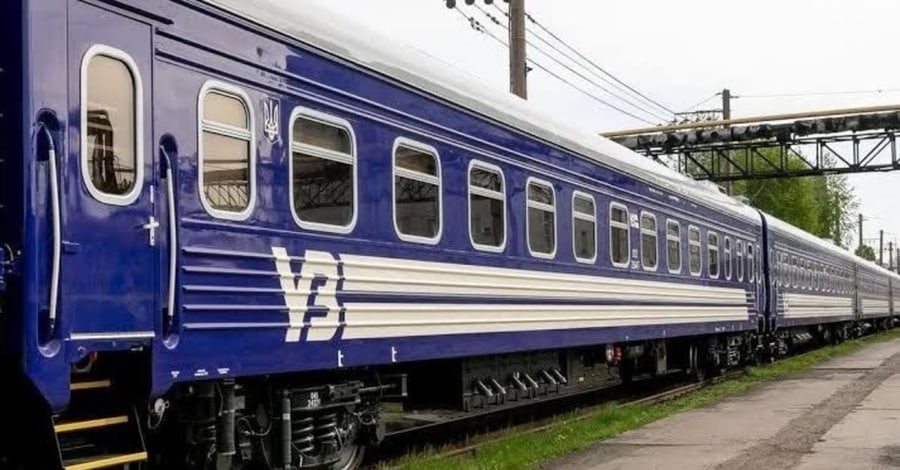
From 20 October, the Dnipro–Lviv and Zaporizhzhia–Przemyśl services will be suspended. Passengers are advised to use alternative routes or make transfers.

Umar Kremlev confirmed at a press conference in Istanbul that he received funds from the son of the former US president for organising the event.

Kyiv and Warsaw are developing a joint control mechanism that will allow Ukrainian services to operate on the Polish side of the border to speed up crossings.

Argentina captain Lionel Messi shared fresh photos with a new haircut and a special adidas kit ahead of his farewell match.

Latvian Armed Forces reported an incident at the border: soldiers initially stopped an attempt to forcibly transport around 20 migrants, after which a group of armed individuals breached the country and stole cameras.
Prime Minister Rosen Radev explained that the incident in neutral waters does not provide grounds for a collective response by the Alliance, although the source of the threat has yet to be established.

European diplomats reported that on Wednesday, EU country representatives are approving the largest expansion of sanctions lists since the start of the full-scale invasion, which will hit 1,650 individuals and companies.
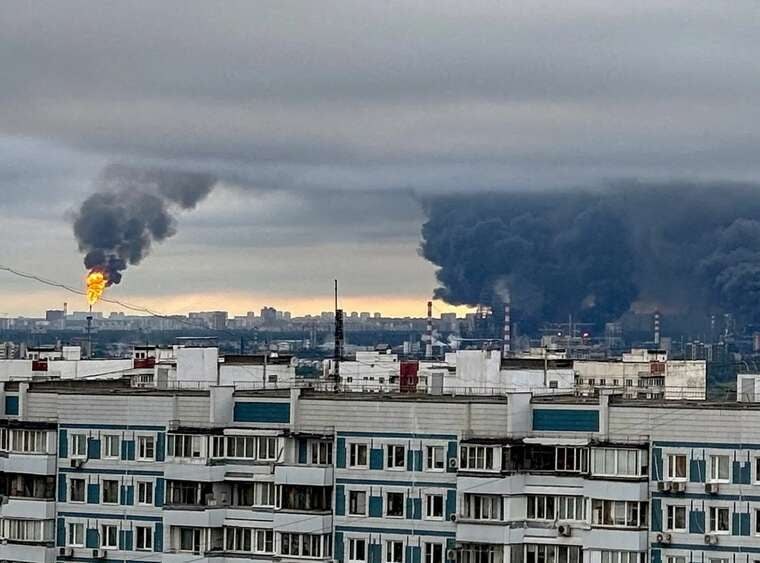
For Russian occupiers, protecting their own oil refineries is a priority task, as Ukrainian unmanned aerial vehicles regularly strike them. To strengthen defence, Moscow has decided to implement balloon obstacles.
Defense Express reports this.
The obstacle structure consists of two small balloons between which a net of thin cables is stretched. Drones approaching critical facilities are supposed to become entangled in or destroyed by this net.
However, such a system has a critical flaw: drones can simply fly over the net to hit the target. To prevent this, developers created a mechanism that, based on radar data, determines the UAV's flight altitude and autonomously adjusts the height of the obstacle itself.
It remains unclear whether the system can change altitude fast enough to intercept a manoeuvring drone. Moreover, if several drones attack from different altitudes, a single net cannot stop all targets simultaneously.
The strength of the structure also raises doubts. During testing, the Russians used a small, almost toy-like drone that does not match the dimensions of even the smallest Ukrainian long-range UAVs. Testing on larger drones, which fly at speeds of several hundred kilometres per hour and weigh several hundred kilograms, has not been conducted.
An additional problem is bad weather. Strong winds can simply tear the balloon obstacles from their place, rendering them unusable.
Currently, there are several parallel projects for such systems in the Russian Federation, but none of them has shown success and remains only at the development stage.
The use of such barriers recalls practices from World War I, when balloon obstacles were first applied, and later they became widespread during World War II. For example, in the United Kingdom, they were used to protect London from German V-1 cruise missiles. However, throughout the period of operation of such systems, only 5% of all launched missiles were intercepted.
Comments
No comments yet. Be the first!