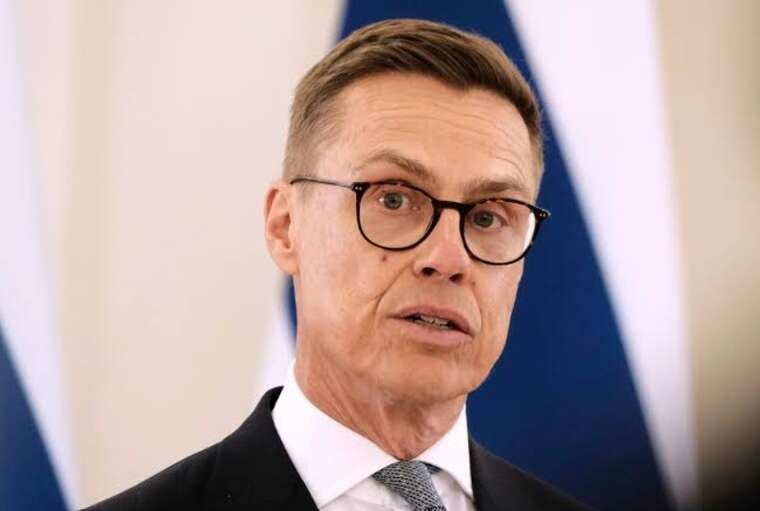
Finnish President denies existence of Russian demands to leave NATO
Alexander Stubb called media reports claiming that Moscow demands Helsinki to leave the North Atlantic Alliance untrue.
Alexander Stubb called media reports claiming that Moscow demands Helsinki to leave the North Atlantic Alliance untrue.
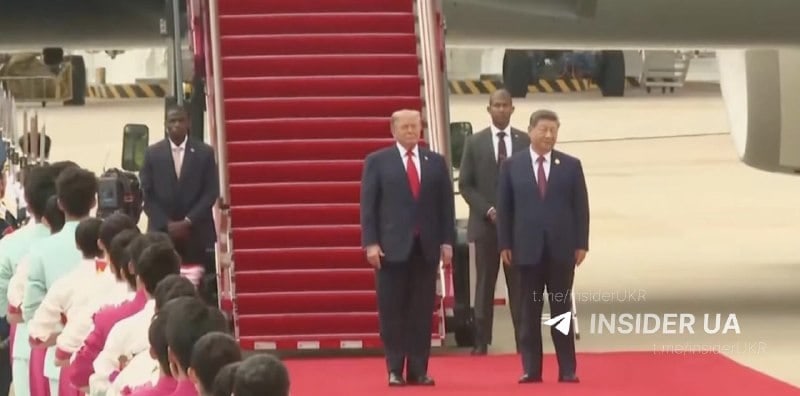
Xi Jinping came out to meet Donald Trump directly at the aircraft. This protocol was not previously applied to Vladimir Putin.
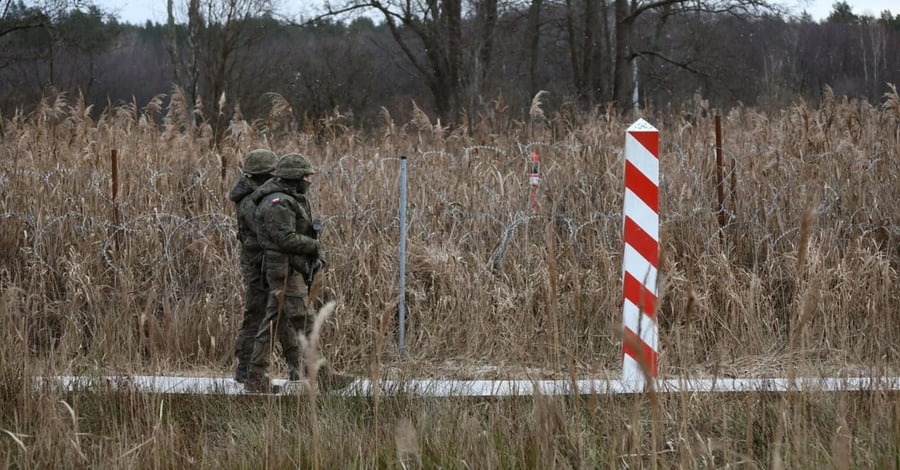
According to Polish media, Russian security services planned to stage an attack near the border with Kaliningrad Oblast to provoke a halt in aid to Kyiv. Warsaw managed to prevent the operation thanks to intelligence.
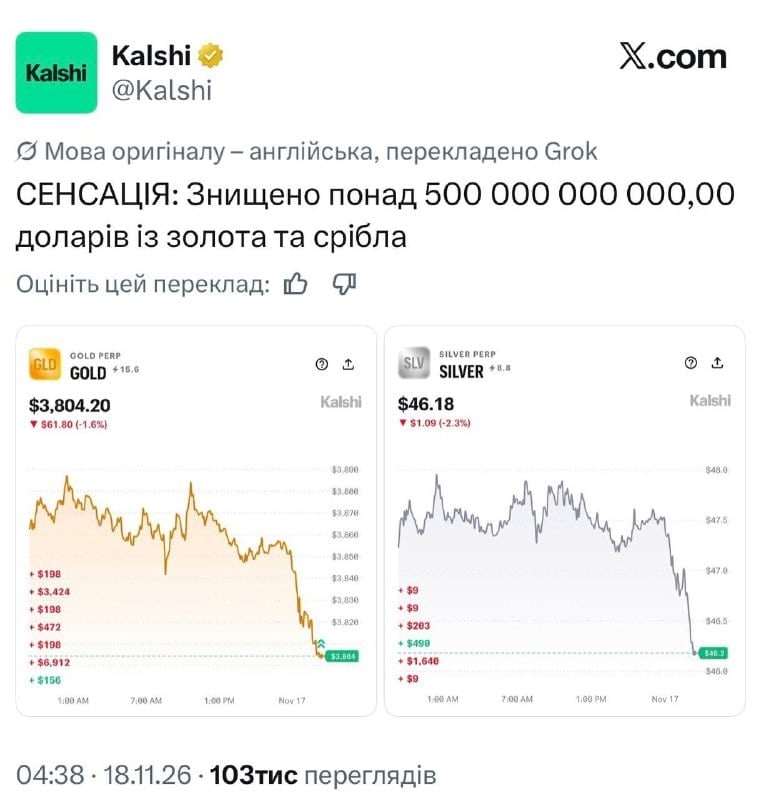
Gold and silver prices fell sharply, reducing the sector's capitalisation by $500bn. This is linked to the strengthening of the US currency and financial outlooks.

A serviceman told the court that he transferred to the Communications Service due to torture in his unit: he was hung from trees by handcuffs and beaten.
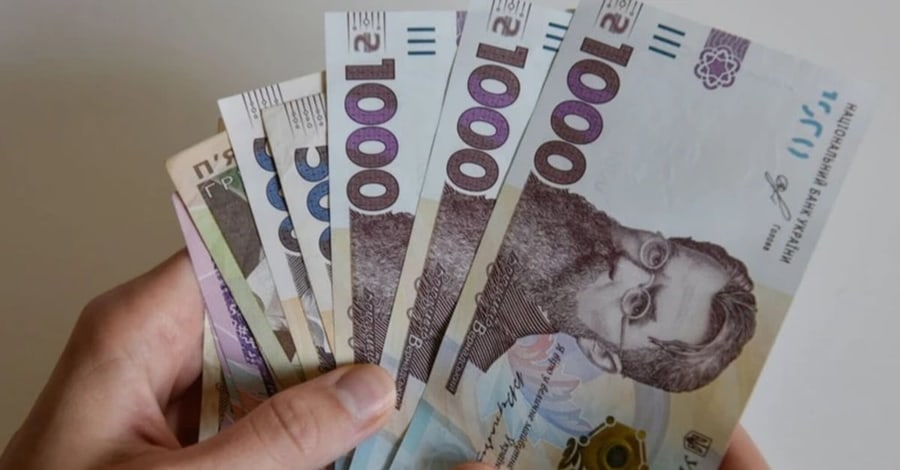
Owning two residential premises is usually grounds for refusing state aid, but the legislation provides several exceptions that allow the subsidy to be retained.

Kharkiv company with eight employees becomes largest drone supplier via Prozorro, increasing revenue from 5.65 million to 2.91 billion UAH over two years.

Having a deferment status in the "Reserve+" app does not guarantee border crossing for all categories of men. The right to leave depends on the specific grounds for exemption from mobilisation.
Russian security services were developing a scenario for a large-scale provocation near the border between Poland and Kaliningrad Oblast. According to data from the Polish publication Rzeczpospolita, released on 18 November, the operation was planned for late October to early November 2026.
The main objective of Moscow's actions was to create the impression of Ukrainian involvement in an attack with a high number of casualties. Such a scenario was intended to serve as a pretext for Warsaw to cease aid to Kyiv.
The journalists' sources, linked to Poland's law enforcement agencies, described the mechanism of the future provocation. It was envisaged that a group of people would illegally cross the border and carry out an attack accompanied by significant human losses.
«Ми мали інформацію про конкретні об'єкти, де мав статися напад. Росіяни розраховували на велику кількість жертв» (We had information about specific objects where the attack was to take place. The Russians were counting on a large number of casualties), noted one of the publication's sources.
To pin the blame on Ukraine, participants could have been planted with items or documents indicating their supposed Ukrainian origin. The option of eliminating the perpetrators during the border crossing was also not ruled out, with the evidence found on them intended to serve as grounds for accusations.
One of the informants compared the planned operation to the Gleiwitz provocation of 1939. At that time, Nazi Germany staged an attack on its own radio station to justify aggression against Poland.
According to the source, the Russian action was intended to form an image of a threat from Ukraine in Polish society and cast doubt on the expediency of further support for Kyiv.
The preparation of the sabotage was detected thanks to intelligence from foreign partners and Polish security services. Preventive measures were initiated after officers linked to the coordination of sabotage operations appeared near the border on Russian territory.
Additional attention to the border area was drawn by events on the night leading into 3 November, when a group of unidentified individuals with flashlights was spotted near the Polish-Russian border.
Polish Prime Minister Donald Tusk previously reported that Polish services had prevented a possible provocation. The coordinator of Polish security services, Tomasz Semonyak, confirmed to journalists that the border measures were related to a real threat. Border guards, police, and military personnel were involved. At the same time, he did not confirm the specific scenario of the possible terrorist act, emphasising that security services cannot publicly disclose all intelligence information.
According to Rzeczpospolita, similar warnings about possible provocations were received by the security services of Lithuania, Latvia, and Estonia.
Poland, which borders Kaliningrad Oblast, had previously strengthened security measures due to the risks of sabotage. Following intelligence warnings, additional security forces were deployed to the border regions.
There is currently no official public confirmation of all the circumstances described by the journalists. In particular, no data has been released regarding identified perpetrators, the exact targets of the possible attack, or material evidence of the operation's preparation.
Comments
No comments yet. Be the first!