
Ukrenergo announces round-the-clock power outages in Ukraine on 21 November
Due to the aftermath of enemy strikes on the energy system, hourly power outage schedules will be in effect in the regions tomorrow.
Due to the aftermath of enemy strikes on the energy system, hourly power outage schedules will be in effect in the regions tomorrow.

Former Lutsk city councillor sentenced to eight years for receiving bribes, but HAC judge released him from serving the sentence, imposing a probation period.
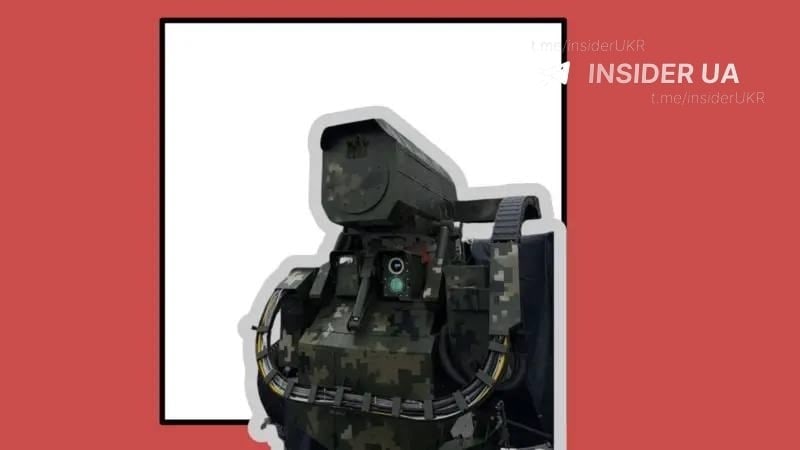
BBC News Ukraine journalists inspected private air defence positions in the capital, where automated machine guns and a new laser system protect critical infrastructure from drones.

According to The Financial Times, Washington aims to sign a peace agreement by the beginning of January 2027.

Head of the SBU coordination centre Andrii Pasternak announced the return of 2,833 children. Meanwhile, Ukrposhta issued a commemorative stamp dedicated to this theme.
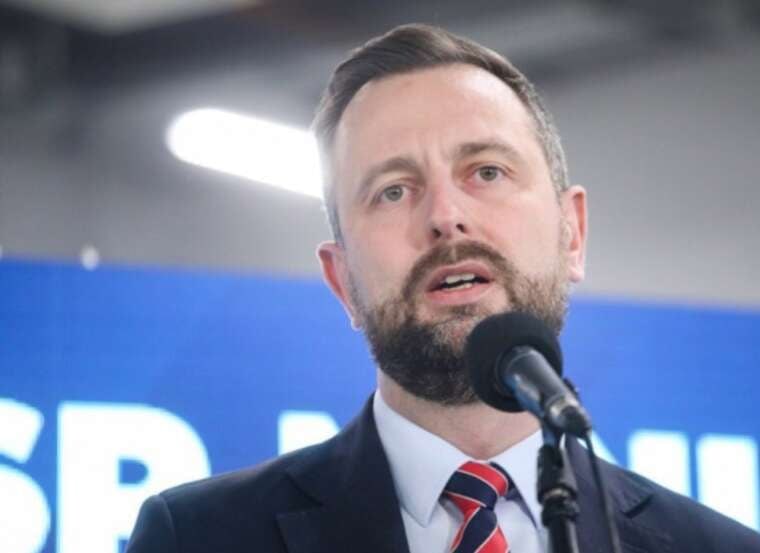
Władysław Kosiniak-Kamysz appealed to allies to strengthen airspace protection following the incident with Russian objects.

The head of state signed a decree appointing Maryana Reva to the position of Deputy Secretary of the National Security and Defence Council.
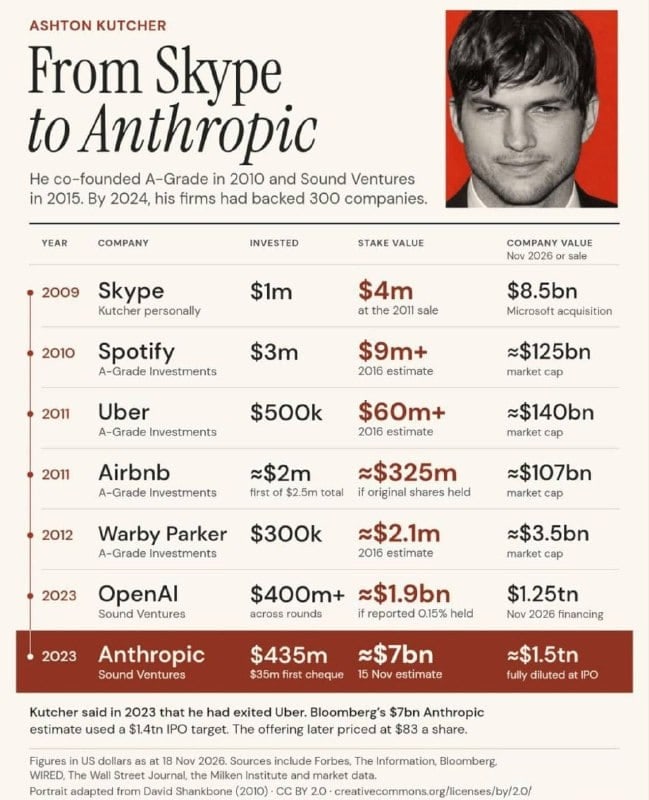
The actor has nearly stopped acting, focusing on financial instruments. His capital exceeds $9 billion thanks to stakes in leading IT companies.
«Тікайте швидше і якнайдалі! Зараз почнеться бойова робота!» ("Run faster and as far as possible! Combat operations are about to begin!"). This order is heard while a group of BBC News Ukraine journalists seeks shelter. Meanwhile, an automated turret installed near a critical infrastructure facility on the northern outskirts of Kyiv independently turns a heavy-calibre machine gun towards the approach of Russian "Shahed" drones. The system is ready to destroy targets as they approach the capital.
Today, dozens of similar automated turrets form the air shield of Kyiv. They are deployed, among other places, on the capital's bridges, which have become priority targets for Russian forces this autumn. In early October, Ukrainian President Volodymyr Zelensky announced that 12 such turrets had been rapidly deployed in the capital following strikes on the South Bridge.
The operator of private air defence, the company Carmine Sky, informs that 17 such systems are actually already operating in Kyiv, having quickly proven their effectiveness. Journalists managed to visit several such positions.
The northern outskirts of Kyiv are shrouded in grey haze. Against the backdrop of a leaden sky, the silhouette of a large machine gun on a pedestal is clearly visible. This is the automated Sky Sentinel turret, one of many installations in the capital region, credited with dozens of destroyed enemy targets — from drones to cruise missiles.
The concrete base of the turret, approximately 2 metres wide and almost 3 metres high, is not an operator's cabin. It is a special room for housing electronics, communication equipment, and power supply. As Alexander, a representative of Carmine Sky, explains, the operator is located dozens of kilometres away from the facility.
«Вона повністю роботизована і не потребує залучення оператора. Оператор знаходиться на командному пункті та керує нею віддалено», – наголошує він. ("It is fully roboticised and does not require the involvement of an operator. The operator is at the command post and controls it remotely," he emphasises.)
In the context of defending Kyiv's airspace, these turrets are considered the "last line of defence". The effective range of engagement is 2 km; according to Alexander, anything beyond that is a matter of chance, although there have been examples of successful interceptions at greater distances.
The turret's operation depends on weather conditions. On a clear day, a target can be detected at a significant distance, but in fog, the effective firing range is reduced to 500 metres. The company representative warns that the turret's operation is dangerous for the surroundings, so people should not approach these facilities.
«Турель – це зброя, і балістична куля не обирає собі ціль. Тому надзвичайно важливо щоб люди не нехтували повітряною тривогою і, коли працюють турелі, перебували в безпечних місцях…». ("The turret is a weapon, and a ballistic bullet does not choose its target. Therefore, it is extremely important that people do not ignore air raid alerts and remain in safe places when the turrets are operating...").
When the air raid siren sounds, the turret begins to rotate towards the expected direction of drone incursion. Journalists and military personnel urgently seek shelter. Only seconds remain before firing begins, as the rate of fire of the anti-aircraft machine gun reaches 750–850 rounds per minute.
While the machine gun is firing, it is worth explaining the principle of the system's operation. A turret (from the French "small tower") is a mount for weapons, in this case, a heavy-calibre Browning M2 machine gun. It rotates in horizontal and vertical planes, allowing the weapon to be aimed at an aerial target.
Turrets equipped with artificial intelligence independently detect an enemy drone and calculate its trajectory. All mechanical parts of the process — rotation and aiming — occur automatically. The operator only needs to confirm the engagement with a single button press.
The Browning M2 machine gun, chambered for 12.7 mm cartridges, was developed in the USA almost a century ago. It was actively used during World War I and World War II. The weapon gained popularity due to its high rate of fire and ease of maintenance as both infantry and anti-aircraft equipment.
In Ukraine, the mass use of such machine guns on turrets for air cover began only this year. Previously, the Air Force command was somewhat sceptical about this weapon. However, during the partial 2026 year, such weapons have destroyed dozens of Russian drones, including jet-powered ones, as well as several cruise missiles, although the latter cases are more of an exception than the rule.
Another position demonstrated by the private air defence operator Carmine Sky is a facility called the "Monolith". It is located at a key logistics facility in Kyiv (name not disclosed), which has been repeatedly attacked by jet-powered drones and ballistic missiles in recent weeks.
Approaching the position, observers see a bizarre object among the grey landscapes that resembles an artefact from the popular computer game "S.T.A.L.K.E.R". Externally, it looks like a large concrete obelisk with a portal painted on it.
A representative of Carmine Sky confirms that the "Monolith" facility was specifically created based on the game's motifs. In the sci-fi universe, set in the Chernobyl Exclusion Zone, this device lured travellers, promising to grant their wishes.
Initially, it was planned to install the "Monolith" in the Chernobyl Exclusion Zone along the flight path of Russian drones, to combine the realities of war with gaming themes. However, massive attacks by jet-powered UAVs on the capital in September–October 2026 forced the urgent relocation of the turret to Kyiv. It has already shot down several drones.
«Цей "Моноліт" має магічні властивості. Він вже нейтралізував, якщо не помиляюсь, п'ять повітряних загроз», – каже Олександр. ("This 'Monolith' has magical properties. It has already neutralised, if I am not mistaken, five aerial threats," says Alexander.)
He adds that recently, even more unusual weapons were deployed to defend the capital, which are being demonstrated to the media for the first time.
Under a tarpaulin, a small device called "Blysk" is hidden. This is a laser installation designed to burn through the bodies of enemy UAVs with a powerful beam.
The creation of cheap and effective laser weapons is a direction in which dozens of countries are working. In combat conditions, only the Israeli "Iron Beam" system has been tested, which in November 2023 carried out the first combat interception in history, shooting down a mortar shell fired from Lebanese territory.
In Ukraine, talk of their own laser weapons began in December 2024. At that time, Colonel Vadym Sukharevsky, who was then the commander of the Unmanned Systems Forces, announced the creation of the "Tryzub" installation.
«Сьогодні Україна є, якщо я не помиляюся, п'ятою країною, яка може сказати, що в неї є лазер. Ми вже на висоті понад 2 км цим лазером можемо збивати літаки», – сказав він. ("Today, Ukraine is, if I am not mistaken, the fifth country that can say it has a laser. We can already shoot down planes at an altitude of over 2 km with this laser," he said.)
In April 2025, Sukharevsky showed footage of "Tryzub" tests, stating that the weapon is capable of destroying strike drones, aerial bombs, cruise and ballistic missiles at a distance of up to 3 km, and helicopters and planes up to 5 km. However, by early June 2025, Sukharevsky was dismissed from his post, and the "Tryzub" project disappeared from the public domain.
Carmine Sky emphasises that their new "Blysk" installation has no connection to "Tryzub". The company reports that "Blysk" entered combat duty in early November 2026.
In a few days of operation, the system has no destroyed targets to its credit, which is explained by the gloomy, cloudy, and foggy weather that reduces the effectiveness of laser weapons.
According to Alexander's explanations, the "Blysk" system forms a bundle of laser beams with a power of 4 kW. It is capable of engaging targets at a distance of up to 1 km. For comparison, this power is only twice as high as that of an ordinary kitchen kettle. The Israeli "Iron Beam" system has a power of 100 kW and, according to claims, destroys targets at a distance of up to 10 km.
«Лазер "Блиск" працює шляхом випромінення пучка енергії потужністю 4 КВт, який може ефективно пропалити корпус будь-якого літаючого засобу, такого типу як "Шахед" і "Герань", – кажуть в Carmine Sky. ("The 'Blysk' laser works by emitting a beam of energy with a power of 4 kW, which can effectively burn through the body of any flying device, such as 'Shahed' and 'Geran' types," they say at Carmine Sky.)
The installation aims at the target, locks onto it, and engages it. To burn through a small FPV drone, "Blysk" needs fractions of a second, whereas the body of a "Shahed" with its multi-layer protection (including rubber) requires several seconds to destroy.
The company claims that it is developing a line of laser installations, considering them more cost-effective and safer for the surroundings compared to anti-aircraft turrets.
The next stop is the command post, located in a protected place deep underground. Here are the operators who simultaneously control dozens of turrets.
In a room with walls covered by dozens of large monitors, several operators (mostly young men in balaclavas) control the turrets using ordinary gaming joysticks. They aim the turrets at targets on the screen and open fire. Artificial intelligence elements in the Sky Sentinel system help find and hold targets.
Alexander emphasises that all private air defence operators work within the Air Force's loop. The command post has access to the SkyMap system, which displays all detected aerial targets.
The process is coordinated by a battle cap, who can order a switch to another turret or operator. Turrets are positioned so that they can cover one another. A key figure is the senior battle cap, who is responsible for coordination with the air command and obtaining permission to open fire.
«Оператор не може просто так відкрити вогонь. Як мінімум, в нього відсутня така кнопка. Має бути три погодження – від Повітряного командування, battle cap і оперативного чергового. Все це відбувається за кілька секунд», – наголошує представник Carmine Sky. ("An operator cannot just open fire. At the very least, they do not have such a button. There must be three approvals – from the Air Command, the battle cap, and the operational duty officer. All this happens in a few seconds," emphasises the Carmine Sky representative.)
To prepare personnel, the company has its own recruitment system. Candidates (ex-military or civilian specialists) undergo checks of theoretical and practical knowledge regarding the use of weapons, as well as a polygraph test. There are no random people at the command post.
The company Carmine Sky, which received the right to engage in private air defence in January 2026, claims that it organises the defence of Kyiv and several other cities on a free "volunteer basis".
«В компанії Carmine Sky не було державних контрактів за всю історію її існування. Але до нас звертається за допомогою приватний бізнес, який потребує захисту, це, наприклад, логістичні і енергетичні підприємства», – пояснює Олександр. ("The company Carmine Sky has had no state contracts throughout its history. But private business that needs protection turns to us for help, for example, logistics and energy enterprises," explains Alexander.)
Currently, dozens of facilities in seven regions are under the protection of private air defence. Services cost millions of hryvnia, one of the reasons being the high cost of the turrets themselves.
«Це коштовна послуга. Оскільки ціна у виробника самої турелі коштує 150 тис. доларів (плюс 50 тис. це вартість кулемета Браунінг). Тому це суттєва інвестиція, але це інвестиція в захист свого об'єкта», – каже представник компанії. ("This is an expensive service. Since the price of the turret itself from the manufacturer is $150,000 (plus $50,000 is the cost of the Browning machine gun). So this is a significant investment, but it is an investment in the protection of your facility," says the company representative.)
The Ministry of Defence notes that the experiment of creating private air defence, initiated in November 2025, has proven its effectiveness. In almost a year, about 100 companies joined it, although only six of them formed air defence combat groups. During this time, private operators have shot down nearly a hundred targets.
At the same time, Carmine Sky points to difficulties related to the regulation of this field. The main problem is the absence of a specific law.
«На жаль, станом на зараз ми маємо лише профільну постанову кабміну, яка регулює цю галузь. На мою скромну думку, цього точно недостатньо. Я вважаю за доцільне прийняти спеціальний закон, який би регулював цю сферу ринку послуг», – каже Олександр. ("Unfortunately, as of now, we only have a relevant cabinet resolution that regulates this industry. In my humble opinion, this is definitely not enough. I consider it appropriate to adopt a special law that would regulate this area of the service market," says Alexander.)
The law should resolve the issue of the status of private air defence employees. Due to a legislative gap, company employees sometimes face problems with the police when transporting weapons and explosives. In addition, operators cannot register their employees for mobilisation deferral, which, according to Alexander, is a "big problem" for personnel recruitment.
Material prepared with the participation of Anastasiia Hrybanova and Oleksii Nazaryuk.
Comments
No comments yet. Be the first!