
US court temporarily bans White House from funding political ads with public money
A Manhattan federal court banned the Trump administration from using taxpayer funds for pre-midterm election advertising, labelling it propaganda.
A Manhattan federal court banned the Trump administration from using taxpayer funds for pre-midterm election advertising, labelling it propaganda.

Prosecutors charged a judge of the Hrebinkiv District Court with receiving unlawful payments for an academic degree that did not meet legal requirements.

The President of Ukraine announced the identification of additional production capacities for turrets that perform well against Shaheds. He also mentioned coordinating logistics with the Baltic states.

A Russian drone attacked the central park in Kharkiv Oblast, where families were spending time. Six people, including three children, were killed, and 15 others were injured.

Infrastructure repairs are being completed in Kyiv following a shelling. Trains will begin running on the evening of 19 October, but the stop at Chernihivska station will be delayed.
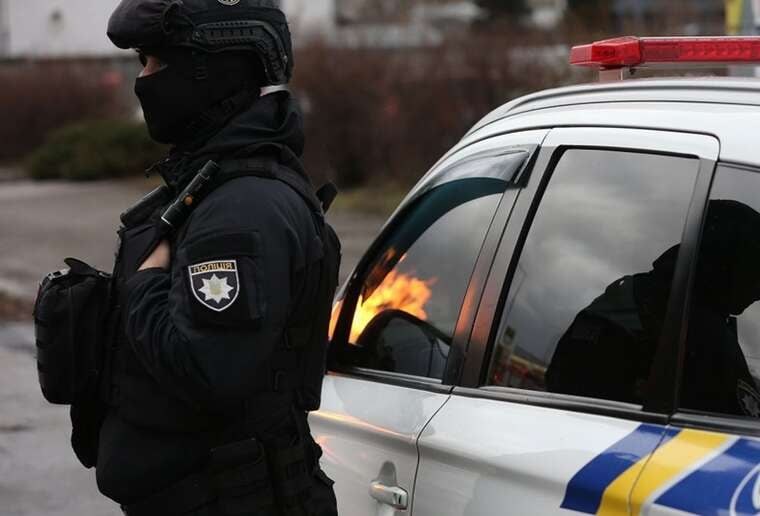
Three police officers and three military personnel were injured during an incident at the TCC in Kyiv's Pechersk district. The perpetrator has been detained.

The Kyiv District Administrative Court granted the lawsuit filed by the bank's majority shareholder, ruling that three tax notification-decisions from the State Tax Service totalling over UAH 7.2 billion were unlawful.

Incident involving the use of firearms in the capital resulted in injuries to four law enforcement officers.

An analytical report by Deloitte, prepared at the request of the UN High Commissioner for Refugees, recorded an atypical trend in the Polish labour market. According to 2025 data published by Puls Biznesu, Ukrainian citizens aged 25 to 34 have a higher income level than their Polish colleagues of the same age.
General statistics indicate that, on average across the market, the income of Ukrainian citizens is approximately 85% of the median salary in the Polish economy. In most age categories, migrant salaries are either equal to or lower than those of locals. However, a significant deviation from this pattern is observed specifically among young men aged 25–34.
The median income of Ukrainian men in this age group reaches approximately 6,800 zloty net. For comparison, the median salary of Poles aged 25–34 across the country is around 5,300 zloty net.
The level of remuneration depends significantly on the sector:
Experts identify three key factors that explain this situation. First, this is geographical distribution. According to the Central Statistical Office of Poland (GUS), 45% of Ukrainian migrants work in regional centres, whereas this figure is only 25% among all workers in the country. Base pay in large cities is traditionally higher than in the provinces, where the majority of the Polish population lives.
Secondly, as noted by Marcin Szymanski, a representative of EWL Group, Polish citizens in large cities rarely agree to heavy physical or monotonous work. Vacancies in these sectors are mostly chosen by foreign workers.
Thirdly, the high total income is a result of extreme workloads, not higher hourly rates. Anna Jobolda, a representative of the staffing agency Gremi Personal, emphasises that migrants are significantly more likely than locals to agree to 10–12-hour shifts, work on weekends, and overtime.
According to Gremi Personal, 85% of Ukrainian workers consider their income commensurate with their qualifications. In addition, 70% of respondents regularly save a portion of their earnings.
Comments
No comments yet. Be the first!