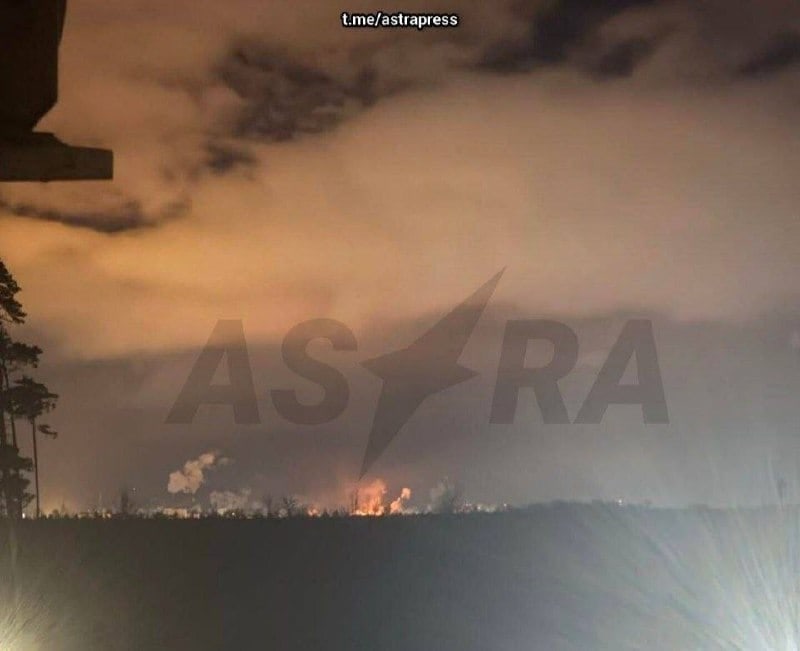
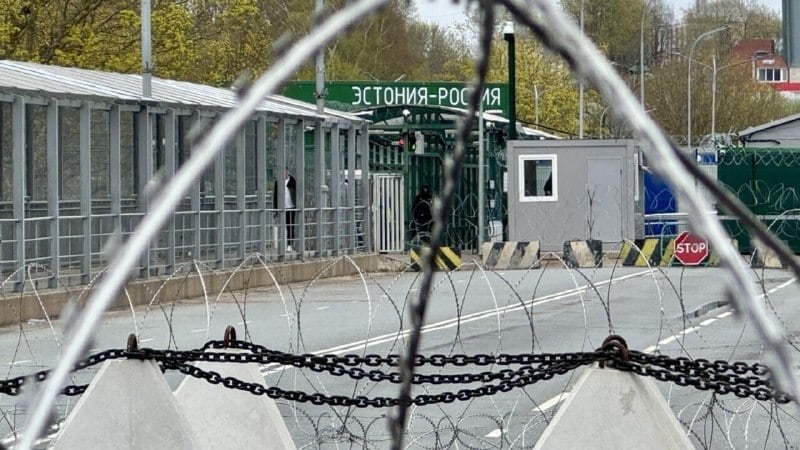
The decision by the Estonian government to suspend the movement of people and goods across the state border from 1 December for six months was a response to a serious security threat. The reason for this step was an attempted sabotage at the production facilities of the Estonian company Threod Systems, which specialises in the development of unmanned systems. Tallinn accused the Main Directorate of the General Staff of the Armed Forces of the Russian Federation (GRU) of committing this crime.
Russian reaction: from calls for war to economic pressure
Moscow immediately reacted to the Estonian measures, stating that such actions are on the brink of open war. In parallel with diplomatic pressure, Russia launched a powerful propaganda campaign. Its main goal was to spread the narrative that the border closure would lead to a collapse in Estonia, and that the country exists solely thanks to its ties with the Russian Federation.
Alexey Pushkov, a member of the constitutional committee of the Federation Council of the Russian Federation, took a particularly aggressive stance. He publicly claimed that the existence of Estonia without Russia is simply impossible. However, such statements are a classic example of cheap propaganda, although they contain certain elements of reality that are worth examining in more detail to understand the true motives of the Kremlin.
Real dependence: figures versus myths
To assess the scale of Estonia's dependence on the Russian market, it is worth turning to specific data for 2025. Exports of Estonian products to the Russian Federation amounted to €283 million, which is only 1.52% of the country's total export volume. In contrast, imports of goods from Russia to Estonia were €74.6 million, or 0.33% of total imports.
These figures clearly demonstrate that Estonia has no critical dependence on either Russian goods or Russian consumers. The main vector of the country's foreign economic activity is directed towards the markets of the European Union. For example, the largest share of exports goes to Finland (15%), followed by Latvia (11%), Sweden (9%) and Germany (8%).
An exception where dependence on the Russian Federation does exist is the city of Narva. It has a certain connection to Russian transport links and tourist flows. Since the beginning of 2026, approximately 760,000 border crossings have been recorded through the Estonian-Russian border checkpoints. For a small country, this is a significant flow that supports cross-border trade and the operation of local infrastructure.
The employment paradox in Narva
Interestingly, car traffic from the Russian side through Narva was stopped back in February 2024 due to the closure of the Ivangorod checkpoint for reconstruction. The effect of this decision turned out to be unusual: the employment rate in Narva, where high unemployment rates had traditionally been observed, did not decrease but instead increased by 2%, reaching 56.7% (from the previous 54.7%).
Thus, the Russian side's claim that Estonia cannot exist without Russia is an exclusively propagandistic construct that does not correspond to economic reality.
Military context of escalation
Despite economic myths, the border closure has a deep military underpinning. In 2026, hybrid provocations and sabotage organised by Russian agents on the territory of Europe have noticeably intensified. This process accelerated particularly after the visit of CIA Director John Ratcliffe to Moscow on 25 August. Estonia, which is in the most vulnerable position in the event of a possible invasion, is forced to take strict security measures in the face of a growing threat from Russian special services.



Comments
No comments yet. Be the first!