
Claude reported user data to the FBI over a joke about an attack in incognito mode
Anthropic's security system blocked the account and notified law enforcement about the user's joking about an attack, leading to a visit by FBI agents.
Anthropic's security system blocked the account and notified law enforcement about the user's joking about an attack, leading to a visit by FBI agents.

Robert Brovdi reported that from 1 to 22 November, unmanned systems units inflicted over 14,000 sanitary and irrecoverable losses on the Russians.

The lawyer emphasised that the deliberate evasion by heads of anti-corruption bodies of participation in the work of the temporary investigative commission violates current legislation and the principles of a democratic state.

Rescuers managed to extinguish the fire that broke out after the attack on the food vehicle, preventing the adjacent shop from catching fire. No one was injured.
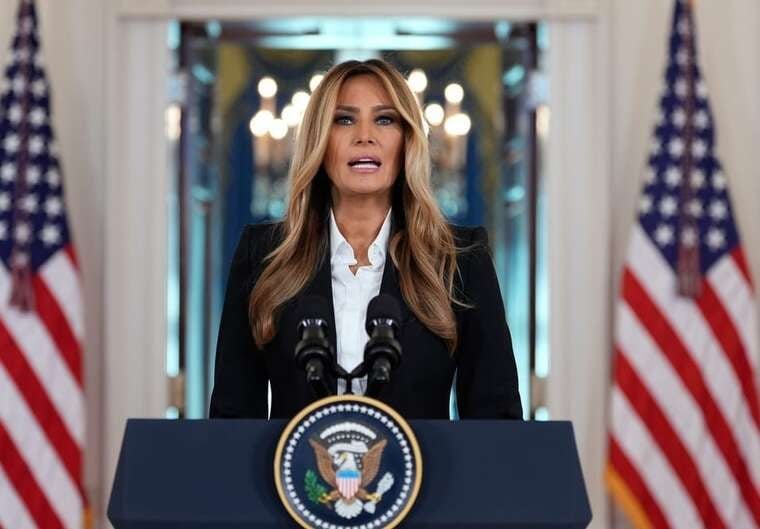
The US First Lady, during the screening of her documentary project, stressed that conflicts hold no value for families and called peace a rational choice.

The Centre for Public Investigations published data on financial payments to Kherson's leadership for the first eight months of 2026, showing that a significant portion of income consists of bonuses and unitemised entries.

Counterintelligence established that the suspect, who left his unit without permission, passed military coordinates and photos of strike consequences to the enemy while posing as a volunteer.

Dmitry Medvedev stated that Moscow would use nuclear weapons if Ukraine secretly obtained such munitions.
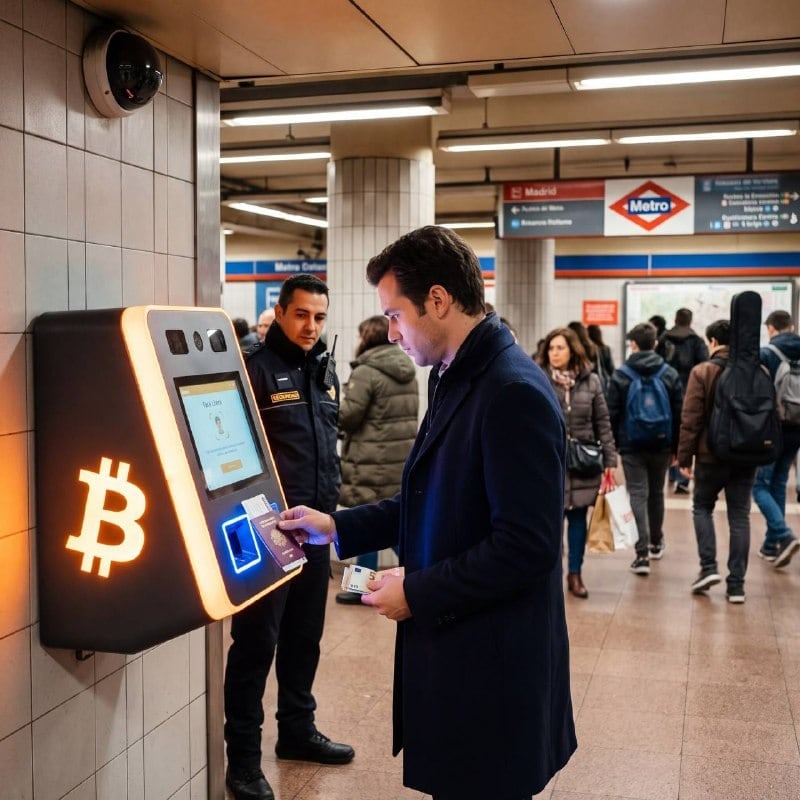
Users frequently ask: what will happen to the Bitcoin exchange rate if the state introduces its own digital currency and restricts cryptocurrency purchases to that currency only? Will this lead to a price jump to one million or even two million dollars? Let us examine this situation objectively, based on current trends.
First, it is worth determining whether private stablecoins will have a chance to exist alongside state digital money. The answer depends on the specific jurisdiction and its monetary policy.
The United States will likely not eliminate private stablecoins but integrate them into a regulated system. This process has already begun. In 2025, a presidential decree banned the issuance of a digital dollar, and in the summer of 2026, Congress enshrined this decision in a law that will remain in effect until the end of 2030. The GENIUS Act obliges stablecoin issuers to hold reserves in dollars and short-term government bonds. Thus, each unit of USDT or USDC is effectively an investment in US government debt. Washington does not need to take control of the dollar away from companies like Tether and Circle; it is sufficient for them to operate under a licence and block addresses upon government request. This turns private instruments into a functional analogue of a state stablecoin.
Europe and China play differently. The digital euro is being developed largely as a defence against dollar-denominated stablecoins, and the European MiCA regulation already establishes restrictions for stablecoins not denominated in euros. China, conversely, has launched the digital yuan and completely banned private cryptocurrency. Russia combines the digital ruble with the ruble-denominated stablecoin A7A5, using it to circumvent sanctions restrictions.
The world will likely be hybrid: central bank digital currencies in Europe, China, and Russia, and tamed private stablecoins in the US. The main risk for the average person lies not in the disappearance of USDT, but in the fact that any digital money—both state and private—will become fully transparent and subject to blocking. Digital control can be implemented even without classic CBDCs, through a network of licensed stablecoins.
Regarding the forecast of Bitcoin reaching one million dollars, the popular theory that access restrictions will cause a surge is incorrect. Control over inflows and outflows gives the state tools to influence buyers: identity verification, taxation, setting limits, and blocking accounts. However, the price is formed in the global market, not by administrative decisions. Experience suggests the opposite: access restrictions reduce liquidity. For example, after the ban on mining and trading in China in 2021, the Bitcoin price initially fell rather than rose.
Let us consider the scale. Bitcoin's market capitalisation at a price of one million dollars would be approximately 20 trillion dollars, which corresponds to the current value of all mined gold in the world. A price of two million dollars would double this figure. There are two paths to such numbers, and neither is related to a monopoly on entry.
The first scenario is significant devaluation of the dollar. In that case, the nominal price of Bitcoin may reach one million, but this would be a consequence of inflation rather than an increase in the asset's real value.
The second scenario is the mass inclusion of Bitcoin in the reserves of states and central banks. In the US, a strategic Bitcoin reserve has existed since 2025, currently consisting of confiscated coins, the sale of which is prohibited. The logic here is simple: a state that holds Bitcoin itself benefits from a high price for this asset.
The most likely scenario is not "Bitcoin can only be bought with state currency, and therefore it will cost a million," but "Bitcoin for anything, but only through licensed gateways under full state control." The price may rise, but it will be driven by inflationary processes and state purchases, not artificial access restrictions. Bitcoin will not disappear, but the mechanism of access to it will change. The state cannot print Bitcoin; it can only regulate who will have the opportunity to access it.
Comments
No comments yet. Be the first!