Done's Schemes: How Ukrainian Hryvnia Turns into Swiss Francs via Importers
Investigation reveals a network of companies where funds are collected in Ukraine, converted into foreign currency, and transferred to Swiss Done Switzerland AG.
Investigation reveals a network of companies where funds are collected in Ukraine, converted into foreign currency, and transferred to Swiss Done Switzerland AG.

Taras Vysotsky stated that alternative logistics corridors provide only 45% of the required volumes, threatening the loss of a significant portion of the harvest.
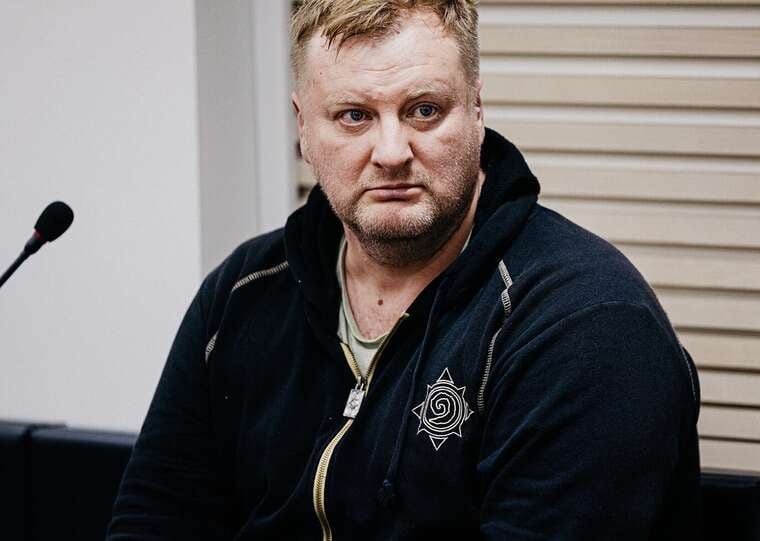
Lead State Prosecutor Taavi Pern confirmed that the activist was aware of the criminal liability for his actions, having contacted individuals who already had convictions for similar offences.

Investigators uncovered a scheme for the misappropriation of military property organised by the deputy commander of the unit. The process was later overseen by an SBU counter-intelligence officer assigned to the unit.
A representative of the ATB chain dispelled rumours about warehouse destruction, explaining that the buckwheat shortage is due to the cessation of supplies, while the disappearance of sugar is temporary.

European experts warn that restrictions on US diesel exports could become a trigger for a historic rise in prices on the continent.
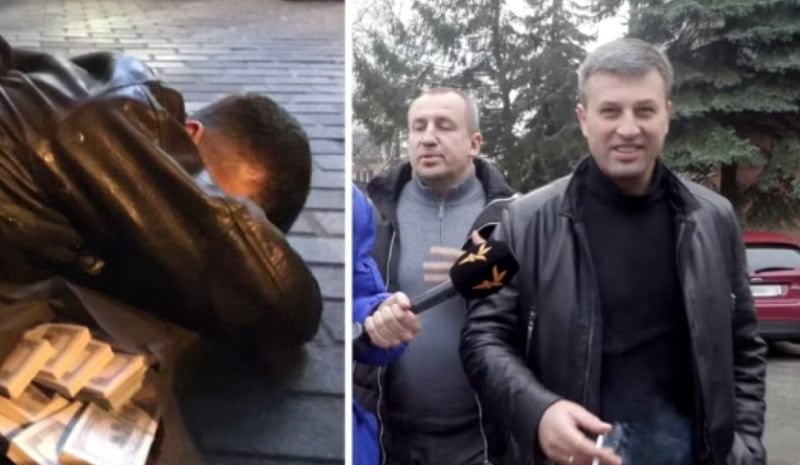
Shevchenkivskyi District Court of Kyiv found two former prosecutors not guilty of demanding $150,000 to close a case.
Investigation revealed that custodian company Trustee Plus has legally ceased to exist, while customers face fund blocking under the pretext of audits.

Less than a year before the start of the 2026 Winter Olympic Games in Milan, discussions are flaring up again over the participation of Russian and Belarusian athletes. The International Olympic Committee (IOC) has proposed allowing athletes from these countries to participate in qualification tournaments, a move that has caused concern within the sporting community.
Information about the IOC's new approach was revealed on 25 February by journalists from SVT Sport, who noted that the committee's leadership is pressuring international winter sports federations to ensure that athletes from Russia and Belarus have the opportunity to compete in qualifying events.
If the Russian authorities took a restrained approach to the 2024 Olympic Games in Paris, banning athletes from competing under a neutral status, the Winter Olympics in Italy are generating greater interest among them. This may be linked to the more lenient attitude of Italian authorities towards Russia compared to their French counterparts. Parisian authorities have consistently opposed the admission of Russian athletes, whereas Italy has traditionally had a favourable political atmosphere, particularly during the years of Silvio Berlusconi's rule.
In January 2024, the participation of Russian cross-country skier Alexander Bolshunov in the Sudtirol Moonlight Classic competition in Seiser Alm caused a scandal. The athlete ironically noted that his participation had been "approved" by Donald Trump, adding a political context to the situation.
IOC President Thomas Bach, who is due to leave office soon, is actively promoting the idea of returning Russian and Belarusian athletes to international competitions. For many years, he has faced criticism for his contacts with Russian businessmen and for a stance perceived as favouring Russian athletes, despite doping scandals and international sanctions. The newspaper Bild even called him "Putin's poodle".
Nevertheless, in 2025, Bach's successor could be the Britishman Sebastian Coe, who heads World Athletics. He is a consistent supporter of sanctions against Russia and in 2022 achieved the full disqualification of Russian and Belarusian athletes from competitions under the auspices of his organisation. His potential election is causing alarm among supporters of restoring Russia's participation in the Olympic Games, which is likely pushing Bach to accelerate the process of their return.
The reaction of international federations to the IOC's initiative has been mixed. The International Skating Union (ISU) approved the participation of Russian figure skaters in Olympic qualification tournaments on 20 December 2023. However, the International Ski and Snowboard Federation (FIS) and the International Biathlon Union (IBU) are maintaining a hard line. According to media reports, it became known on 4 March that FIS is not considering the possibility of returning Russians, even under a neutral status, while IBU stated that it had not received any official letters from the IOC on this matter.
A poll was also conducted among skiers, the results of which showed that 51.8% of athletes were against allowing Russians, 34.5% agreed to their participation under a neutral status, and only 13.7% supported the return of the Russian team with the national flag.
Despite resistance from certain federations, Russians continue to prepare for qualification. For instance, Russian cross-country skier Varvara Prokhorova, who holds the rank of warrant officer in the Russian army, is competing for an Olympic licence in ski mountaineering. At the World Championships in Switzerland, she was personally supported by Thomas Bach, who gave her an Olympic pin. This gesture drew criticism from sports officials who see a political subtext in it.
Olena Saladukha, President of the Ukrainian Athletics Federation, emphasised that the IOC's position contradicts the principles of fair sport and ignores the consequences of Russian aggression. Ukrainian sports organisations are demanding a complete ban on the participation of athletes from Russia and Belarus until the cessation of hostilities.
However, the situation remains uncertain for now: some international federations are defending the sanctions policy, while others are yielding to IOC pressure.
Comments
No comments yet. Be the first!