
Ukrainian Plakhtii: Millions in Dubai accounts contrast with modest Azino777 declarations
Investigation reveals huge gap between declared assets of Azino777 owner and his actual assets in UAE, plus mentions of company's criminal past.
Investigation reveals huge gap between declared assets of Azino777 owner and his actual assets in UAE, plus mentions of company's criminal past.

SAPO head explains why suspects choose Austria to hide and how the local jurisdiction circumvents extradition procedures.

Ukrainian forces destroyed over 2,000 Russian invaders in a day. Total losses of the Russian army since the start of the full-scale invasion have exceeded 1.6 million personnel.

The parliamentary committee recommends that the Verkhovna Rada consider an initiative providing for increased working hours for teenagers and simplified hiring and dismissal procedures.

According to the Institute for the Study of War, Kyiv's long-range attacks have significantly limited fuel production in Russia, forcing Moscow to import petrol and introduce export restrictions.

Washington has abandoned the strategy of engaging Moscow through economic offers. The dialogue is now focused on territorial issues and security.
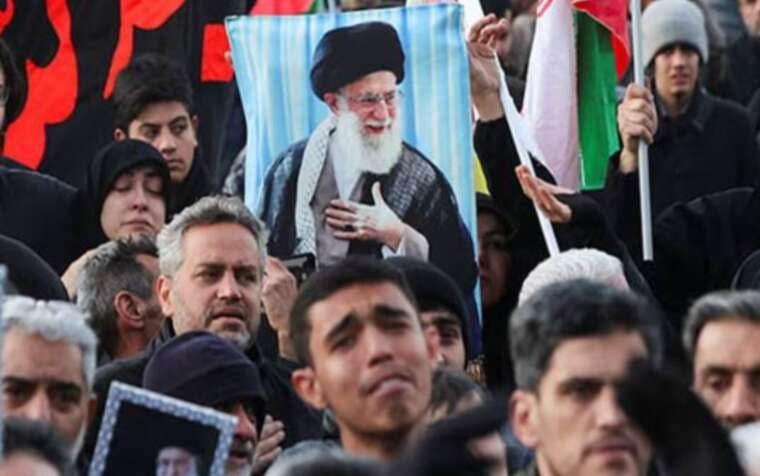
The Trump administration is considering targeted strikes on the top of the Iranian regime, although a final decision has not yet been made.

Order No. 1648 has been approved, defining which media outlets and publishers can obtain critical importance status. The main condition for telethon participants is the monthly production of 10 hours of broadcast content worth at least UAH 1 million.
In Washington, there is active discussion regarding a military solution to the months-long conflict with Iran. According to sources, the administration of US President Donald Trump is considering an operation to remove key figures from the Iranian leadership. Proponents of this approach are convinced that eliminating the leaders of the regime's hardline wing would allow for the end of hostilities, which have already been ongoing for nine months.
As reported by NBC News, supporters of this scenario believe that such an action would demonstrate the United States' ability to locate and neutralise Iranian officials at any time. In their view, such a step would increase pressure on the Iranian government and give President Trump a reason to declare victory, thereby ending the military campaign. Meanwhile, the American leader has not yet made a final decision on implementing this plan.
Critics of this initiative warn of serious risks. They argue that removing part of the leadership could lead to the remaining elites adopting an even harder stance. This would complicate future peace negotiations and undermine trust in the US as a potential partner in diplomatic settlement. Some US military leaders also fear that such strikes would provoke a large-scale response from Tehran, putting the safety of American officials at risk.
The idea of eliminating representatives of the Iranian top brass is not new; it was previously proposed to the president, but discussions around it have intensified recently. Among other options Washington is considering are the resumption of large-scale hostilities and strikes on Iran's critical infrastructure. Potential targets could include oil facilities on Kharg Island, energy capacities on Qeshm Island, and uranium enrichment facilities in the Pickaxe Mountain area. However, Trump has not yet made a final decision, and last week he hinted that large-scale military actions could be postponed until next year.
One of the key arguments against the operation is the threat to American officials. In particular, US Treasury Secretary Scott Bessent recently moved to a military base near Washington due to fears for his personal safety after receiving threats from Iran. For the successful execution of strikes on Iranian leadership, Washington requires highly precise intelligence data. According to sources, the US is using not only its own resources but also information provided by Israeli intelligence services.
Meanwhile, Tehran shows no readiness for concessions. On 24 November, Iranian Parliament Speaker and chief negotiator Mohammad-Bagher Ghalibaf stated that the country would not agree to negotiations with the United States until seven demands of the Iranian side are met. Among the conditions previously voiced by Iranian officials are the cessation of hostilities on all fronts, the lifting of US sanctions, the end of the naval blockade of Iranian ports, and the unfreezing of frozen assets. Ghalibaf also warned that Iran is ready to expand the geography of the confrontation in the event of hostile actions.
Comments
No comments yet. Be the first!