
Head of Ministry of Defence department suspected of illicit enrichment of UAH 12.6 million
The Security Service of Ukraine has notified a defence ministry official of suspicion, who together with his family amassed UAH 12.6 million.
The Security Service of Ukraine has notified a defence ministry official of suspicion, who together with his family amassed UAH 12.6 million.

The Russian leader emphasised that Kyiv is obliged to agree to the demands formulated before the Anchorage meeting if it seeks to end the armed conflict.

The Russian leader thanked his American counterpart for the invitation, but noted that he does not always find it comfortable to travel abroad frequently.

The Russian leader summarised trilateral consultations, calling them candid, but stressed that Moscow maintains its course on Donbas and refuses agreements on a local ceasefire.

In Opole Voivodeship, a Ukrainian citizen ignored a stop order and fled on foot. He was detained and now risks leaving the country.
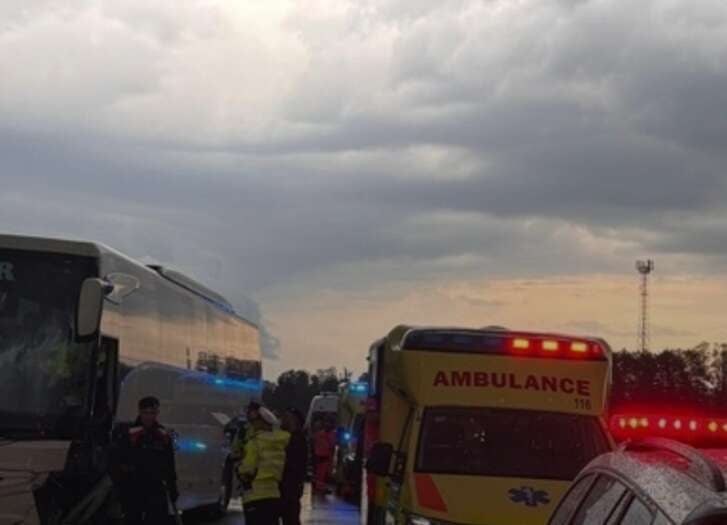
On the morning of 19 November, an accident involving a bus transporting children occurred on the I/27 highway near Plzeň. Evacuation was carried out through the windows, and the car driver died.

Former head of the patrol police came to the defence of the Minister for Veterans' Affairs and proposed to establish dialogue between the ministry and the military community.

The Russian leader stated that he had previously discussed a possible local ceasefire with Security Council members, but attacks on the bridge crossing became the reason to halt negotiations.
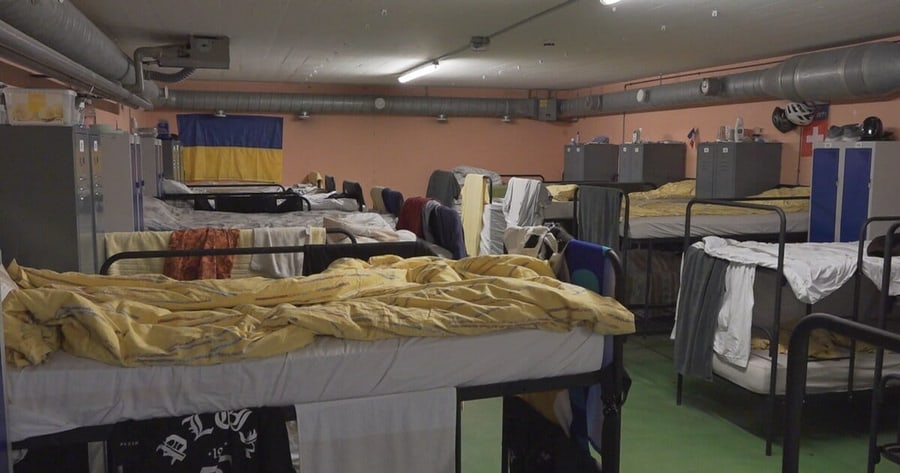
In Vaud canton (Switzerland), around 100 refugees have been forced to spend nights in underground civil protection shelters for several months. This situation has arisen due to an acute shortage of accommodation places at the EVAM (Etablissement vaudois d'accueil des migrants) facility. Life underground is causing serious harm to the physical and mental health of the residents.
Yuriy Smirnov, a Ukrainian about 40 years old, can no longer tolerate existence in an underground facility. He has been living in a civil protection shelter in the town of Clarens for several months. Dirt, lack of natural light and ventilation, as well as overcrowding, are having a devastating impact on his mental state.
«Моє здоров'я значно погіршилось. Це дуже важко для мене психологічно. Мені сняться кошмари. Я знову переживаю певні сцени війни» ("My health has deteriorated significantly. It is very difficult for me psychologically. I have nightmares. I am reliving certain scenes of the war again"), he shares. The situation is so critical that the man has decided to sleep on the street rather than in this shelter.
Similar feelings are shared by other young men. Although they are grateful for being received in Switzerland, the months spent underground are taking a heavy toll on them. Frequent illnesses and a sense of being stuck in time accompany their stay here.
«В укритті дуже гучно. Я не можу зосередитися на домашніх завданнях, на своїх проєктах, на захисті диплома» ("It is very noisy in the shelter. I cannot focus on my homework, my projects, or my thesis defence"), says a student from the Faculty of Physics.
The shelter in Clarens accommodates around 60 people, who are housed in three dormitories. Another approximately 50 men are living in a civil protection shelter in Echallens. These residential facilities are designated exclusively for men. According to EVAM, individuals whose health condition is incompatible with such living conditions are also excluded from these facilities. The institution states that residency status in the country is not a criterion for placement.
The average length of stay in the Clarens and Echallens shelters is just under three months. However, the men who were interviewed note that they have been living there for four to six months. In general, the length of stay should not exceed six months.
Several organisations, including the Swiss Organisation for Refugee Aid (OSAR), believe that underground civil protection shelters are not an adequate place for accommodating refugees.
EVAM Director Erich Durst acknowledges that these conditions are far from ideal. «Вони прийнятні, оскільки передбачені законом. Але закон зазначає, що це має бути крайнім заходом, коли немає інших рішень» ("They are acceptable because they are provided for by law. But the law states that this must be a last resort when there are no other solutions"), he explains.
It is worth noting that these shelters have been functioning as residential facilities for almost four years, with small pauses when the situation allowed their use to be suspended. The underground housing accommodates just over 1% of the total number of people EVAM provides shelter for.
This autumn, EVAM accommodated a total of 8,906 people. The majority of them (5,535) live in apartments, while 3,371 are in collective structures. Another over 200 people are accommodated in private homes under the "Give Shelter to a Migrant" programme.
EVAM lacks a sufficient number of accommodation places. The number of people in need of assistance has increased since the start of the war in Ukraine. In addition, several facilities have reached the end of their rental agreements.
According to EVAM, against the backdrop of tension in the real estate market, additional problems arise: finding buildings suitable for collective accommodation and the fair distribution of housing between the regions of Vaud canton. In the context of a tight budget, cost is also an important factor.
«Зараз ми шукаємо 400 місць на наступний рік» ("We are currently looking for 400 places for next year"), Erich Durst clarifies. If these places are not found, the opening of new civil protection shelters is not ruled out.
Currently, the flow of new migrants has decreased. However, the housing shortage, in particular, prevents refugees from obtaining independent housing. For organisations, the key task is to support individuals on their path to self-sufficiency.
In 2027, Vaud canton plans to strengthen the support for assisted individuals with the aim of transitioning to housing rented in their own name. «Для допомоги у подоланні цього етапу на шляху до самостійності розглядаються можливості навчання та підтримки в пошуку квартири» ("To help overcome this stage on the path to independence, possibilities for training and support in finding an apartment are being considered"), EVAM reports.
Juliette Jeanne
Comments
No comments yet. Be the first!