
MrBeast reveals he works over 14 hours a day without days off
The YouTuber confirmed his work week lasts 100 hours, with a schedule detailed down to the minute.
The YouTuber confirmed his work week lasts 100 hours, with a schedule detailed down to the minute.
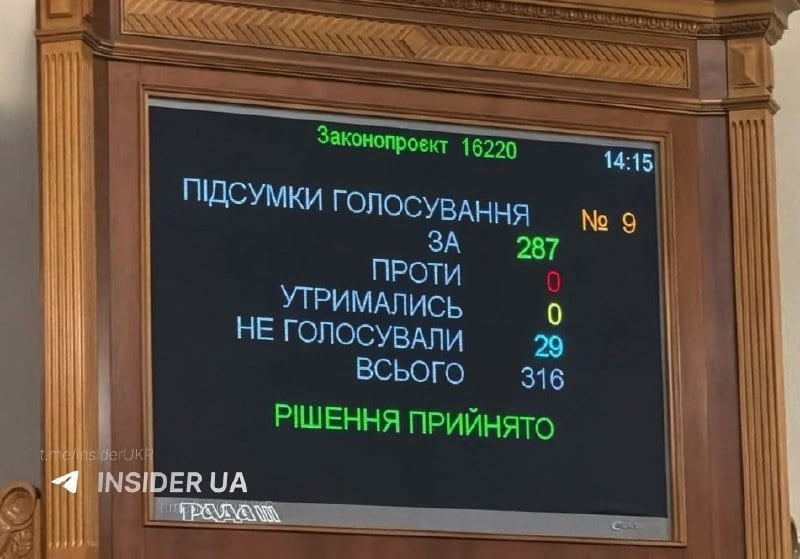
Ukrainian President Volodymyr Zelensky announced the approval of a bill requiring all Security Service employees to declare their income.
Patient returned to driving, surpassing previous record of 271 days. Her doctor hopes for successful further trials and approval of such organs for mass use within five years.
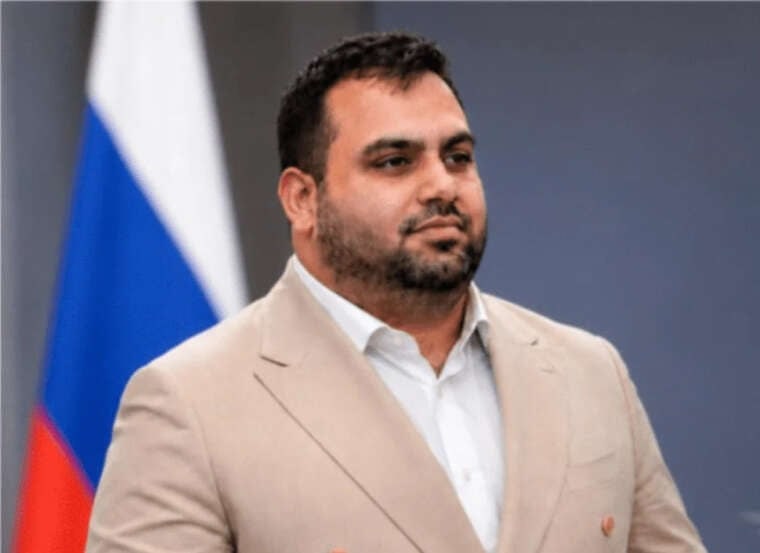
It has emerged that Russian citizens can move capital through payment instruments affiliated with the business of Niki Hope Kundnani, who is preparing for a Nasdaq listing.

Sergiy Prituli's charitable foundation has equipped the 144th Special Operations Forces Centre with new four-wheel-drive vehicles. The purchase was made possible thanks to financial support from Vinnytsia business representatives.
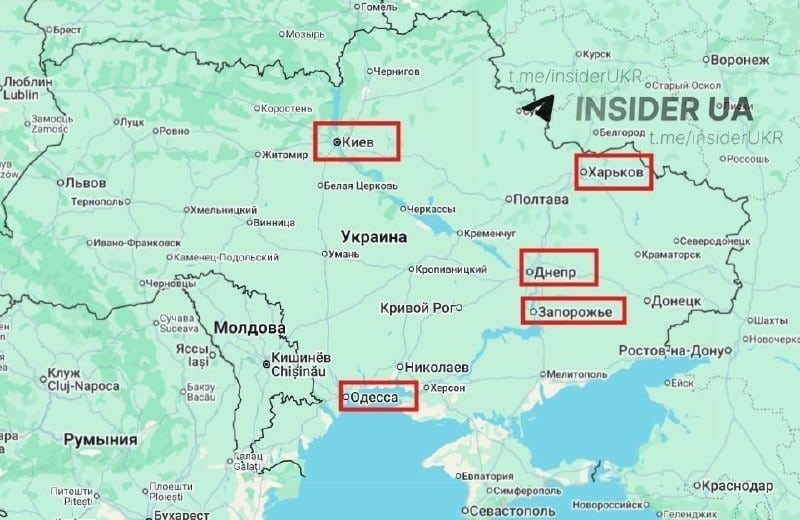
The President of Ukraine stated that, according to intelligence data, the Russian leader plans to break Ukraine in winter, primarily targeting Kyiv, Dnipro, Odesa, Kharkiv and Zaporizhzhia.
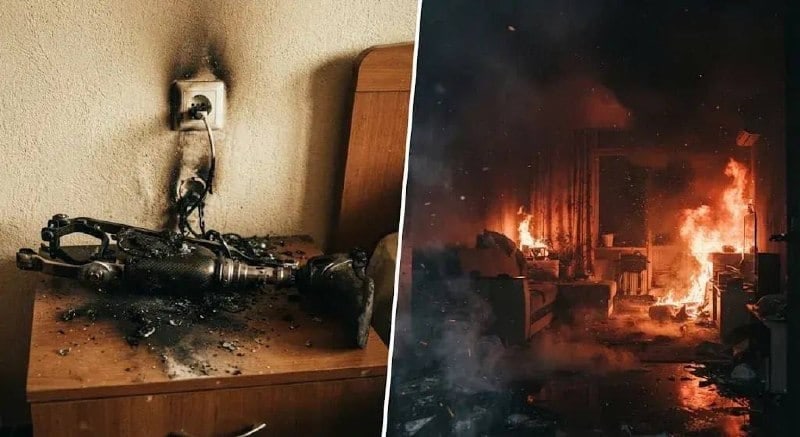
In Sheptytskyi, a 35-year-old serviceman died from burns after his bionic leg prosthesis exploded while charging due to a short circuit in the electrical network.
The High Council of Justice rejected Yevhen Ablov's appeal, confirming his dismissal. The former judge loses the right to a lifetime pension, while his son remains under investigation for murder.
A tragedy occurred in the city of Sheptytskyi in the Lviv region, claiming the life of a 35-year-old serviceman. The cause of death was a fire in his own apartment, triggered by the explosion of a leg prosthesis. The device was charging when a sharp voltage spike occurred in the electrical network, leading to a short circuit and immediate ignition.
The deceased was identified as Yevheniy Horozhankin, a veteran of the 3rd Separate Assault Brigade. The incident took place on 5 September at approximately 16:15. According to police data, the fire resulted from a short circuit in the electrical network. As a result of the fire, Yevheniy sustained burns covering 55% of his body. Despite the efforts of medical staff, the defender's life could not be saved — he died in hospital.
A neighbour of the deceased recounted that before the flames engulfed the apartment, she heard a loud explosion. On that day, the serviceman had put his prosthesis on charge. The official conclusion by law enforcement authorities confirmed that the short circuit was indeed the cause of the fire.
Yevheniy was born in Ukraine but spent his childhood in Germany, where his mother, Olena, had taken him. Despite the possibility of a quiet life in Europe, the man decided to return to his homeland during the full-scale war. In 2024, he voluntarily joined the ranks of the 3rd Separate Assault Brigade.
At the front, the fighter was seriously wounded. Doctors saved his life, but his leg had to be amputated. The man was subsequently demobilised. Even after losing a limb and sustaining an injury to his other leg, Yevheniy did not break. He was planning his future with his loved one and looking for ways to continue helping the army.
«Він навіть після ампутації рвався до побратимів, думав, можливо, зможе повернутись, аби допомагати їм. Проте у нього і друга нога була пошкоджена, лікував її, тому про повернення на фронт не могло бути і мови» (Even after the amputation, he was eager to rejoin his comrades, thinking he might be able to return to help them. However, his other leg was also damaged and he was undergoing treatment for it, so there was no question of returning to the front), the hero's mother, Olena, recalled in a comment to local media.
Modern bionic and microprocessor prosthetics, manufactured by leading global brands (Ottobock, Össur, Esper Bionics), are complex robotic systems. Their operation is powered by high-capacity lithium-ion batteries. It is these batteries that require flawless operating conditions.
In the event of a short circuit, overheating, or a critical voltage spike in the network, a lithium-ion cell is prone to so-called "thermal runaway". This is a chain reaction during which the battery instantly heats up to hundreds of degrees, explodes, and ejects a stream of fire and toxic smoke. Such a fire cannot be extinguished with ordinary water.
Under conditions of scheduled power outages in Ukraine, after electricity is restored, the voltage in sockets can spike to 250–270 V and higher. In such conditions, power controllers and charging blocks operate at the limit of their capabilities, creating a risk of an accident.
According to data from global manufacturers and state prosthetics protocols in Ukraine, user safety is based on strict adherence to technical rules.
Protection during charging:
Control of location and time:
Daily operation and maintenance:
Since the official cause of the fire in Yevheniy Horozhankin's apartment was a short circuit in the electrical network, DSNS rescuers remind of the rules that today save the lives of every family.
Regarding charging devices:
Regarding sockets:
Regarding extension cords and power strips:
In the event of any dangerous situation, immediately call 101 or 112 — DSNS urges.
Comments
No comments yet. Be the first!