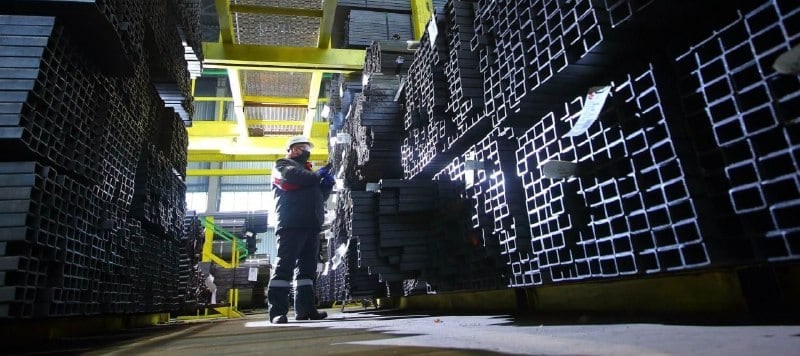
EU restrictions threaten the survival of Ukraine's metallurgical industry
New Brussels quotas could cut Ukrainian steel exports by 1.5 million tonnes, putting tens of thousands of jobs at risk amid the war and declining production.
New Brussels quotas could cut Ukrainian steel exports by 1.5 million tonnes, putting tens of thousands of jobs at risk amid the war and declining production.
Investigation into Deutsche Bank ending cooperation with Rinat Akhmetov's SCM group has highlighted the vulnerability of domestic business. The authors warn that after the war, foreign companies may take leading positions in the domestic market.
The Ministry of Health has released infection statistics for the week of 16 to 22 November: the number of patients has increased, but the level remains at a background level.
Local administrations of cities with a population of over 100,000 must develop water supply restriction schedules within two weeks.
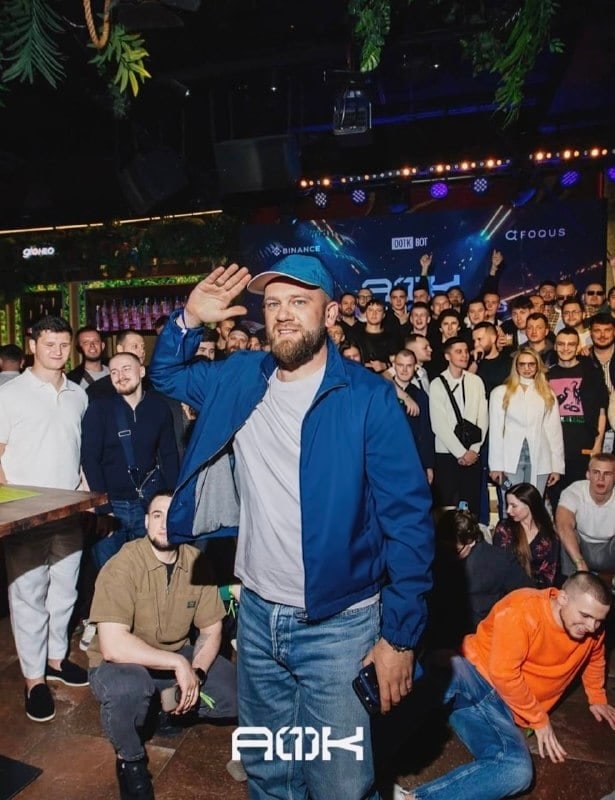
Sergiy 01k introduced Vladyslav Tumanov, who combines the roles of CEO, Co-Founder, and COO at A01K CRYPTO CARTEL. The article describes their trips, transport, and social environment.
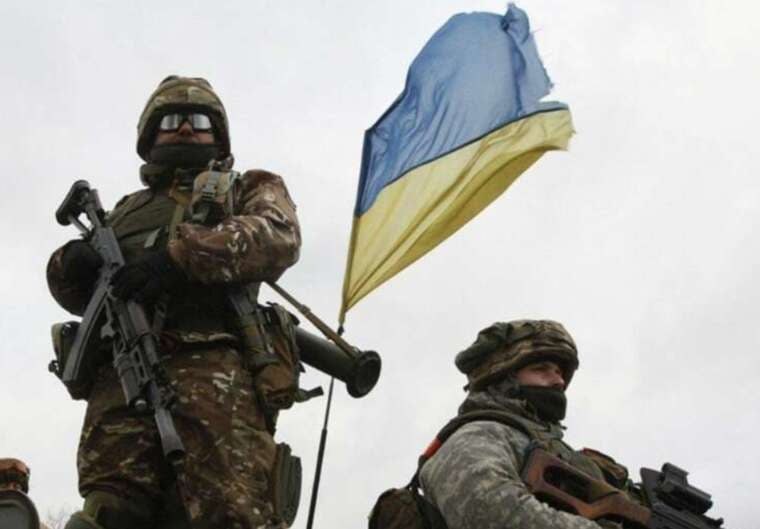
The Defence Procurement Agency signed agreements to supply food until 2027 with a consortium linked to Tetiana Hlyniana's former business group.
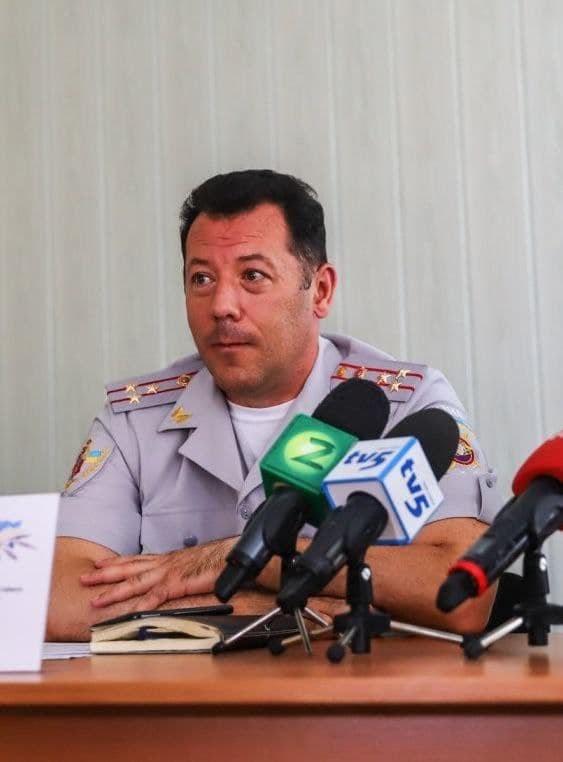
The Specialized Anti-Corruption Prosecutor's Office filed a lawsuit to declare Vadym Kiriienko's asset unjustified, as he heads the interregional directorate for the execution of sentences.
Kyiv's Pecherskyy District Court has cancelled the charges of false declaration against an NABU detective, previously signed by Prosecutor General Kravchenko.
The incident in which Deutsche Bank, according to international investigation data, ended cooperation with Rinat Akhmetov's SCM group due to questions regarding the origin of capital, has gone beyond a corporate news item. This situation has revitalised the discussion about the prospects for large Ukrainian businesses. Against the backdrop of hostilities, entrepreneurs are already suffering losses of assets and markets, and after the end of the war, they face potential increased competition from foreign entities.
Before the full-scale invasion, oligarchic structures had significant influence on the country's political life. However, events that began in February 2022 led to their weakening. One of the symbols of these changes was the introduction of a unified telethon, which deprived TV channel owners of control over the broadcast. Against this backdrop, Rinat Akhmetov liquidated his media holding. Another illustrative episode was the case of Ihor Kolomoisky, who was taken into custody.
At the same time, the positions of two other centres of influence have strengthened. First, this is the president and his entourage, around whom a new business environment is forming, linked to large state contracts and financial flows. Second, these are Western partners, on whose support Ukraine has become significantly more dependent. The confrontation between the authorities and anti-corruption bodies, which have the support of part of the pro-Western forces, is viewed by the authors of the material as a struggle for control over internal processes. In this game, large business, in their opinion, plays a predominantly passive role, finding itself under pressure from both sides.
The main threat to large companies has not only a political but also an economic nature. Russian strikes systematically damage industrial enterprises, logistics and energy infrastructure. The reduction in maritime exports has already led to the halt of Ukrainian metallurgy and created serious difficulties for the agricultural sector.
Losses from Russian strikes force owners to doubt the feasibility of investing in restoration, as new attacks may destroy assets again. An additional factor of uncertainty is the limited capacity for state support and risks associated with exports through damaged port infrastructure.
The second key challenge concerns whether Ukrainian companies will be able to gain access to reconstruction financing and European markets, or whether Western partners will demand the transfer of key economic positions to transnational corporations. The scandal involving Deutsche Bank and SCM is perceived as one of the signals of a restrained attitude of Western financial institutions towards Ukrainian oligarchs.
As early as 2024, the President of the European Bank for Reconstruction and Development stated that financing oligarchs is not provided for, and the country's economy needs de-oligarchisation. At the same time, large Ukrainian entrepreneurs are directing significant funds to support the Armed Forces. In particular, Rinat Akhmetov finances the "Azov" and "Third Assault" units. However, it remains unclear whether this contribution will be taken into account when determining the terms of business participation in post-war recovery.
Large Ukrainian business has found itself in a situation of simultaneous pressure: war destruction, economic losses, and the threat of being squeezed out by foreign competitors. If these trends persist, domestic entrepreneurs may end the war with significantly reduced capital, while foreign companies will take leading positions in the domestic market.
The authors name the fastest end to hostilities as the most favourable scenario for business. This would allow stopping the destruction, launching economic recovery, and returning to the political process through elections. In that case, leading entrepreneurs could try to restore some of the lost influence. However, the question remains open as to whether they have sufficient leverage to influence decisions on war and peace, and whether they are ready to use it.
Comments
No comments yet. Be the first!