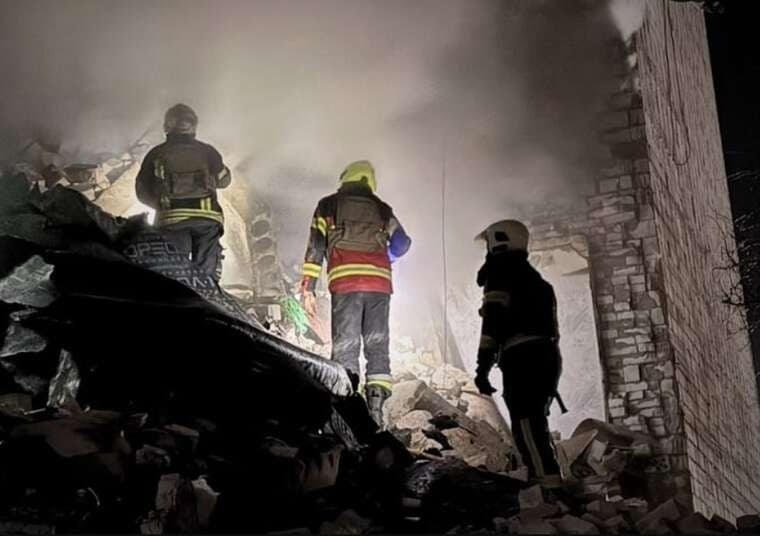
Death toll rises following attack on residential building in Dymyr, Kyiv region
The number of victims of the strike on a multi-storey building in Kyiv region has reached twelve. Search and rescue operations are ongoing at the scene.
The number of victims of the strike on a multi-storey building in Kyiv region has reached twelve. Search and rescue operations are ongoing at the scene.

US President Donald Trump stated that if diplomatic dialogue with Tehran fails, Washington may strike Iran after the holidays. He called Iranian negotiators tap dancers.

The post's author expressed dissatisfaction with the work of the Perm oil refinery, urging people to hurry to get petrol.
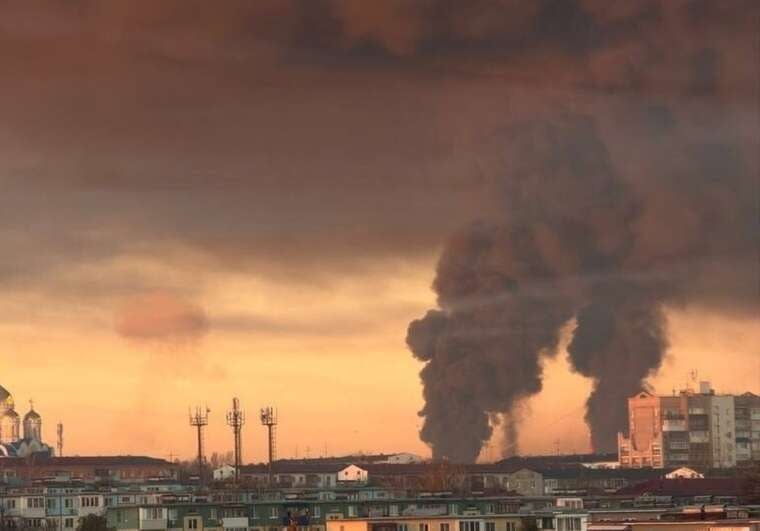
A series of explosions occurred in Novoshakhtinsk at night, leading to a fire at a major oil processing facility and a neighbouring company operating in the fuel sector.

A hostile drone hit the second floor of a multi-storey apartment building in the Shevchenkivskyi district of Kharkiv. Two people were injured as a result of the incident.
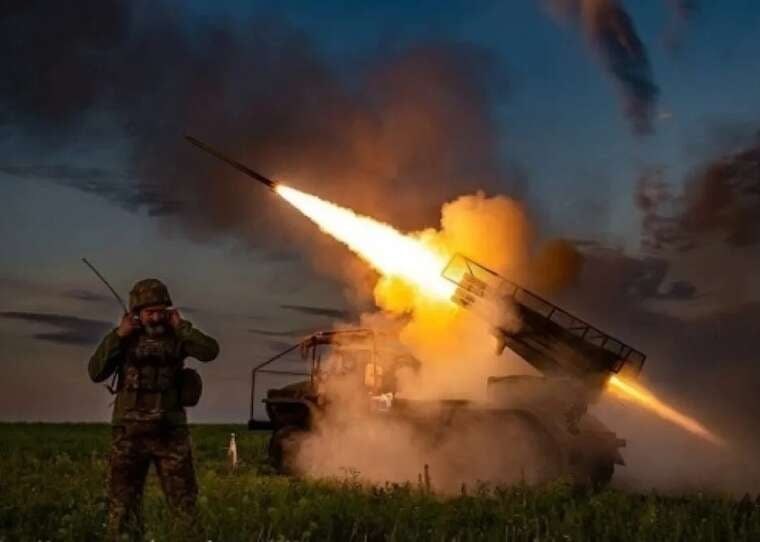
Ukrainian defenders inflicted significant losses on the enemy in personnel and equipment, including the destruction of 70 artillery systems and nearly 1,500 drones.

Kremlin spokesman Dmitry Peskov stated that trilateral consultations on ending the war in Ukraine could take place very soon, although the exact schedule for the meeting has not yet been agreed.

Representatives of the NGO "Stop Corruption" analyse the imbalance between law enforcement budgets and actual judicial outcomes, pointing to typical scenarios of case blocking.
Every year, hundreds of thousands of criminal offences are recorded in Ukraine, while law enforcement structures receive billions of hryvnias from the state budget. At the same time, citizens who appeal to these bodies often face bureaucratic barriers: information is not entered into the Unified Register of Pre-trial Investigations (ERDR), cases are closed, transferred between agencies, or court rulings remain unenforced. Representatives of the Rivne branch of the NGO "Stop Corruption" raise the question of whether the actual results of state institutions' work correspond to the resources spent, and whether the same scenarios that hinder justice are repeated in different regions.
The specifics of the Ukrainian anti-corruption system are better examined through concrete figures and statistics than through public statements by officials. On the one hand, there are public activists and volunteers who gather information at their own expense, document potential corruption offences, prepare applications, and submit materials to law enforcement agencies. On the other hand, there are state structures with established staffing, budgetary funding, and full procedural powers. Criminal proceedings find themselves between these two parties, and their fate often becomes problematic.
The anti-corruption group of the Rivne regional branch operates on a voluntary basis and has no state funding. All efforts to search for information and prepare materials fall on the activists. In contrast, the state maintains an extensive network of law enforcement agencies. According to data from the publication "Slovo i Dilo" regarding the 2025 budget, funding looks as follows:
It is important to note that these are funds for maintenance, not performance indicators. Meanwhile, the State Judicial Administration reported that funding for the judicial system in 2025 is only 60.9% of the required amount. Labour costs are covered at 68.9%, other current expenses at 47.2%, and development expenses at only 11.7%. This indicates a systemic imbalance between the bodies that investigate, those that exercise procedural supervision, and the courts that must ensure justice.
The Supreme Court's analysis of the state of justice in 2025 records the registration of 608,000 criminal offences. Notifications of suspicion were served on individuals in 27% of these cases. Proceedings regarding 148,000 offences were referred to courts, of which 140,000 were with indictments. According to verdicts that entered into force in 2025, 56,000 people were convicted.
A separate indicator is the activity of the State Bureau of Investigations (SBI). According to the annual report for 2025:
These figures raise questions: how many cases end with indictments, how many are closed, transferred by jurisdiction, or remain stagnant? State bodies report on the number of procedural actions, but society has the right to see the full path of a criminal proceeding from the first application to the final decision.
The practice of the Anti-Corruption Group reveals several systemic problems. First, this is the failure to enter information into the ERDR. Article 214 of the Criminal Procedure Code of Ukraine obliges an investigator, inquirer, or prosecutor to enter information no later than 24 hours after the submission of an application or the independent discovery of circumstances that may indicate a criminal offence. However, applicants are often forced to challenge inaction through investigating judges.
Second, these are rulings refusing victim status or closing proceedings, which limit the applicant's rights to participate in the investigation. Third, this is the transfer of cases between investigative bodies. Although the mechanism is provided for by law, it should not turn into an endless movement of documents without results. Fourth, this is the non-enforcement of investigating judges' rulings, which deprives judicial control of practical meaning.
Article 382 of the Criminal Code of Ukraine provides for liability for the intentional non-enforcement of a court decision. However, the public question is broader: who controls the enforcement of investigating judges' rulings that oblige investigative bodies to take certain actions? Does an official bear liability for inaction? Is such inaction taken into account when evaluating the body's work and allocating the budget? Without answers to these questions, the system risks turning into endless paperwork where the citizen does not receive a substantive answer.
The author of the article personally observed in the Solomianskyi District Court of Kyiv how the investigating judge's office was surrounded by case materials, creating the impression of an archive. He saw a similar picture in the office of a regional investigator, where, in his estimate, between 500 and 1,000 case materials were present simultaneously. This is not official statistics, but subjective observations, yet they are confirmed by data. According to the Supreme Court's analysis, in 2025, 1.93 million cases and materials were received by courts, of which 1.149 million were criminal.
The High Council of Justice in 2026 published information that the Solomianskyi District Court had 51,799 cases in progress in 2025, and the average workload per judge was 1,105 cases. Thus, overload is not just an impression, but a statistical fact. However, overload cannot be a universal justification for the non-enforcement of court rulings or the violation of the rights of process participants.
The most alarming case is when the subject of investigation becomes potential offences by law enforcement officers or prosecutors themselves. In such situations, the applicant depends on the decisions of the very system they are challenging. The Anti-Corruption Group of the Rivne branch reports appeals to the High Council of Justice and bodies of prosecutorial self-governance regarding such proceedings. Among the issues raised: refusals of victim status, challenging of rulings, non-enforcement of court rulings, potential violations during procedural supervision, and the use of procedural mechanisms that, in the opinion of applicants, hinder a full investigation.
A separate direction is potential obstruction of journalistic activity. This concerns materials regarding journalists of the "Stop Corruption" agency and the "Fourth Power" publication. According to activists' information, in the relevant criminal proceeding, circumstances of potential illegal collection of personal data, use of information systems to obtain information about their movements, and creation of dossiers are being examined. These circumstances require independent verification, proper investigation, and procedural assessment. The mere fact of submitting an application does not mean the proven guilt of specific individuals. If the investigation is conducted without proper access for victims to procedural mechanisms, this creates risks for the freedom of journalistic activity.
The title of the article is a metaphor. In the group's observations, the question arises about possible stable connections between officials, law enforcement officers, and commercial structures in certain regions, which may use their official positions to obtain undue advantage. This is a hypothesis that needs to be verified by facts. But if similar mechanisms are discovered in different places, the question arises: are these local cases, or the reproduction of the same model where potential offences remain unchecked due to procedural inaction or decisions by the law enforcement bodies themselves?
To verify this, it is not necessary to assume the existence of a single centre of control. It is enough to compare documents, deadlines, decisions, and investigation results in different proceedings. Society has the right to demand an efficiency audit based not on the number of documents created, but on the following indicators:
The state cannot evaluate the efficiency of the law enforcement system solely by the number of documents created. Its result is protected citizens' rights, fully investigated crimes, and enforced court decisions. If activists work without a budget, investigators and prosecutors receive state resources, and courts have a funding deficit, the question of fair distribution of funds becomes a matter of national level. The answer should be given not by official letters, but by facts, independent investigation, and real accountability. Justice begins where the law works equally for everyone.
Comments
No comments yet. Be the first!