
Trump demands SEC replace term "artificial intelligence" with "superintelligence"
US President Donald Trump stated that the SEC regulatory body plans to make the use of a new term for designating technologies mandatory.
US President Donald Trump stated that the SEC regulatory body plans to make the use of a new term for designating technologies mandatory.
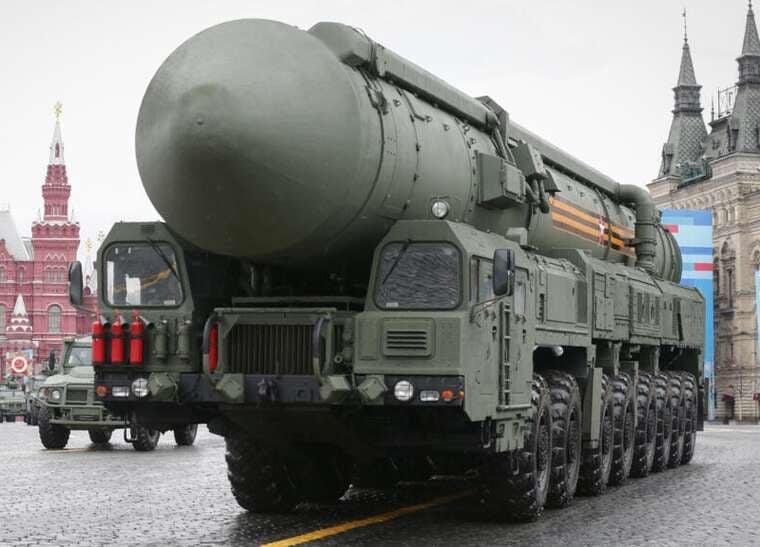
Movement of strategic weapons capable of carrying nuclear warheads has been recorded in the Altai Krai.

German officials and experts discuss the risks of combat spreading to the Baltic waters. The government's position contrasts with parts of the coalition's views on Ukrainian restraint.

Czech authorities are drafting a bill that introduces a mandatory requirement to be employed or registered with the employment office for benefit recipients and limits the duration of stays abroad.
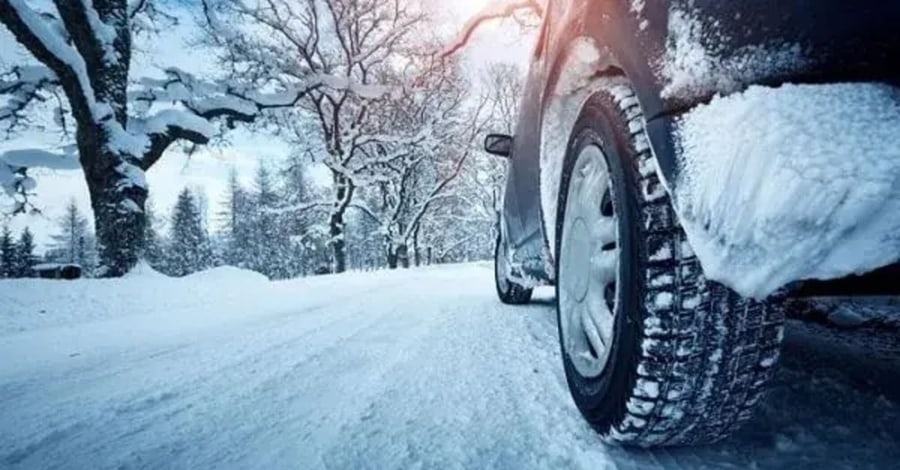
European countries have different approaches to mandatory winter tyre use. Ukrainian drivers need to know the specifics of legislation in Poland, Germany, Austria and other states to avoid sanctions.

Hungarian police seized over 70 kilograms of drugs from two Dutch citizens who arrived from Bangkok. The men face lengthy prison sentences.

Presidential adviser Dmytro Lytvyn stated that the government and the security service are preparing a joint approach to information control. The main obstacle is the spread of data via anonymous Telegram channels.
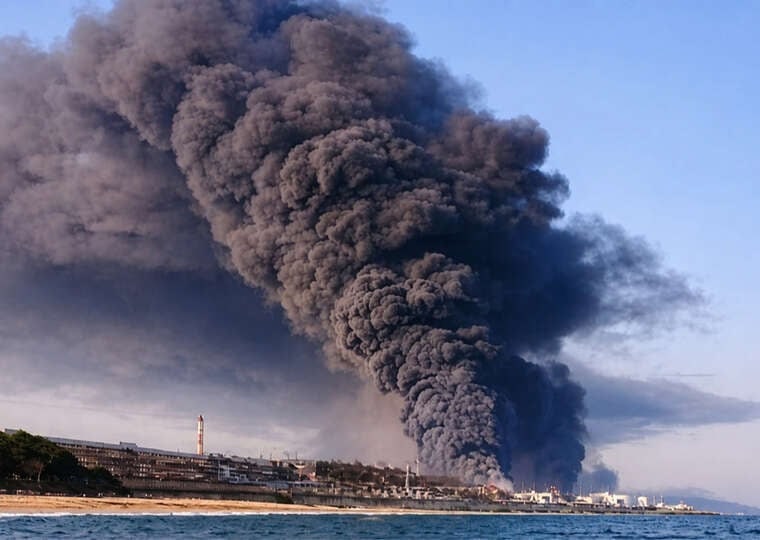
Over the past 50 days, Defence Forces have struck 40 oil and military targets in Russia. The geography of operations spans more than 2,400 km, while fuel production in the Russian Federation has fallen by a third.
Drivers from Ukraine who plan to travel by private vehicle across European countries must take into account that national legislation varies significantly regarding seasonal vehicle equipment. While some countries allow driving on summer tyres year-round, in others, the absence of winter tyres under appropriate weather conditions can lead to serious financial sanctions.
At the European Union level, there is no general regulation establishing fixed dates for tyre changes for all drivers. Each state independently determines the criteria under which a vehicle must be equipped with seasonal tyres. According to the European Consumer Centre, there are four main approaches to regulating this issue:
Ukrainian number plates do not exempt drivers from liability for violating local rules. Even transit passage through a country with different requirements entails compliance with its legislation.
Polish legislation does not establish an obligation to switch to winter tyres for passenger cars. Drivers can use summer tyres throughout the year, as no specific change dates are provided. Accordingly, there is no fine for the mere absence of winter tyres. However, the vehicle must meet general safety requirements, and the minimum permissible tread depth is 1.6 mm. On certain snow-covered sections, signs may be in force requiring the use of anti-slip chains. This is important to consider for those planning further routes through Germany, the Czech Republic or Slovakia.
In Germany, the need for winter tyres depends on weather and road conditions, not the calendar. Seasonal equipment is necessary during snowfall, ice, frost, slush or hoarfrost. From 1 October 2024, the 3PMSF marking (snowflake symbol on a mountain background with three peaks) is mandatory. The M+S designation without this symbol is no longer considered sufficient to meet winter requirements.
According to data from the ADAC automobile club, the size of the fine depends on the nature of the violation:
In addition to financial penalties, the driver is charged one penalty point in the Flensburg register. The minimum statutory tread depth is 1.6 mm, but ADAC recommends using tyres with a tread of at least 4 mm in winter.
In the Czech Republic, winter tyres are required from 1 November to 31 March if there is snow, ice or frost on the roads. The requirement also applies when such conditions may occur during the trip according to the weather forecast. For passenger cars weighing up to 3.5 tonnes, winter tyres must be fitted on all wheels, and the minimum tread depth is 4 mm.
For non-compliance with the rules, the driver may be issued a fine:
Additional restrictions may apply on certain road sections, indicated by appropriate road signs.
In Austria, winter tyres are mandatory from 1 November to 15 April if the road surface is covered with snow, ice or slush. Passenger cars must have winter tyres on all four wheels. The minimum tread depth for radial tyres is 4 mm, and for diagonal tyres — 5 mm. Unlike Germany, in Austria it is permitted to use tyres with M+S, M.S, M&S markings or the snowflake symbol, provided they meet other requirements.
According to ADAC, the basic fine for a violation is around 100 euros. If the vehicle creates a danger for other road users, the penalty amount can reach several thousand euros. Drivers heading to ski resorts should check the requirements for anti-slip chains, which may be mandatory even in the presence of winter tyres.
In Slovakia, winter tyres become mandatory when the road is covered with a continuous layer of snow, ice or frost. The requirement also extends to cases where such conditions can be anticipated on the route. The use of all-season tyres is permitted. The minimum tread depth in winter conditions must be 3 mm. For violations, the driver faces a fine of from 50 euros.
In Hungary, there is no general legislative requirement to fit winter tyres on passenger cars during a specific period or under certain weather conditions. However, mandatory use of anti-slip chains may be introduced on certain roads. This is important to consider for motorists heading through Hungary to Austria, Slovenia or Italy, where winter equipment rules are stricter.
In Romania, the obligation to use winter tyres is not tied to the calendar. The driver must fit appropriate tyres if the road surface is covered with snow, ice or frost. Violations are subject to a fine of from 9 to 20 penalty units. In addition, the police may confiscate the vehicle registration certificate, which significantly complicates further travel. This is particularly relevant for Ukrainians who use Romania as a transit country for trips to Bulgaria and other European states.
In France, special requirements for winter equipment apply from 1 November 2026 to 31 March 2027. They concern designated mountain areas, including certain municipalities in the Alps, Pyrenees, Massif Central, Jura and Vosges. According to official explanations from the French government, drivers of passenger cars must choose one of two options:
The M+S marking alone without additional anti-slip devices is insufficient to meet these requirements. ADAC points to a possible fine of 135 euros and a ban on further movement. However, in the current explanation from the French government, the application of this sanction specifically in the 2026/2027 season is not separately clarified.
In Italy, there is no single calendar period during which winter tyres are mandatory throughout the country. Specific rules are established by regional and local authorities, as well as road operators. On many routes, winter equipment is required from 15 November to 15 April. In the Aosta Valley, this period starts earlier — on 15 October. On certain roads, anti-slip chains are allowed instead of winter tyres. For non-compliance with established requirements, drivers may face fines of from 87 to 345 euros.
Requirements for seasonal tyres are also provided for in other European states. In particular:
During car trips across Europe, drivers may encounter different requirements not only for tyre seasonality but also for their marking. Therefore, even a vehicle equipped with winter tyres will not always comply with the legislation of all countries on the route.
On the sidewall of the tyre, two main designations can be seen:
For drivers who regularly cross the borders of European states, tyres with the 3PMSF marking are a more universal option in terms of compliance with winter requirements of different countries. This also applies to all-season models. The inscription All Season on a tyre does not guarantee that it meets legislative norms for winter equipment.
It is equally important to monitor tread depth. For example, a tyre with a residual depth of 3 mm may meet the minimum legislative requirements of Germany, but not be suitable for winter operation under the rules of the Czech Republic or Austria, where a minimum of 4 mm is established.
The use of unsuitable tyres may have consequences not only in the form of a fine. If a vehicle is involved in an accident, the insurance company may check whether the condition of the tyres influenced the occurrence of the traffic accident or the severity of its consequences.
According to explanations from the Czech police, the insurer has the right to consider reducing the compensation if a causal link between the use of unsuitable tyres and the accident is established.
When assessing an insurance case, the following may be taken into account:
However, the absence of winter tyres does not mean automatic refusal of insurance reimbursement. It is important to distinguish between compulsory civil liability insurance, specifically the "Green Card", and voluntary insurance of one's own vehicle — CASCO. The procedure for payments to victims, the possibility of reducing compensation to the vehicle owner, or the presentation of a subrogation claim are determined by the legislation of the specific state, the circumstances of the accident and the terms of the insurance contract.
Ukrainians travelling by rented vehicle should also check its winter equipment in advance. A car rented in a country where there is no general obligation to use winter tyres is not necessarily ready for a trip to neighbouring states.
For example, a rental company in Poland may provide a car on summer tyres without violating local legislation. However, if the driver sets off on it on snow-covered roads in Germany or Austria, they must comply with the requirements of these countries.
Before concluding a rental agreement, it is worth clarifying:
It is desirable for the rental company to confirm these terms in writing. The vehicle should be prepared for a winter trip before crossing the border. Because requirements that are not mandatory in one state may become a condition for legal movement in a neighbouring country.
It is worth noting that in 2027, motorists in Europe will have to adapt to a number of transport innovations: from the increase in vignette prices to stricter environmental requirements and updated traffic rules. Austria is fully transitioning to digital payment for motorways, Belgium is preparing a new road vignette, and Italy will introduce restrictions for Euro 5 diesel vehicles. In addition, the EU will improve the mechanism for cross-border recovery of fines.
Comments
No comments yet. Be the first!