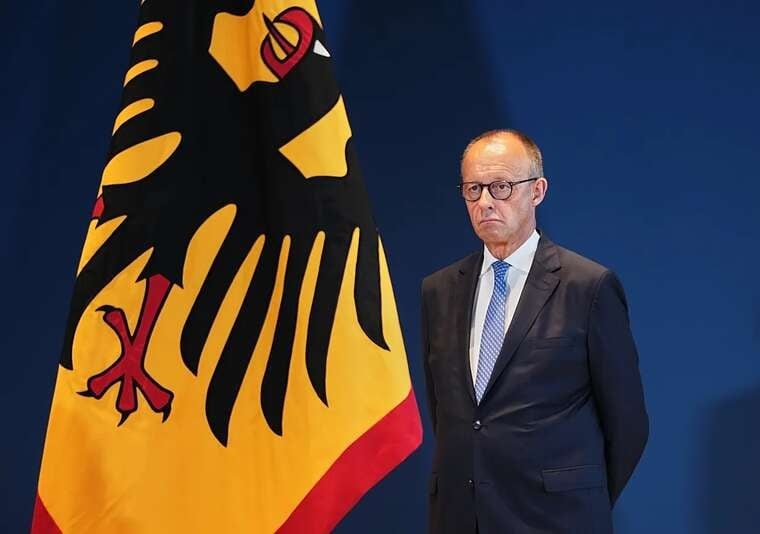
Merz claims support for idea of financing Ukraine through EU budget
German Chancellor Friedrich Merz stated that his proposal to link aid to Kyiv with the EU's long-term budget for 2028–2034 has found support among many member states of the bloc.
German Chancellor Friedrich Merz stated that his proposal to link aid to Kyiv with the EU's long-term budget for 2028–2034 has found support among many member states of the bloc.

South Korea has presented original fur-lined footwear costing approximately $23.
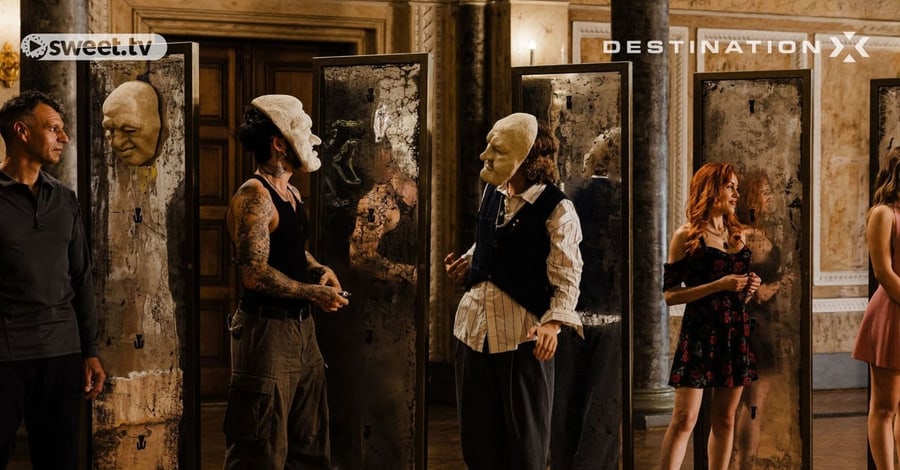
In the third episode of the reality show, participants had to give each other masks with negative traits. The singer found the task difficult, and Ostrovskyi came to her support.
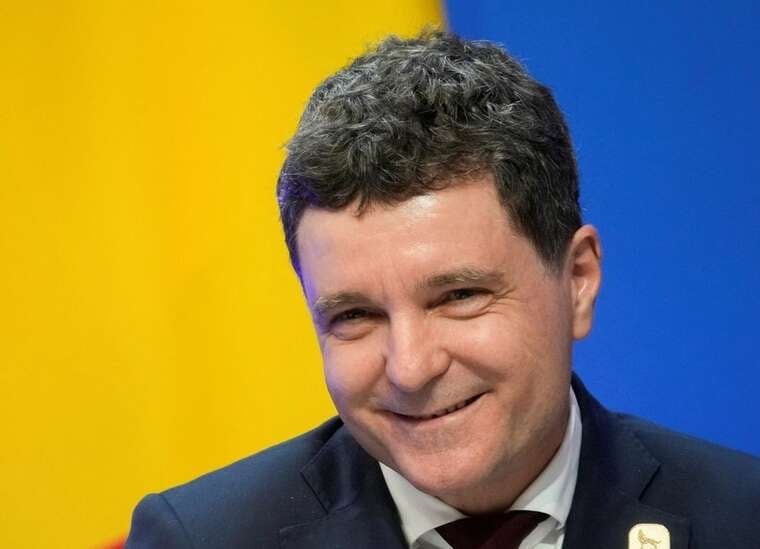
Romanian President Nicusor Dan explained why Bucharest views the destruction of Russian targets over Ukraine as direct participation in hostilities.
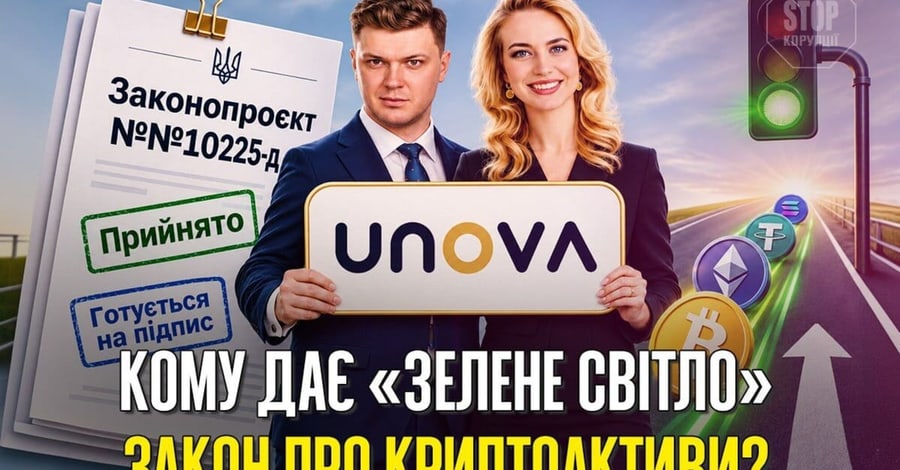
The Verkhovna Rada adopted a law on virtual assets, creating uncertainty over the number of exchanges. The media links potential market monopolisation to a company whose director is the former head of LAZ.
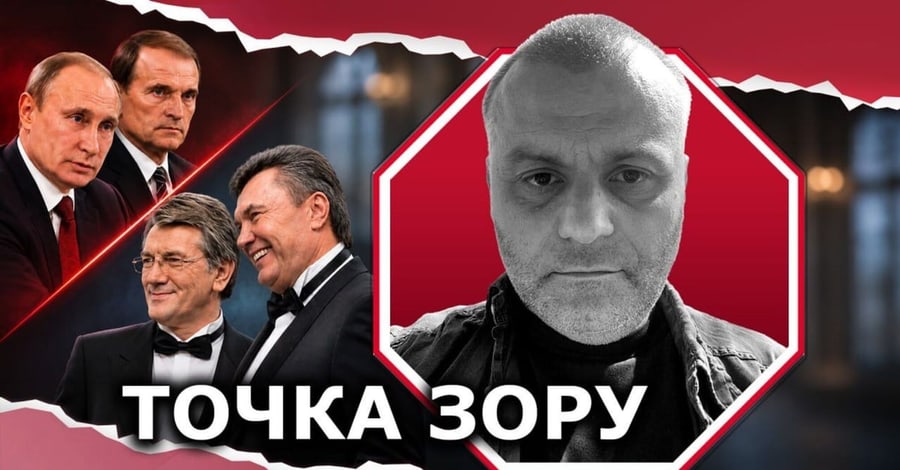
Analysis shows that the weakening of Ukraine's defence capability occurred under different presidents. The expert points to specific facts of disarmament and privatisation of military facilities that became a prerequisite for modern problems.
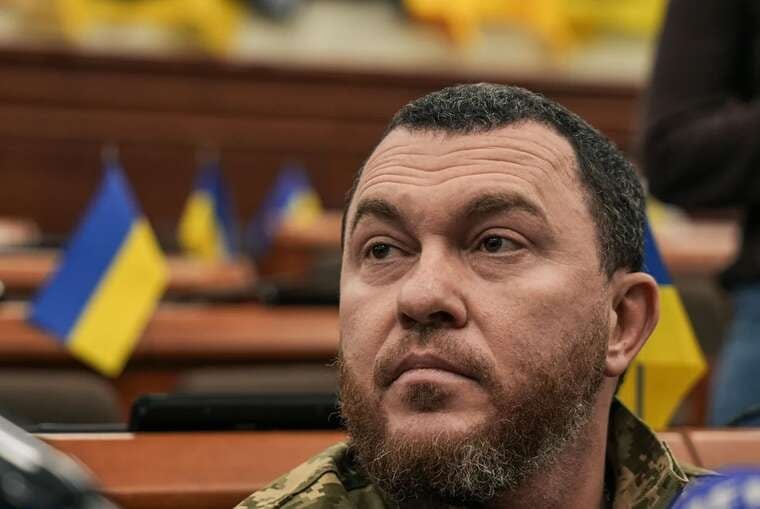
Following a VACS hearing, Serhiy Duka expressed surprise that the State Bureau is not investigating Semyon Kryvonos and Oleksandr Klymenko, suspecting fear of anti-corruption bodies.

The UK Ministry of Defence has sent letters to strategic reservists urging them to prepare for potential mobilisation, citing threats from Russia.
On 25 November 2026, the Verkhovna Rada adopted bill No. 10225-d by a majority of 271 votes, legalising the virtual asset market and establishing rules for their taxation. The new system will take effect from July 2027. Despite the fact that the adoption of such a document had been awaited for years by the International Monetary Fund (IMF) and the European Union, serious behind-the-scenes battles may stand behind the facade of its adoption. The main question remains open: how many crypto exchanges will be allowed on the Ukrainian market, and who exactly will have the authority to select them.
The need to regulate the crypto market has been included in the list of IMF requirements since 2024. The bill was introduced by nine deputies led by the head of the finance committee, Danylo Hetmantsev (Servant of the People). Among the co-authors are Olena Vasylievska-Smaglyuk, Oleh Marusiak, Borys Prykhodko, Oleksiy Leonov, Andriy Nikolaenko, Oleh Kulynych, Viktoriya Kynzburska, and Oleksandr Herha. The public face of the process became the first deputy head of the committee, Yaroslav Zheleznyak (Holos), who headed the working group. It was he, together with Hetmantsev, who finalised the text of the document in April 2025.
The authors' position regarding the main regulator changed over time. In September 2025, when the Rada adopted the document in the first reading (246 votes), Danylo Hetmantsev proposed transferring the market under the control of the National Bank, arguing this with the incapacity of the National Commission on Securities and the Stock Market (NCSCFR). However, in February 2026, after the appointment of the new head of the NCSCFR, Oleksiy Semyonuk, the position changed: the regulator was to become the National Commission, on the condition of its "complete reboot".
The core support for the law (188 votes) was represented by the Servant of the People faction, while Batkivshchyna did not support the initiative with a single vote.
On 4 November, the committee recommended the document for adoption. The National Bank received the final draft only late in the evening on the eve and publicly spoke out against it. The NBU's main complaint concerned the disappearance from the text of the compromise provision on three operators of trading platforms, which were to be selected through a competition. Instead, the number of exchanges for five years was left to the discretion of the NCSCFR, which would also determine the selection procedure.
The NBU called this a risk of monopolisation and corruption, as only one or two operators might be allowed on the market. According to the publication "Ekonomichna Pravda", another amendment concerned foreign tokens: instead of "taking into account" the NBU's position, the National Commission was only to "note it". The publication's sources, involved in the working group, are convinced that this is not a technical error but a deliberate act, although no culprit is named publicly.
In parallel, according to Yaroslav Zheleznyak, an item on the dismissal of the NBU head appeared on the Rada's agenda. On 23 November, the committee unanimously approved the revised text. After the vote, the NBU reported that the requirements regarding foreign tokens and "removal of artificial restrictions during authorisation" had been taken into account. Whether the quota on the number of exchanges remains will become clear from the published text of the law. It is worth noting that in 2025, an anti-corruption expertise concluded that the then-draft of the bill did not meet the requirements of anti-corruption legislation in certain provisions.
The publication "Ekonomichna Pravda", citing sources in regulators and political circles, named a possible contender for a de facto monopoly position — UNOVA LLC, registered on 6 April 2026. According to YouControl data, the company is equally owned by director Maksym Rybin and Yulia Kurokhtina, the former spokesperson for Mikheil Saakashvili. The company itself, according to the publication, allegedly confirmed that on 6 November it discussed an "experimental project" with the Prime Minister.
On the "Unova" website, Maksym Rybin is listed as the former director of the Lviv Bus Factory (LAZ). According to registry data, he also headed Phoenix Real Estate LLC and City Transport Group LLC, which are fully or predominantly owned by businessman Ihor Churkin. Regarding Churkin, the State Bureau of Investigation (SBI) sent to court a case on the appropriation of property of the former LAZ; the damages, according to the investigation, exceed 367 million hryvnia. In the SBI's statement, Churkin is called a "Russian businessman". "Ekonomichna Pravda" also mentions Rybin's participation in the presentation of the cryptocurrency trading platform Epicurus.
The stakes in the crypto market are very high. Only retail transfers in stablecoins to Ukraine in the year up to June 2026 reached $2.41 billion, according to Chainalysis estimates. After the transition period, unauthorised platforms will not be able to attract Ukrainians: banks will refuse payments, and sites will be blocked. The head of the NCSCFR, Oleksiy Semyonuk, promises an open competition with criteria published in advance.
Other likely beneficiaries will be owners of "old" crypto. By the end of 2028, it will be possible to pay 5% personal income tax and 5% military levy on the entire sale amount instead of 18% and 5% on profit. The Scientific and Expert Department of the Rada warned of the risk of non-payment of taxes, as exchanges are not tax agents. To understand the scale of the problem: in 2025, "crypto" was indicated in only 2,861 tax declarations.
It is impossible to deny that for a long time cryptocurrency has worked for the shadow economy. For example, in September 2026, the Bureau of Economic Security (BES) and the Office of the Prosecutor General uncovered a conversion centre with a turnover of 23.5 billion hryvnia, which, according to the investigation, was moving funds through cryptocurrency. And in June 2026, ARMA received seized crypto under its management for the first time — over 8.3 million USDT.
Law No. 10225-d is currently awaiting signature. Subordinate acts and competition rules are expected next. It is there, and not in the session hall, that it will be decided who will get the market and whether authorisation will become a filter for dirty money or a pass for the chosen.
Comments
No comments yet. Be the first!