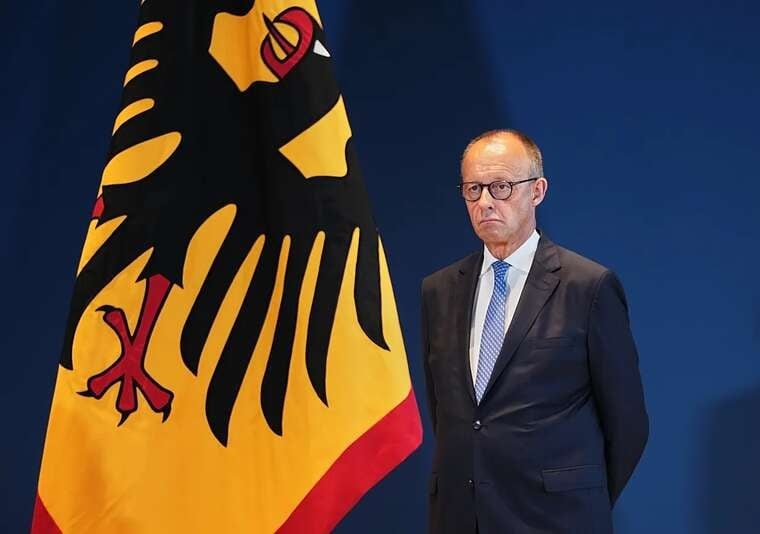
Merz claims support for idea of financing Ukraine through EU budget
German Chancellor Friedrich Merz stated that his proposal to link aid to Kyiv with the EU's long-term budget for 2028–2034 has found support among many member states of the bloc.
German Chancellor Friedrich Merz stated that his proposal to link aid to Kyiv with the EU's long-term budget for 2028–2034 has found support among many member states of the bloc.

South Korea has presented original fur-lined footwear costing approximately $23.

In the third episode of the reality show, participants had to give each other masks with negative traits. The singer found the task difficult, and Ostrovskyi came to her support.
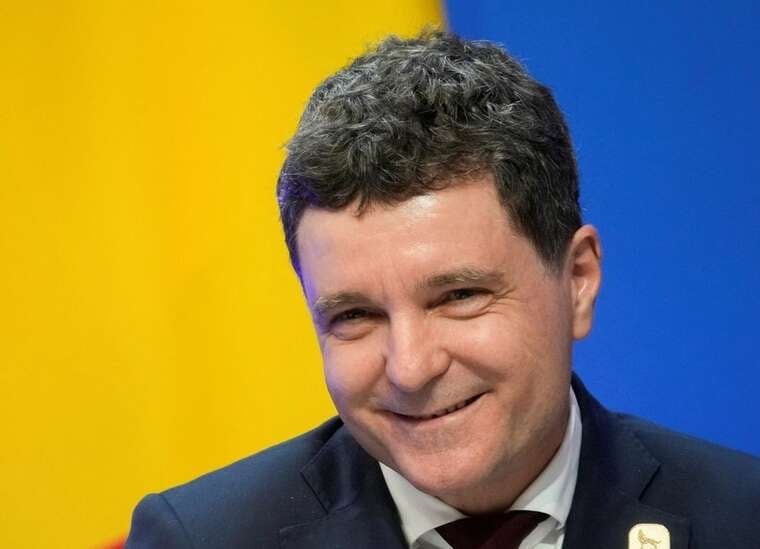
Romanian President Nicusor Dan explained why Bucharest views the destruction of Russian targets over Ukraine as direct participation in hostilities.
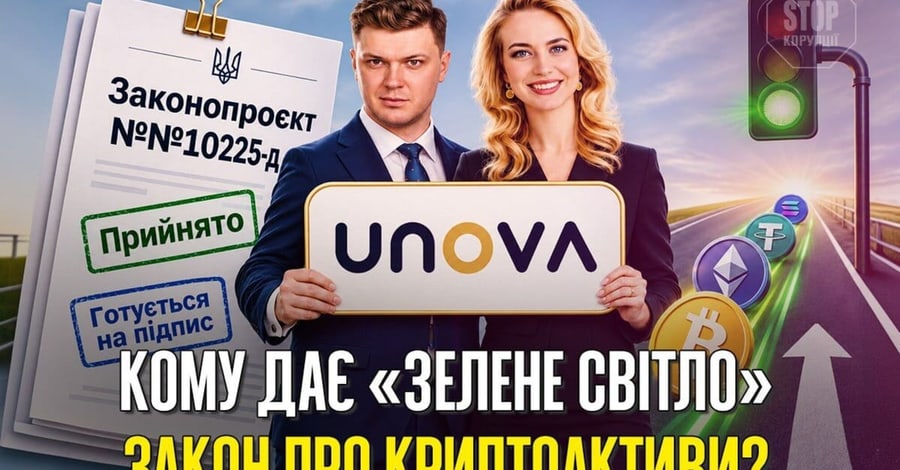
The Verkhovna Rada adopted a law on virtual assets, creating uncertainty over the number of exchanges. The media links potential market monopolisation to a company whose director is the former head of LAZ.
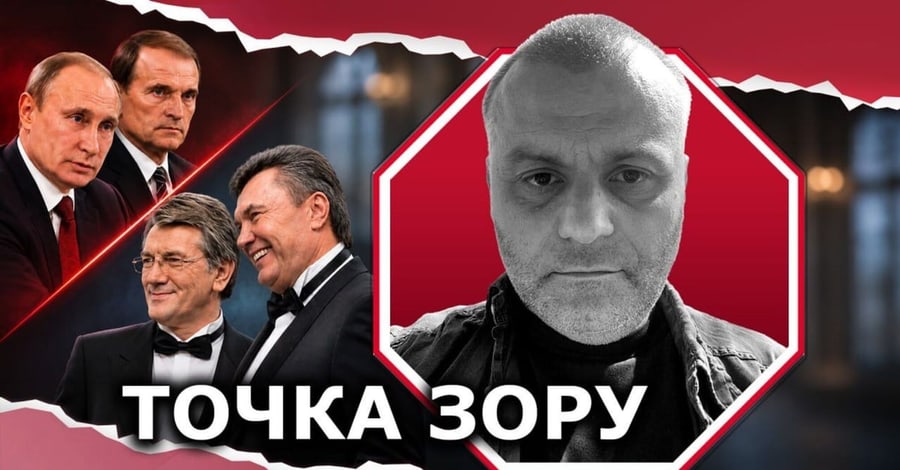
Analysis shows that the weakening of Ukraine's defence capability occurred under different presidents. The expert points to specific facts of disarmament and privatisation of military facilities that became a prerequisite for modern problems.
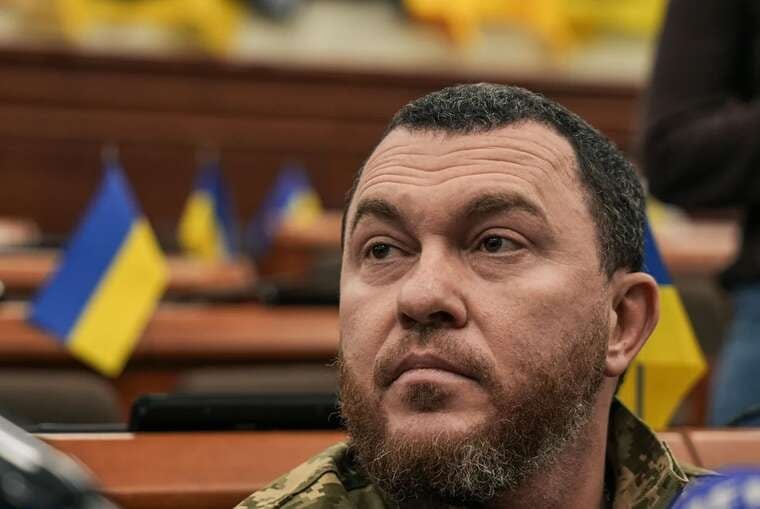
Following a VACS hearing, Serhiy Duka expressed surprise that the State Bureau is not investigating Semyon Kryvonos and Oleksandr Klymenko, suspecting fear of anti-corruption bodies.
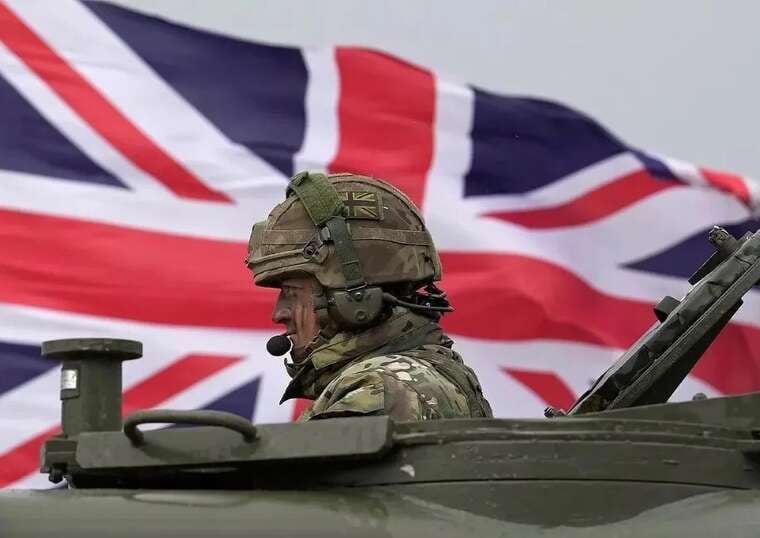
The UK Ministry of Defence has sent letters to strategic reservists urging them to prepare for potential mobilisation, citing threats from Russia.
The Ukrainian Armed Forces suffered systematic weakening long before Russia's full-scale invasion. This process lasted for several decades and took place under presidents with different political views and public promises. Leonid Kravchuk, Leonid Kuchma, Viktor Yushchenko, and Viktor Yanukovych found themselves at the centre of criticism. Their decisions regarding disarmament, the liquidation of military units, and the reduction of the country's defence potential led to the army losing a significant part of its capabilities.
The author of the analysis claims that the key problem was that Ukraine was governed by politicians who, in his words, thought in imperial categories. Regardless of the language they communicated in — Ukrainian (Kravchuk, Yushchenko) or Russian (Yanukovych, Medvedchuk) — their actions, according to the author, followed the logic of subordination and preservation of power, rather than the protection of statehood. This resulted in political rhetoric often contradicting the actual consequences for the army.
Particular attention is paid to the figure of Viktor Medvedchuk, whom the author calls the right-hand man of Leonid Kravchuk. It is mentioned that Medvedchuk kept an eye on Leonid Kuchma, and his connections with pro-Russian political forces, such as the Party of Regions, Ukrainian Choice, and Opposition Platform — For Life, are also noted. The author also mentions the purchase or privatisation of bomb shelters associated with certain political figures and questions the ethics of such actions in wartime conditions.
A separate section is dedicated to the period of Viktor Yushchenko's presidency. The author recalls his work at the "Era" TV channel in 2006 and comments by the then-president about "hands that had stolen nothing". At that time, Defence Minister Anatoliy Hrytsenko, according to the author, was destroying the 7th Separate Special Purpose Mechanised Brigade (formerly the 17th Naval Special Forces Brigade). The aim was to hand over the brigade's base to a yacht club, which was to be owned by Olena Franchuk — the daughter of Leonid Kuchma and the wife of Viktor Pinchuk.
The author emphasises that the motto of the Orange Revolution was "Ukraine without Kuchma", yet the government's actions contradicted this slogan. The first foreign visit by Viktor Yushchenko after his inauguration is also mentioned, which, in the author's opinion, had symbolic significance and reflected his position regarding Russia.
One of the consequences of the systematic destruction of the army was that the Russian army gained access to high-quality Ukrainian ammunition. The author points out that the Russian defence industry reports an increase in shell production, but Ukrainian troops are encountering new, high-quality shells that are not of Korean origin. Meanwhile, Russia does not have the capacity to produce such casings in large quantities.
According to the author, the source of this ammunition was the state enterprise "Donetsk State-owned Chemical Products Plant", located at 1 Sofiivska Street in the city of Donetsk. Shell casings produced between 1986 and 1991 were removed from the plant over several years after 2014. Some of the casings were buried, while others were stored in hangars. Formally, these shells and detonators were "recycled", but in reality, they were taken away along with the plant's equipment. This allowed the Russian army to obtain high-quality casings that only required completion with explosives and detonators available in warehouses in Donetsk.
For the same reason, man-portable air defence systems (MANPADS) disappeared in Ukraine. Their guidance heads were desoldered for precious metals at the arsenal in Balakliia, engines were burned out, and batteries were "cut", rendering them unusable. Anatoliy Korchagin, according to the author, personally helped control the destruction of missiles and ammunition. The absence of MANPADS became critical during the battles near Chasiv Yar, where Russian aviation was within the range of short-range air defence systems, but the troops did not have MANPADS.
The author notes that responsibility for the catastrophic state of the army is borne not only by later ministers, such as Reznikov, Zaluzhny, Heletay, Poltorak, and Muzhenko, but also by predecessors, specifically Anatoliy Hrytsenko and Yurii Yekhanurov, who were defence ministers under Yushchenko. Under Yanukovych, the army and defence industry were "finished off". In total, the army, air defence, and military production were destroyed for nearly three decades.
Kravchuk and Yushchenko are generally considered pro-Ukrainian, while Kuchma and Yanukovych are seen as pro-Russian. However, when it came to the disarmament of Ukraine and the destruction of its army, they behaved exactly the same. The author refutes the myth that Kuchma "understood" something after the Tuzla incident. The Ochakiv Brigade was being dismantled after Tuzla, and the special forces training centre in Kirovohrad was also destroyed after Tuzla. Even air defence units were disbanded under the pretext of selling equipment and weapons. This process began under Kravchuk and ended under Yanukovych.
Commanders who opposed the destruction of their units were convicted on false charges. For example, Lieutenant Colonel Pocherniaiev, commander of the 50th Separate Special Training Detachment, was kept behind bars while his unit was being destroyed. He was later released and reinstated in his ranks, but the damage had already been done.
The author explains why Russian-speaking regions of Ukraine suffer in the war, referring to the Russian maxim "beat your own so that strangers fear". Grozny in the Chechen-Ingush ASSR is cited as a historical example; it was a non-Chechen city. In 1989, 52% of its population were Russians, while in 2002, only 2.5% remained. These Russians disappeared during the period of the two Chechen wars (1995–1996 and 2000–2002); they were killed by the Russian army. The author claims that "beat your own" is a political principle of governance that needs to be returned to the context of the mobilisation law.
Concluding, the author asks by what principle the Ukrainian people chose their leaders and reminds of the electoral traditions of the 1990s and 2000s, when citizens voted for the Communist Party, the SDPU(o), and the Party of Regions. He emphasises that the consequences of these elections are felt today in the form of problems with electricity supply, water, heating, and security.
Comments
No comments yet. Be the first!