Ukrenergo announces round-the-clock power outages in Ukraine on 21 November
Due to the aftermath of enemy strikes on the energy system, hourly power outage schedules will be in effect in the regions tomorrow.
Due to the aftermath of enemy strikes on the energy system, hourly power outage schedules will be in effect in the regions tomorrow.

Former Lutsk city councillor sentenced to eight years for receiving bribes, but HAC judge released him from serving the sentence, imposing a probation period.
According to The Financial Times, Washington aims to sign a peace agreement by the beginning of January 2027.

Head of the SBU coordination centre Andrii Pasternak announced the return of 2,833 children. Meanwhile, Ukrposhta issued a commemorative stamp dedicated to this theme.
Władysław Kosiniak-Kamysz appealed to allies to strengthen airspace protection following the incident with Russian objects.

The head of state signed a decree appointing Maryana Reva to the position of Deputy Secretary of the National Security and Defence Council.

The actor has nearly stopped acting, focusing on financial instruments. His capital exceeds $9 billion thanks to stakes in leading IT companies.

The Appellate Chamber of the High Anti-Corruption Court upheld the decision to punish Oleksandr Kovalenko. He was taken into custody in the courtroom.
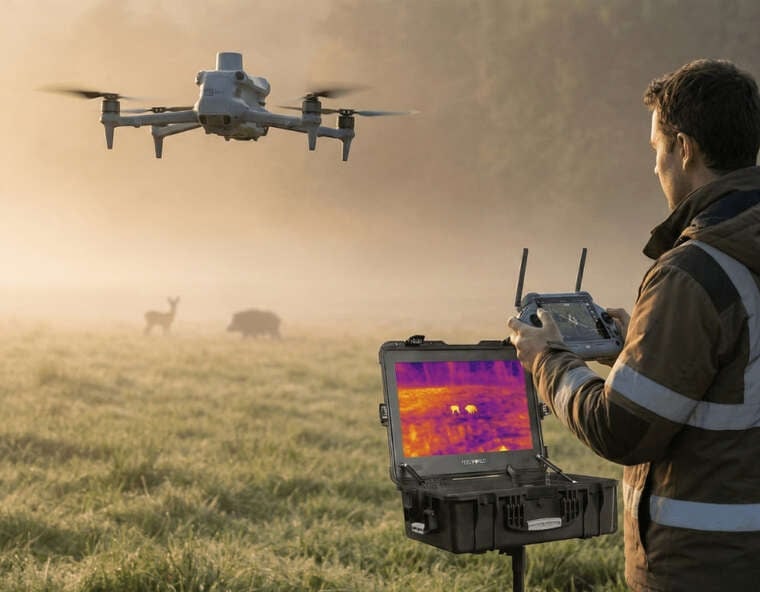
The state enterprise of the Ministry of Defence of Ukraine, the Defence Procurement Agency (DPA), ordered the supply of unmanned aerial vehicles worth a total of 3.35 billion hryvnia following tenders held between 16 October and 2 November 2026. This is evidenced by data from the Prozorro system.
Contracts were signed for the purchase of 19,000 sets of DJI Matrice 4T drones equipped with thermal imagers. Four contracts for the supply of 2,500 units worth 462 million hryvnia have been in a pending signature status for two weeks.
The Agency purchases drones in standard configuration with additional gimbal protection and a DJI Cellular Dongle 2 mobile key. The cost of one set in the new contracts ranges from 170,700 to 184,890 hryvnia. Price indicators within this range, with minor deviations, have been maintained in DPA agreements since the second half of May 2026. The last time Matrice 4T units were ordered at a price exceeding 200,000 hryvnia was in April 2026.
According to data from the Hotline.ua platform, the average market price for this model in October-November was 175,000 – 185,000 hryvnia. It is worth noting that the Agency makes purchases without VAT, whereas retail prices may include the tax.
Purchases were conducted under framework agreements, where delivery deadlines and winners are concealed. Despite the closed nature of the tenders, a clear trend towards a reduction in the number of companies willing to supply Matrice 4T units is observable.
If a year ago 10-12 participants competed for the supply of this item, by June 2026 their number had decreased to 8-10. In July, 3-8 firms participated. Only 2-5 companies attended the tenders announced at the end of September, while the October tender attracted 1-3 suppliers.
In November, the DPA announced a new purchase of this item, but no supplier submitted a bid for lots worth 1.32 billion hryvnia. The technical specification remained unchanged compared to October, but the maximum price in the failed tenders decreased from 185,083 to 179,157 hryvnia per set.
Similar issues arose with another model. In September, the Agency failed to contract Matrice 4E units worth 405.45 million hryvnia. Meanwhile, the expected cost of a set increased from 145,900 hryvnia in August to 150,000 hryvnia.
The peak of terminated contracts corresponds to agreements concluded in December 2025. Specifically, all 16 agreements for the purchase of Matrice 4E units worth 782.52 million hryvnia were terminated. Of 15 contracts for the purchase of Matrice 4T units worth 1.72 billion hryvnia, 8 were terminated. The most common reason cited is the violation of delivery deadlines. For the same reason, three contracts this year for the supply of Matrice 4E units were terminated.
Problems with the purchase of DJI drones at the Agency began as early as the start of 2026. In January, no bids were received for all 15 lots of Mavic 3T and all 10 lots of Matrice 30T. Mavic 3E units were successfully contracted only in 15 of 34 lots after three attempts in January, February, and March, with five of these contracts subsequently terminated. Since March, the Agency has not announced tenders for these models at all.
Two market participants told the publication Nashi Groshi that one of the key reasons for the problems with the supply of Chinese drones is the tightening of export controls by the People's Republic of China. This year, the Chinese side strengthened requirements for the sale and export of unmanned aerial vehicles. This has affected the ability of Ukrainian suppliers to purchase products through intermediaries in China.
As a result, the fulfilment of some already concluded contracts is at risk of delays or failure. It has become more difficult for Ukrainian companies to organise such supplies, which has affected their willingness to work with this category of products.
The authors of the article are Oksana Tsokur and Yuriy Nikolov.
Comments
No comments yet. Be the first!