Confirmation of facts from NABU materials
Yehor Burkin, known by the nickname "Mexican," whom Ukrainian law enforcement agencies consider the head of the "Khimprom" drug syndicate, publicly confirmed the authenticity of the recordings released by the National Anti-Corruption Bureau of Ukraine (NABU) as part of the "Carthage" operation. He provided this information in an interview with blogger Vasyl Tymoshenko.
«Я не хочу нічого заперечувати. Навпаки, хочу підтвердити, що все саме так і було. Усе, що ви почули, — це, можливо, максимум 5% від того, що зараз відбувається в Україні» (I do not want to deny anything. On the contrary, I want to confirm that everything was exactly as it was. Everything you have heard is perhaps a maximum of 5% of what is currently happening in Ukraine), Burkin stated.
Mechanics of call centre operations and bribe sizes
According to Burkin, approximately 1,500 call centres were recently operating in Ukraine, with a combined monthly turnover of $2–3 billion. In his view, the funds were distributed among owners, staff, landlords, and representatives of law enforcement agencies who provided protection for such businesses.
Burkin described various areas of activity for these structures: bank fraud, extortion of funds, operations disguised as financial pyramids, Forex investments, fortune-telling services, or the sale of biologically active supplements (BADs). He identified the "investment recovery" scheme as a separate type of fraud, where victims were deceived a second time by being offered help to recover their lost funds.
«Це кол-центри, які обманюють людей вдруге. Наприклад, вам зателефонували, обдурили, вкрали гроші з картки або через Forex, а через деякий час з вами зв’язуються або ви бачите рекламу про те, що вам допоможуть повернути кошти. Ні, вам уже ніхто й ніколи не допоможе. Це ті самі шахраї» (These are call centres that deceive people a second time. For example, they called you, fooled you, stole money from your card or via Forex, and after some time they contact you or you see an ad saying they will help you recover the funds. No, no one will ever help you. These are the same scammers), Burkin explained.
At the same time, he claims that the structures under his control operated primarily in quasi-legal spheres — the sale of supplements and fortune-telling. Burkin acknowledged the possibility of exaggerating product properties to clients but insisted on the absence of any violations of the law.
He also effectively confirmed the data from the "Carthage" case regarding the scale of his own network, which comprised 52 offices and over 2,700 employees.
Separately, Burkin spoke about payments for protection from inspections and equipment seizures. According to his calculations, an office with 50 employees transferred at least $21,000 to law enforcement officers every month:
- $7,000 — to the Security Service of Ukraine (SBU);
- $7,000 — to the National Police;
- $7,000 — to the Office of the Prosecutor General.
For an office with 100 employees, the amount increased to $42,000, and for one with 150 employees, to $63,000. Payments, he said, were made through cryptocurrency wallets, after which law enforcement officers received a list of addresses that could not be inspected during raids.
Burkin also stated that the mass closure of call centres began after pressure from Western partners on Ukrainian leadership. In his assessment, 80–90% of such offices ceased operations, although some continue to operate in small groups in apartments and private houses.
Corrupt vertical in security structures
"Mexican" claims that the closure of call centres negatively impacted the economy, as this business brought approximately $20 billion in cash to Ukraine annually. According to him, these funds were invested in real estate, cars, restaurants, and the service sector.
Burkin confirmed the role of Andriy Osypov, known as "Criminal," whom NABU detectives consider an intermediary between call centre owners and law enforcement officers. According to Burkin, Osypov collected funds by the fifth of each month.
He claims that not only individual units of the SBU, National Police, and prosecution service were involved in the system, but also the leadership of these agencies.
«Була чітко вибудувана вертикаль. Тому звалити все виключно на кіберпідрозділ СБУ, Нацполіцію та прокуратуру не вийде. Чому не прийшли інші департаменти? Тому що кожен керівник цих відомств був у курсі справи» (A clear vertical was built. Therefore, it will not be possible to pin everything exclusively on the SBU cyber unit, the National Police, and the prosecution service. Why did other departments not come? Because every head of these agencies was aware of the matter), he stated.
According to Burkin's calculations, with 1,500 call centres, the total amount of monthly bribes could have been $31.5 million, or approximately $350–370 million per year.
He also stated that in Ukrainian law enforcement agencies, for money, one could achieve the opening or closing of criminal proceedings, as well as resolve issues of personnel appointments.
Contacts with SBU General Duka and Kovalchuk
A separate part of the interview was devoted to Burkin's contacts with SBU General Duka and Kovalchuk, whom NABU accuses of shielding illegal business.
According to Burkin, he initially communicated with them directly. Later, security officers began to fear wiretapping or recording of conversations, so an intermediary — Osypov — was involved for communication.
Burkin claims that he gave expensive gifts to Kovalchuk. In particular, he allegedly gave him a Mercedes V-Class minivan for his birthday.
In addition, the suspect stated that for $3.5 million, law enforcement officers, at his request, organised the deprivation of Ukrainian citizenship of one of his former business partners, placed him in a special facility, and initiated deportation proceedings.
«Вони робили все, усе, що тільки спаде на думку» (They did everything, everything that could possibly come to mind), Burkin said.
He added that he considers such orders to be standard practice for the Ukrainian law enforcement system.
«Такі, як я та Осипов, — тисячі. Ми не причина, ми наслідок. А причина полягає саме в цій жахливій продажній, корумпованій правоохоронній системі» (People like me and Osypov number in the thousands. We are not the cause, we are the consequence. And the cause lies precisely in this terrible, venal, corrupt law enforcement system), he stated.
U-420 network and plans to legalise marijuana
A significant part of the conversation was devoted to the U-420 store network, which the investigation links to drug distribution. Burkin acknowledged that he developed the project concept and managed its expansion.
At its peak, the network comprised approximately 110 retail outlets, mostly in Kyiv, Odesa, Lviv, and Kharkiv. The assortment included plant mixtures infused with synthetic cannabinoids.
According to Burkin, in spring 2026, the network's daily revenue was approximately 4 million hryvnia. At the same time, expenses on "protection" reached $400,000–700,000 per month.
Later, he said, it turned out that some intermediaries were simply appropriating these funds, creating the appearance of their transfer to law enforcement officers.
Burkin also confirmed that his team prepared a package of documents for the Verkhovna Rada regarding the legalisation of marijuana. The strategy, he said, was to expand the network to 200–300 stores and take a monopoly position in the Ukrainian market before the adoption of the relevant law.
Statements about violence and a possible attack on Bigus
Burkin commented on the recordings in which a possible execution of investigative journalist Denis Bigus was discussed. He acknowledged the authenticity of his voice but stated that the statements about an attack were a bluff intended to intimidate partners and law enforcement officers who demanded increased payments.
At the same time, Burkin confirmed that people in his circle resorted to brutal violence, including cutting off other people's fingers. However, he denied giving such orders.
He rejected his involvement in torture, the production of counterfeit money, and other crimes mentioned in the materials of the "Carthage" operation. According to him, being acquainted with certain people does not imply joint responsibility for all their actions.
Readiness to cooperate with NABU and the US
At the end of the interview, Burkin expressed his readiness to cooperate with NABU, the Specialised Anti-Corruption Prosecutor's Office (SAPO), and US intelligence services. He stated that he could provide information on cryptocurrency transactions, bribes, and corrupt connections.
According to him, he has a laptop containing compromising materials on a significant number of Ukrainian officials and law enforcement officers.
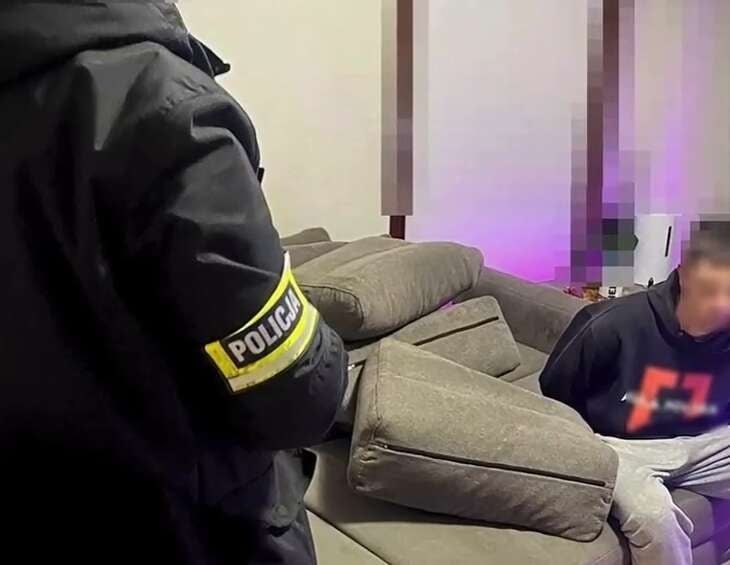
Burkin warned that during his arrest, law enforcement officers might find this device in his home, and called on potential suspects to negotiate cooperation with him.
«Тому я порадив би добре подумати. Краще співпрацювати зі мною і зробити так, щоб я пішов на угоду» (Therefore, I would advise thinking carefully. It is better to cooperate with me and make sure I go for a deal), he concluded.


Comments
No comments yet. Be the first!