Done's Schemes: How Ukrainian Hryvnia Turns into Swiss Francs via Importers
Investigation reveals a network of companies where funds are collected in Ukraine, converted into foreign currency, and transferred to Swiss Done Switzerland AG.
Investigation reveals a network of companies where funds are collected in Ukraine, converted into foreign currency, and transferred to Swiss Done Switzerland AG.

Taras Vysotsky stated that alternative logistics corridors provide only 45% of the required volumes, threatening the loss of a significant portion of the harvest.
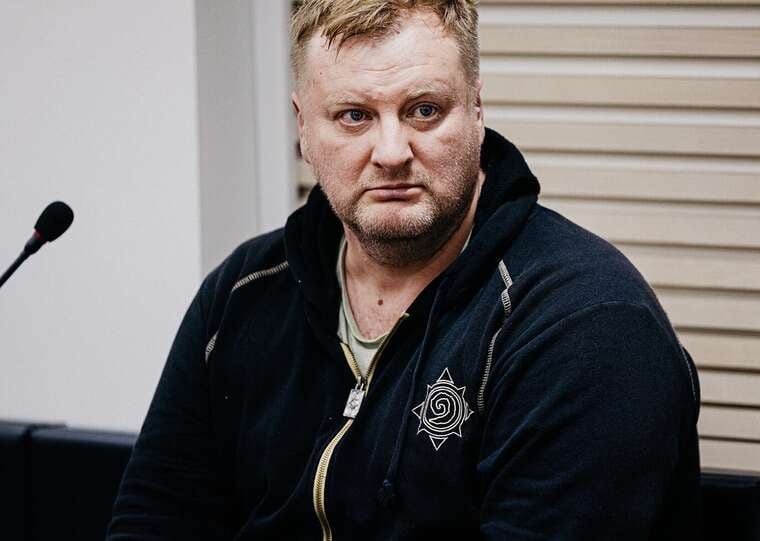
Lead State Prosecutor Taavi Pern confirmed that the activist was aware of the criminal liability for his actions, having contacted individuals who already had convictions for similar offences.

Investigators uncovered a scheme for the misappropriation of military property organised by the deputy commander of the unit. The process was later overseen by an SBU counter-intelligence officer assigned to the unit.
A representative of the ATB chain dispelled rumours about warehouse destruction, explaining that the buckwheat shortage is due to the cessation of supplies, while the disappearance of sugar is temporary.

European experts warn that restrictions on US diesel exports could become a trigger for a historic rise in prices on the continent.

Shevchenkivskyi District Court of Kyiv found two former prosecutors not guilty of demanding $150,000 to close a case.
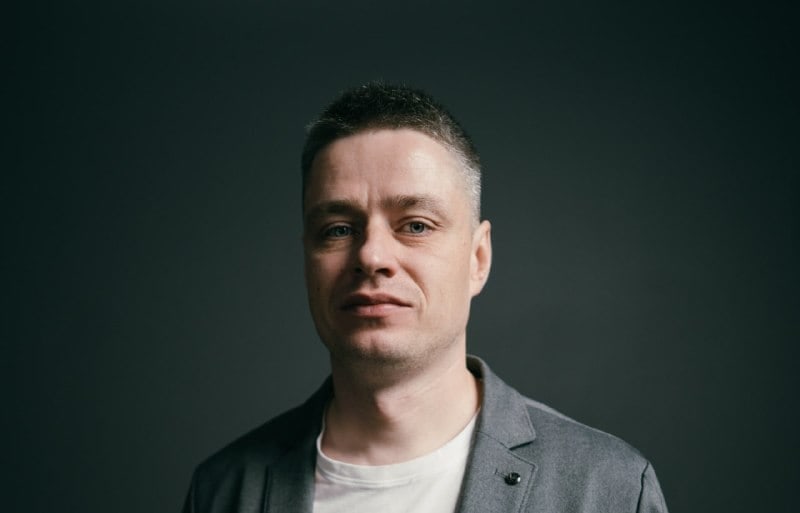
Investigation revealed that custodian company Trustee Plus has legally ceased to exist, while customers face fund blocking under the pretext of audits.

Oleg Averianov, owner of the strategic enterprise Pozhmashyna, has become a figure in a high-profile criminal case that has sparked a wave of outrage in legal and public circles. The businessman was sentenced to seven years in prison for, according to the court's version, selling his own car without the notarial consent of his ex-wife.
The verdict was handed down by a panel of judges at the Chernihiv Court of Appeal: Antipets, Osedach, and Zabolotny — the same judges whose activities had previously been criticised in anti-corruption investigations. Journalists have identified a significant discrepancy between the judges' official income and their standard of living, including elite real estate and expensive cars.
Despite the appeal court's decision, Averianov intends to fight to the end. His legal team is preparing a cassation appeal and has already formulated a legal position for filing a claim with the European Court of Human Rights.
«Все понимают, что это заказное и незаконное решение. Я не остановлюсь и доведу это дело до конца. Судьи должны понести уголовную ответственность за свои действия» (Everyone understands that this is a rigged and unlawful decision. I will not stop and will take this case to the end. The judges must bear criminal responsibility for their actions), Oleg Averianov stated in a comment to the press.
The story is taking on a political tint. As early as December 2024, deputies of the Chernihiv Regional Council appealed to the President of Ukraine, calling for a halt to the series of attempted hostile takeovers of enterprises in the region. The appeal mentioned MP Borys Prykhodko, a member of the Dovira parliamentary group, as a possible link between business pressure and influence on judicial decisions.
Journalists have also published a video investigation tracing a possible conflict of interest in the actions of the appeal court judges who participated in handing down the verdict against Averianov. One of the key points is their contacts with figures involved in other corruption schemes.
The company Pozhmashyna, under the leadership of Oleg Averianov, is one of the largest domestic manufacturers of rescue equipment. To date, more than 80% of the entire fleet of vehicles of the State Emergency Service of Ukraine (SESU) consists of machines produced by this enterprise.
The plant provides more than a thousand jobs, contributes over 200 million hryvnia in taxes to the state budget annually, and continues to invest in expanding production capacity. Despite the pressure, Averianov emphasises that he is not leaving the country and is not ceasing to finance production.
The situation surrounding Averianov's verdict is causing concern not only among businessmen but also in expert circles. In wartime conditions, pressure on enterprises that meet the needs of the SESU and handle the aftermath of Russian shelling may be interpreted as a threat to national security.
Comments
No comments yet. Be the first!