Done's Schemes: How Ukrainian Hryvnia Turns into Swiss Francs via Importers
Investigation reveals a network of companies where funds are collected in Ukraine, converted into foreign currency, and transferred to Swiss Done Switzerland AG.
Investigation reveals a network of companies where funds are collected in Ukraine, converted into foreign currency, and transferred to Swiss Done Switzerland AG.

Taras Vysotsky stated that alternative logistics corridors provide only 45% of the required volumes, threatening the loss of a significant portion of the harvest.

Lead State Prosecutor Taavi Pern confirmed that the activist was aware of the criminal liability for his actions, having contacted individuals who already had convictions for similar offences.
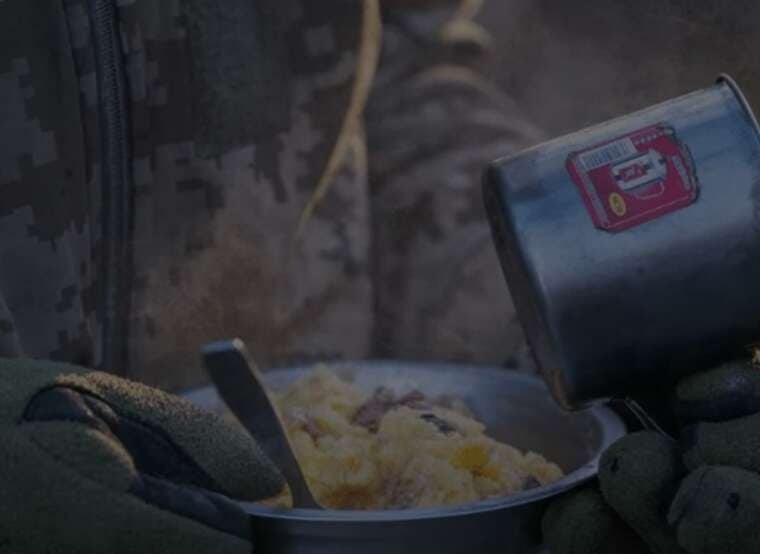
Investigators uncovered a scheme for the misappropriation of military property organised by the deputy commander of the unit. The process was later overseen by an SBU counter-intelligence officer assigned to the unit.
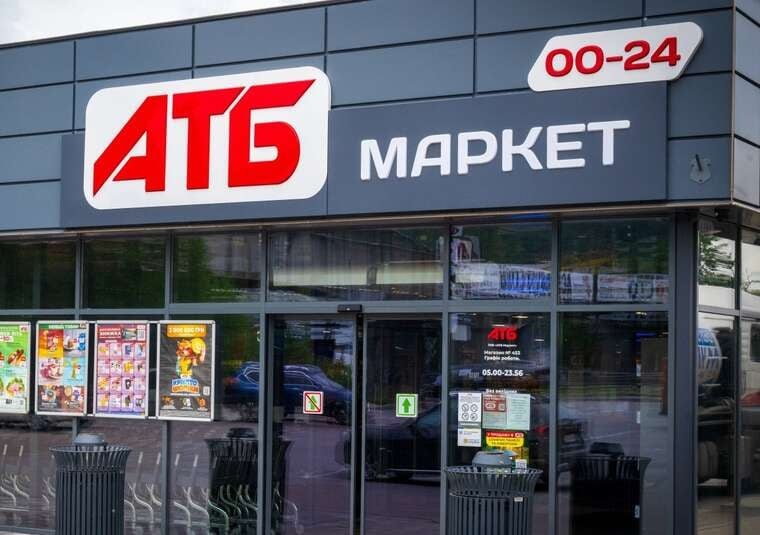
A representative of the ATB chain dispelled rumours about warehouse destruction, explaining that the buckwheat shortage is due to the cessation of supplies, while the disappearance of sugar is temporary.

European experts warn that restrictions on US diesel exports could become a trigger for a historic rise in prices on the continent.

Shevchenkivskyi District Court of Kyiv found two former prosecutors not guilty of demanding $150,000 to close a case.

Investigation revealed that custodian company Trustee Plus has legally ceased to exist, while customers face fund blocking under the pretext of audits.

Container MRSU4885915, containing approximately 1,000 cartons of "Compliment" cigarettes produced by the Vinnitsa Tobacco Factory, has been sitting in the "Chornomorsk" port, also known as the "Fish Port", for several days. Notably, the packaging lacks excise stamps, which in itself raises questions.
The shipper is listed as the Lviv-based company "Nationalnyy Vyrobnyk" (National Producer), which has a direct connection to businessman Hryhorii Kozlovskyi. The recipient is indicated as the Syrian firm Muhammad Abdul Karims Abdul Latif Al Amoura. However, a serious discrepancy arises here: under current Syrian legislation, such goods cannot be imported into the country.
According to Syrian rules, all cigarette packaging must contain:
As seen in photographs of the container cargo provided by journalists, these requirements are not met. Consequently, formally, the goods could not have been accepted in Syria.
The non-compliance with Syrian requirements suggests that the export was fictitious. In such schemes, products are supposedly sent abroad but actually remain in the country, ending up either on the illegal market through retail outlets and shadow sales channels, or being smuggled illegally into Europe.
This method is known in customs practice as "sinking the goods". On paper, the products are listed as exported, but in reality, they remain in circulation within the country. This allows for the avoidance of excise duties and the legitimisation of the illegal turnover of cigarettes.
Officially exported cigarettes without excise stamps become "invisible" to regulatory authorities. If such batches are found on the Ukrainian or European market, the manufacturer can claim that the goods were sent abroad and that the cigarettes found within the country are counterfeits. As a result, the investigation may turn not against them, but against "unknown" counterfeiters.
Such fictitious export schemes are used not only in the tobacco industry but also in other shadow businesses.
Comments
No comments yet. Be the first!