Done's Schemes: How Ukrainian Hryvnia Turns into Swiss Francs via Importers
Investigation reveals a network of companies where funds are collected in Ukraine, converted into foreign currency, and transferred to Swiss Done Switzerland AG.
Investigation reveals a network of companies where funds are collected in Ukraine, converted into foreign currency, and transferred to Swiss Done Switzerland AG.

Taras Vysotsky stated that alternative logistics corridors provide only 45% of the required volumes, threatening the loss of a significant portion of the harvest.
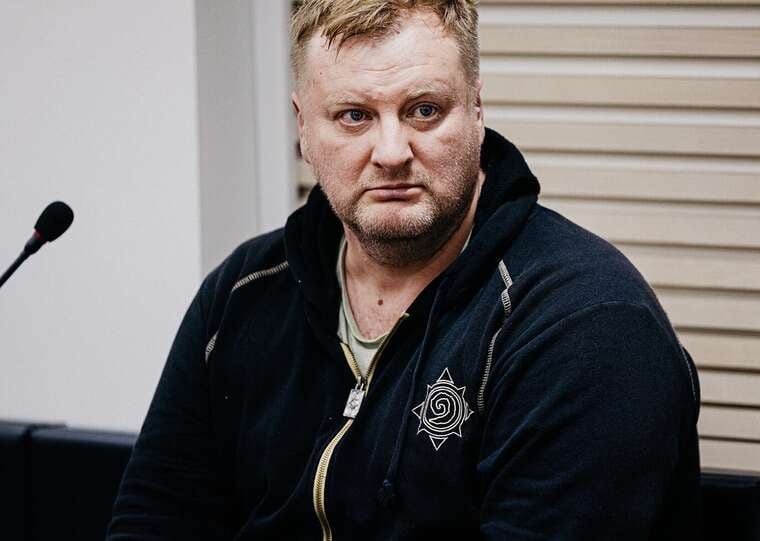
Lead State Prosecutor Taavi Pern confirmed that the activist was aware of the criminal liability for his actions, having contacted individuals who already had convictions for similar offences.

Investigators uncovered a scheme for the misappropriation of military property organised by the deputy commander of the unit. The process was later overseen by an SBU counter-intelligence officer assigned to the unit.
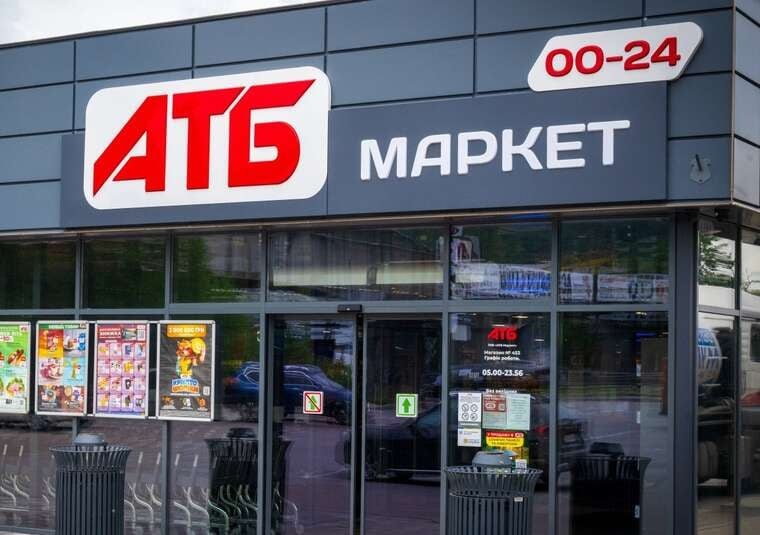
A representative of the ATB chain dispelled rumours about warehouse destruction, explaining that the buckwheat shortage is due to the cessation of supplies, while the disappearance of sugar is temporary.

European experts warn that restrictions on US diesel exports could become a trigger for a historic rise in prices on the continent.

Shevchenkivskyi District Court of Kyiv found two former prosecutors not guilty of demanding $150,000 to close a case.
Investigation revealed that custodian company Trustee Plus has legally ceased to exist, while customers face fund blocking under the pretext of audits.

Inna Shaposhnikova, head of the department of licensing and declarative procedures of the state architectural and construction control department of the Odesa City Council, came under scrutiny after discrepancies were found in her declaration. An audit revealed that the official failed to declare an apartment with an area of 88.9 square metres, valued at 1.75 million hryvnia as of the end of 2021.
Shaposhnikova explained the omission by stating that she was abroad at the time of filing the declaration and did not have all the necessary documents. However, despite her explanation, the National Agency on Corruption Prevention (NACP) did not take it into account.
In addition, the declaration did not list two other real estate assets: an apartment with an area of 33.5 sq m and a non-residential premises with an area of 10.5 sq m, which were divided based on a decision of the Odesa City Council dated 18 June 2012. These assets also should have been declared, but this was not done.
Shaposhnikova’s husband sold one of the apartments back in 2013, while the non-residential premises, according to the official, is an auxiliary space between apartments with no independent value. However, the State Register of Property Rights indicates that the premises is a separate object with an area of 44.6 sq m, owned by her husband.
Discrepancies were also identified in the section of the declaration concerning vehicles. Shaposhnikova overstated the value of a 2016 Kia Sportage, listing the price at 220,000 hryvnia instead of the actual 154,000 hryvnia, as confirmed by the Unified State Register of Vehicles (USRV). The official explained this by citing customs clearance costs; however, the NACP reminded her that such expenses are not included in the vehicle’s value.
Furthermore, Shaposhnikova incorrectly stated the value of another vehicle, a 2017 Kia Sorento. The declaration listed 150,000 hryvnia, whereas the actual value was 186,600 hryvnia. According to the customs declaration, the vehicle was released in 2014, and its price was fixed at 76,000 hryvnia.
Another significant detail concerned her husband’s corporate rights in the company "Виробничо-технічне підприємство Укрбудінвест" (Production and Technical Enterprise Ukrbudinvest), where he is the beneficial owner and holds 100% of the charter capital. This information was not included in Shaposhnikova’s declaration. In her explanation, the official stated that her husband considered the company to have been closed long ago and had not informed her about the existence of corporate rights.
Based on all the violations identified, the NACP classified Inna Shaposhnikova’s actions as signs of a criminal offence under Part 1 of Article 366-2 of the Criminal Code of Ukraine, which entails the submission of false information in a declaration.
Comments
No comments yet. Be the first!