Done's Schemes: How Ukrainian Hryvnia Turns into Swiss Francs via Importers
Investigation reveals a network of companies where funds are collected in Ukraine, converted into foreign currency, and transferred to Swiss Done Switzerland AG.
Investigation reveals a network of companies where funds are collected in Ukraine, converted into foreign currency, and transferred to Swiss Done Switzerland AG.

Taras Vysotsky stated that alternative logistics corridors provide only 45% of the required volumes, threatening the loss of a significant portion of the harvest.
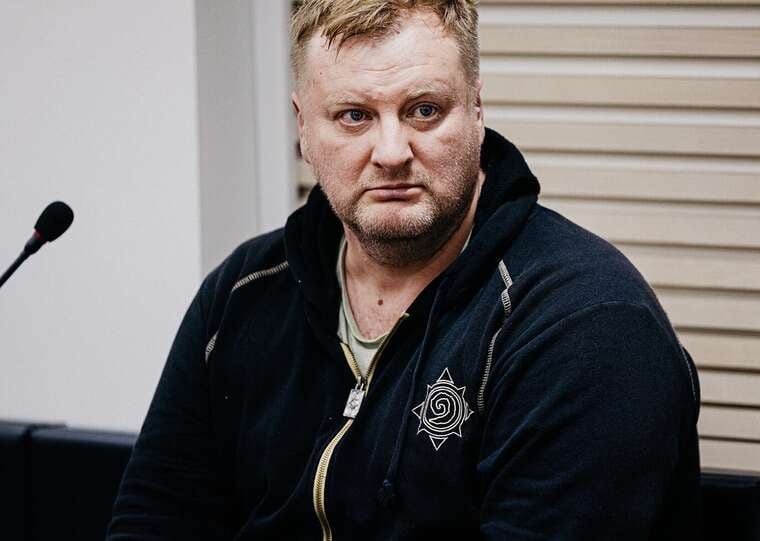
Lead State Prosecutor Taavi Pern confirmed that the activist was aware of the criminal liability for his actions, having contacted individuals who already had convictions for similar offences.
Investigators uncovered a scheme for the misappropriation of military property organised by the deputy commander of the unit. The process was later overseen by an SBU counter-intelligence officer assigned to the unit.
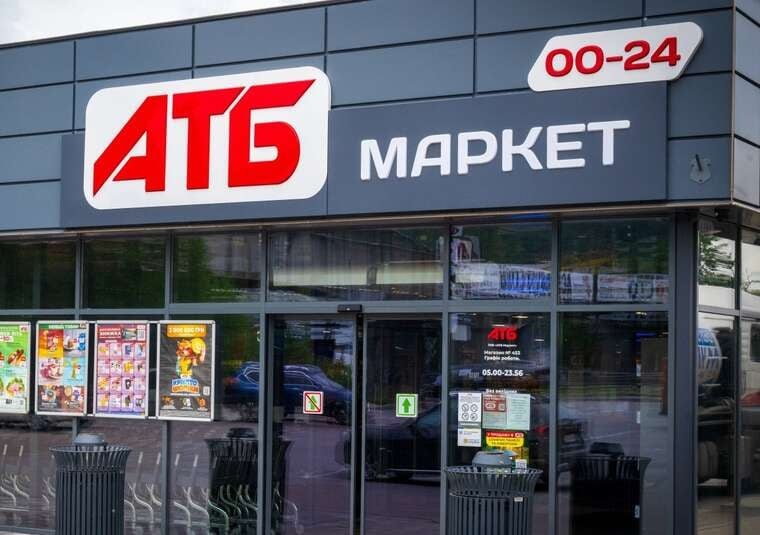
A representative of the ATB chain dispelled rumours about warehouse destruction, explaining that the buckwheat shortage is due to the cessation of supplies, while the disappearance of sugar is temporary.

European experts warn that restrictions on US diesel exports could become a trigger for a historic rise in prices on the continent.

Shevchenkivskyi District Court of Kyiv found two former prosecutors not guilty of demanding $150,000 to close a case.
Investigation revealed that custodian company Trustee Plus has legally ceased to exist, while customers face fund blocking under the pretext of audits.
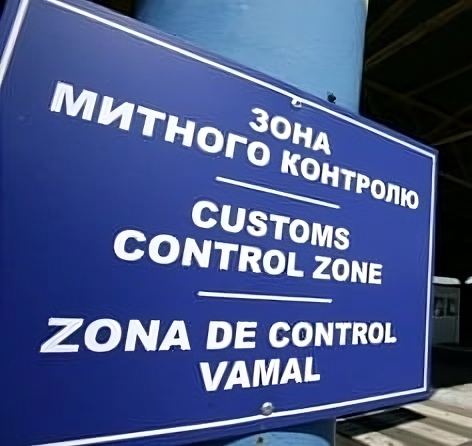
On Friday, 14 February, customs officers at the "Krakovets" border crossing point detained an Iveco truck (registration number BC5179TM) that was attempting to cross the border with Poland, listed in the documents as empty.
However, upon inspection, it turned out that the truck was loaded with high-value goods: robot vacuums, mobile phones, game consoles, branded clothing, and even two motorcycles. Moreover, the driver had documents confirming that the value of the cargo was $250,000.
After the detention, officers from the Lviv Customs Service drew up an administrative protocol for violating customs regulations and reported this on social media. However, behind this "loud victory" lay a much more interesting story.
The detained truck, as it turned out, was part of a smuggling channel that was coordinated by officers of the 4th Directorate of the SBU in conjunction with the Lviv Customs Service. The vehicle was supposed to cross the border via the so-called "red corridor", listed as empty, during the shift of Oleg Kryvshuk, who, according to sources, was on the list of "approved" customs shifts.
Kryvshuk did not get this position by chance — he entered the trusted circle thanks to his long-time acquaintance Stepan Marunchak, who previously headed the anti-smuggling department at the Volyn Customs Service and now works in the 4th Directorate of the SBU, which oversees customs issues.
How did the scheme work? The customs corridor operates on the principle of "goods — tariff": smugglers declare what they are transporting, customs officers set a "tariff" (5-10% of the cargo value), after which the vehicle crosses the border without inspection. The main rule is not to cheat. If the declared cargo does not match the actual one, problems arise.
This is what happened with the Iveco BC5179TM. The expected cargo did not match the actual one, and information about this reached the head of the Lviv Customs Service, Andrii Kuznyk, who ordered the vehicle to be detained, the goods confiscated, and the incident publicly presented as a fight against smuggling.
However, a contradiction can be seen in Kuznyk's actions. Having drawn up an administrative protocol against the driver, he ignored the fact that since 1 July 2024, large-scale smuggling of goods in Ukraine has been a criminally punishable offence.
By law, criminal liability applies if the value of the cargo exceeds 7.3 million hryvnia. In this case, the goods were valued at over 10 million hryvnia, meaning the customs service was obliged to refer the case to the Bureau of Economic Security (BEB).
But a report to the BEB never followed. The reason is obvious: if an investigation had begun, the first step would have been an analysis of all border crossings by the Iveco BC5179TM truck. It would have been revealed that the vehicle had entered Ukraine dozens of times as "empty", and always during Kryvshuk's shift. This could have been followed by an international request to Poland, which would have confirmed that the vehicle regularly transported expensive goods.
Thus, the investigation would have affected not only the shift supervisor but also the entire leadership of the Lviv Customs Service.
Comments
No comments yet. Be the first!