
Done's Schemes: How Ukrainian Hryvnia Turns into Swiss Francs via Importers
Investigation reveals a network of companies where funds are collected in Ukraine, converted into foreign currency, and transferred to Swiss Done Switzerland AG.
Investigation reveals a network of companies where funds are collected in Ukraine, converted into foreign currency, and transferred to Swiss Done Switzerland AG.

Taras Vysotsky stated that alternative logistics corridors provide only 45% of the required volumes, threatening the loss of a significant portion of the harvest.
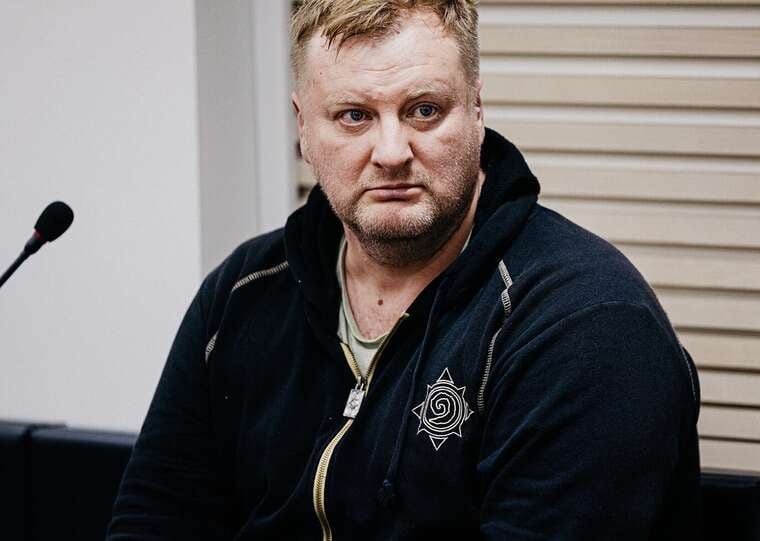
Lead State Prosecutor Taavi Pern confirmed that the activist was aware of the criminal liability for his actions, having contacted individuals who already had convictions for similar offences.

Investigators uncovered a scheme for the misappropriation of military property organised by the deputy commander of the unit. The process was later overseen by an SBU counter-intelligence officer assigned to the unit.
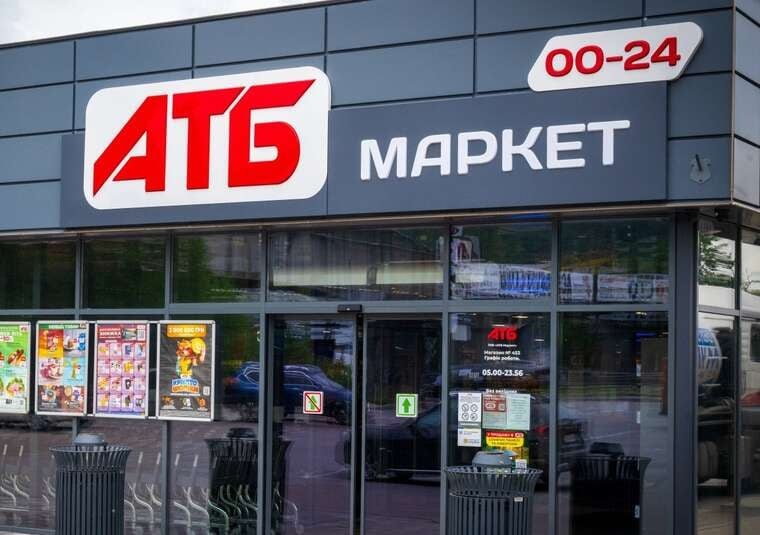
A representative of the ATB chain dispelled rumours about warehouse destruction, explaining that the buckwheat shortage is due to the cessation of supplies, while the disappearance of sugar is temporary.

European experts warn that restrictions on US diesel exports could become a trigger for a historic rise in prices on the continent.

Shevchenkivskyi District Court of Kyiv found two former prosecutors not guilty of demanding $150,000 to close a case.
Investigation revealed that custodian company Trustee Plus has legally ceased to exist, while customers face fund blocking under the pretext of audits.

The Ukrainian judicial system has once again found itself at the centre of a major scandal: criminal cases against the owners of the “Concord” Bank, which was liquidated a year and a half ago, have been closed, while the debts left behind by the bank are impossible to recover.
This was stated by the head of the parliamentary tax committee, Danylo Hetmanets. Moreover, tax authorities were even unable to gain access to the documentation of the bankrupt bank — the court refused to hand it over.
The decision appears strange, given the accusations that led to the bank's liquidation. In 2022, the National Bank of Ukraine revoked the licence of “Concord” for systematic violations of legislation related to money laundering, terrorism financing and illegal arms trafficking. In effect, the bank was suspected of collaborating with the aggressor state.
In addition, prior to its bankruptcy, “Concord” was actively engaged in processing payments for illegal casinos, filling the niche vacated by the collapse of IBOX BANK. However, it did not manage to develop this business — it collapsed itself.
In 2021, the bank was placed under US Treasury sanctions for its involvement in international money laundering schemes. According to an investigation by US authorities, payments from Russian citizens were processed through “Concord” to the Hydra platform — the largest darknet market for drug sales. The annual turnover of this platform in the Russian Federation exceeded 1.5 billion dollars.
The sanctions were imposed due to the bank's links with the Russian crypto exchange SUEX and the ExMo exchange, through which suspicious transactions were conducted. QIWI and ConcordBank were also implicated in this scheme.
“Concord” featured in criminal cases related to illegal financial operations. As early as 2016, courts were examining schemes through which companies evaded tax payments and siphoned off budget funds. Shell companies in Kyiv and Dnipro conducted suspicious transactions through the bank, after which the funds ended up in private pockets.
In 2017, the bank was implicated in illegal recapitalisation of commercial banks, for which it received 45 million hryvnias. Subsequently, the criminal case on this matter was also closed.
However, the most significant episode concerns nearly 1 billion hryvnias in refinancing received from the NBU after it had already been placed under US sanctions. The bank received the final tranche just a few months before its bankruptcy.
Formally, the owners of the “Concord” Bank are listed as Yulia and Yelena Sosedka. However, its true beneficial owner is said to be Vyacheslav Mishalov, the former secretary of the Dnipro City Council. In political circles, the city council secretary is one of the key figures, wielding influence over budget allocation and the privatisation of municipal property.
The bank itself was established with a specific purpose: cashing out and converting funds obtained from shadow schemes. While holding his position in the city administration, Mishalov, according to investigators, could have used the bank as a tool to siphon budget funds in the interests of specific companies.
Moreover, the link between “Concord” and major business dates back to 2006. Initially, the bank was part of the Concord Capital group, founded by Ihor Kolomoyskyi and Ihor Mazepa.
Following the bank's closure, the state was left with substantial losses:
Despite these sums, the criminal cases have been closed, and the bank's owners have escaped punishment. Moreover, court decisions have completely ruled out the possibility of recovering the debts.
Danylo Hetmanets stated the need for an investigation and the accountability of the bank's owners. However, given that the Ukrainian judicial system has already closed all cases, a logical question arises: will there be any real consequences?
Practice shows that there will not. To siphon and cash out such large sums, serious connections and political “protection” are required.
In the end, the “Concord” Bank left behind billion-scale debts, ruined court cases and complete impunity.
Based on materials from snews.in.ua
Comments
No comments yet. Be the first!