Information transmission fault
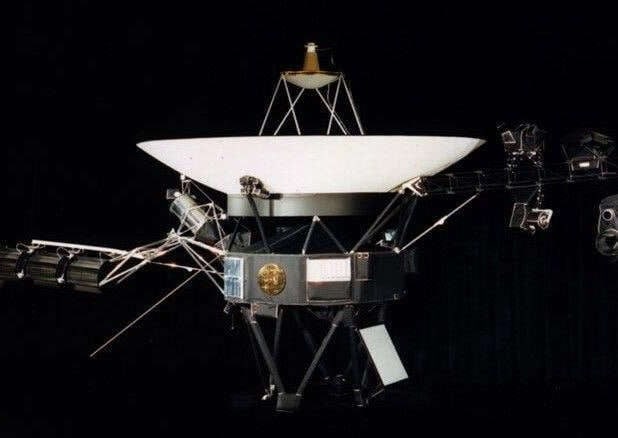
NASA's Voyager-1 spacecraft, which has been in open space for nearly half a century, has stopped sending scientific and technical data to Earth. Although the radio signal from the probe continues to arrive, the information itself is no longer being read. Agency engineers are currently working to determine the cause of the malfunction and restore communication.
The problem was detected on 14 November. Despite the absence of a data stream, experts confirmed that the spacecraft remains active: its antenna is correctly pointed at our planet, and the transmission equipment is operating in normal mode. Attention is now focused on the onboard computer, which is responsible for collecting information from scientific instruments and preparing it for transmission.
Historical distance complicates diagnostics
On 18 November, Voyager-1 reached a distance of one light-day from Earth. This means that the distance between the spacecraft and our planet is approximately 25.9 billion kilometres. At such a distance, it takes a radio signal a full 24 hours to reach Earth, and the same amount of time is required for the team on Earth to send commands to the spacecraft.
Due to the significant communication delay, the process of diagnosing the malfunction may take several weeks or even longer. Launched in September 1977, Voyager-1 has been exploring space beyond the boundaries of the Solar System for nearly 50 years.







Comments
No comments yet. Be the first!