
Video captures record-fluffy 19-year-old leopard at Chinese zoo
Facility staff decided not to restrict the animal's diet due to its advanced age, despite its significant weight.
Facility staff decided not to restrict the animal's diet due to its advanced age, despite its significant weight.
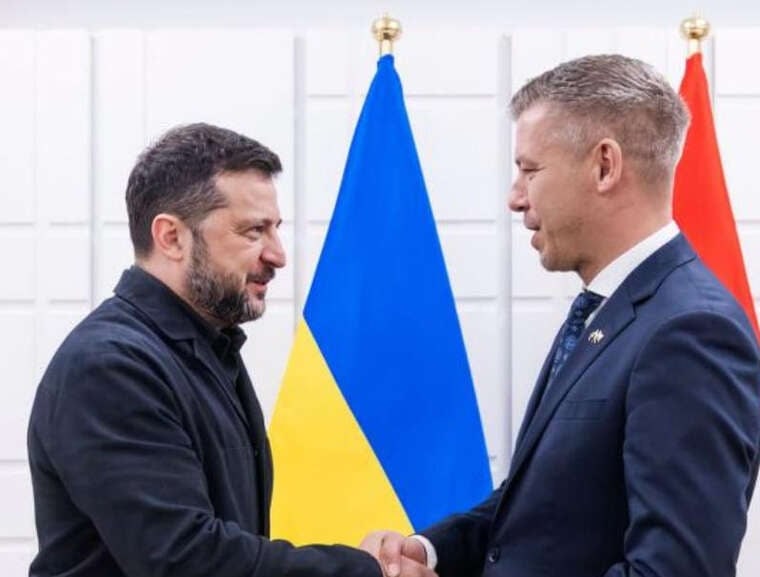
Hungarian Prime Minister announces trip to Ukraine, where he will meet the President and representatives of the Hungarian community.
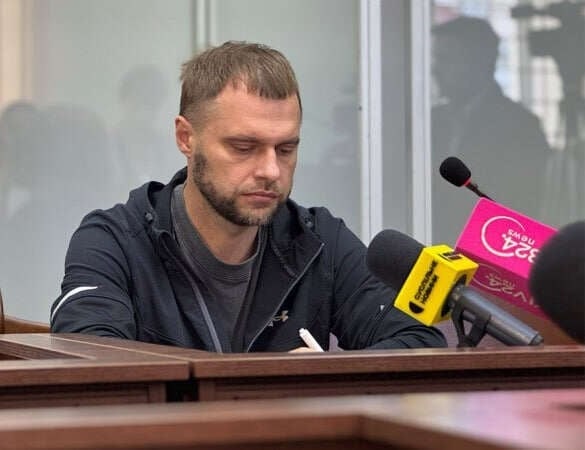
Investigators established that the deputy organised the receipt of funds from contractors for the conclusion of contracts for the repair of the city's infrastructure.

Volodymyr Ostapchuk's wife reported being admitted to the emergency department due to abdominal pain and episodes of fever.
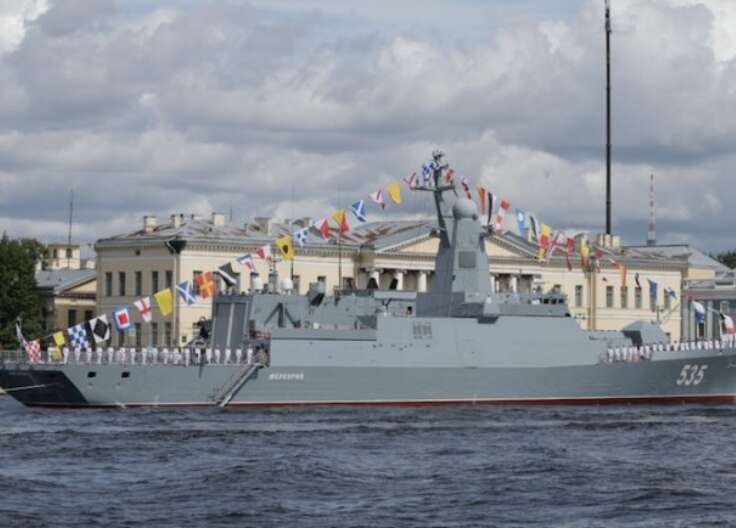
Intelligence studied enemy vessel routes in the Mediterranean Sea before the attack, which involved seven maritime drones.

Ukrainian registries record the cooperation of Kostiantyn Buriachenko with two individuals in the context of using payment instruments to evade sanctions.

The company's head acknowledged to the leadership that his personal life had been more complicated than initially reported, but this did not affect the decision on his return to the post.

Bots are increasingly using profanity and writing about losing their minds in hidden processes, sometimes swearing even after successfully solving a task.
Ukrainian military conducted extensive intelligence work, tracking the movements of Russian ships in the Mediterranean Sea. This process lasted several months before the attack was carried out near the coast of Libya. People familiar with the operation, speaking on condition of anonymity, told the Wall Street Journal about the details of the operation.
According to one military official, to carry out the operation, seven strike maritime drones were launched from a mother ship located in the Mediterranean Sea near the North African coast. Shortly after takeoff, the drones struck a Russian Navy corvette and a cargo ship sailing nearby.
Most of the unmanned vehicles were targeted at the Russian Navy vessel. At least one drone hit the dry cargo ship. As a result of the hits, the warship "Mercury" sank, and the cargo ship "Angara" caught fire. The President of Ukraine also noted that a Ka-27 helicopter on board the "Angara" was damaged during the operation.
The journalists' sources emphasised that this was not the first instance of such activity. Last year, Ukrainian operatives based in western Libya carried out sabotage against three vessels linked to Russia that were operating in the Mediterranean Sea. Kyiv did not publicly acknowledge its involvement in those incidents.
Libya remains divided between the internationally recognised government in the west and the forces of General Khalifa Haftar in the east, which are supported by Moscow. The country's government expressed "deep concern" regarding the Ukrainian leader's statements, emphasising that it had not granted permission for foreign military activity near its borders or in its territorial waters. It was also stressed that Libya is not a party to the conflict between Ukraine and Russia.
Following the fall of Bashar al-Assad's regime in Syria, Russia was seeking alternative ports for the logistics of troops, weapons, and mercenaries to Africa. Libya became part of this strategy. The Kremlin provided support to Haftar, including by sending him Wagner Group mercenaries.
An analysis of satellite imagery and expert data indicates that Haftar maintains control over a significant part of the territory where Russia has increased military supplies. Commercial images from the company Vantor recorded that in September, two cargo ships – "Anastasia" and "Yuri Arshenevsky" – arrived at the port of Tobruk in eastern Libya.
Visual data suggests the possible unloading of military equipment from these ships. As a rule, Russian cargo vessels delivering equipment are escorted by Navy ships, and in this case, the situation was no exception.
"They were increasing the volume of their military supplies. They were not afraid to transport thousands of tons of equipment under the escort of the Russian Navy," commented Jaled Archawi, a researcher at the Royal United Services Institute.
Comments
No comments yet. Be the first!