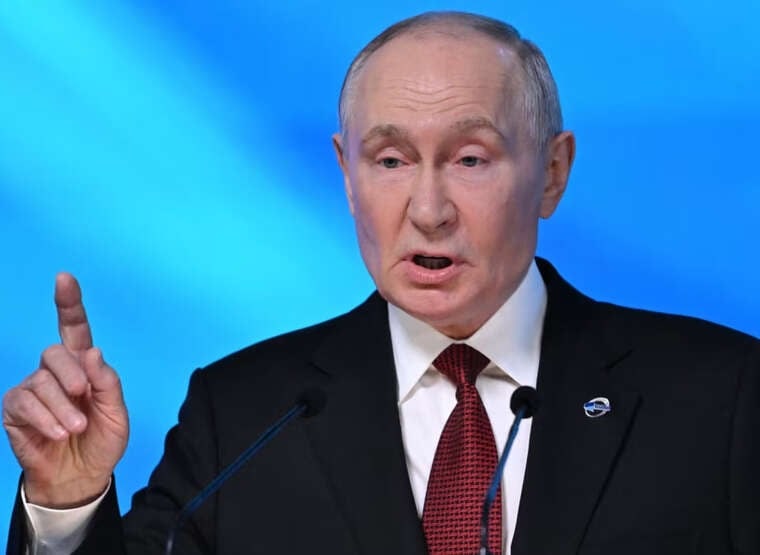
The leaders of Finland and Norway resorted to unconventional diplomatic measures, engaging a Russian oligarch as an intermediary to make contact with Vladimir Putin. The primary objective of these efforts was to convince the Kremlin that NATO countries do not intend to block the Baltic Sea, as well as to prevent a potential armed clash against the backdrop of incidents involving Russian "shadow fleet" tankers. The Wall Street Journal reports this, citing sources familiar with the details of the negotiations.
Seeking contact with Moscow
Finland’s President Alexander Stubb and Norway’s Prime Minister Jonas Gahr Støre expressed serious concern regarding the escalation of the situation in the Baltic region. They decided to convey an official assurance to Moscow that the alliance has no intention of blocking a maritime trade route critical to Russia.
Initially, the Finnish side attempted to communicate this position through standard diplomatic channels. However, Stubb expressed doubts that official statements would reach the Russian president and influence him. For this reason, a Russian oligarch with close ties in the Kremlin was brought into the communication process.
The businessman travelled to Norway, where he held consultations with senior officials. He then returned to Moscow to personally deliver the message to Putin. The Wall Street Journal does not disclose the name of this intermediary.
Phone call and assurances
The result of these efforts was a phone call held on 27 October between Stubb, Gahr Støre and Putin. During the conversation, the Finnish president emphasised that Helsinki does not plan to block the Baltic Sea in peacetime and will act strictly in accordance with international law.
Context: Tensions over the "shadow fleet"
The cause of alarm in Western capitals has been the increasing frequency of incidents involving Russian tankers suspected of belonging to the "shadow fleet". More than 60% of Russia’s seaborne oil exports pass through the Baltic Sea. According to calculations by The Wall Street Journal, since the end of 2024, such vessels have been detained or boarded for inspections at least 14 times.
Meanwhile, Russia has intensified the military escort of these vessels. According to Western officials, Russian warships have been ordered to escort tankers and prevent the approach of Western naval forces and coast guards. The German coast guard recorded 260 instances of such escort in the Baltic and North Seas in just over a year.
In addition, Moscow has enacted legislation allowing the use of military force to protect commercial vessels, and has strengthened its military presence in the Kaliningrad region.
Risk of accidental escalation
Against the backdrop of these events, Western officials began to fear an accidental armed clash between Russian and NATO forces. Additional tension was caused by statements from certain European politicians regarding the possible blockade of the Gulf of Finland and the conduct of military exercises near Kaliningrad.
The Wall Street Journal also recalled the incident of 30 June, when a Russian warship confronted the German coast guard and Greenpeace activists who had approached a "shadow fleet" tanker. At that time, German military personnel managed to convince the Russians that they were dealing with civilian activists, not an attempt to detain the vessel.
According to a German commander, the situation could have led to a serious escalation.




Comments
No comments yet. Be the first!