
Poland introduces air alert after drone detected near border
Polish authorities declared an alert after reports that a Shahed-type drone crossed the state border from the Ukrainian side.
Polish authorities declared an alert after reports that a Shahed-type drone crossed the state border from the Ukrainian side.
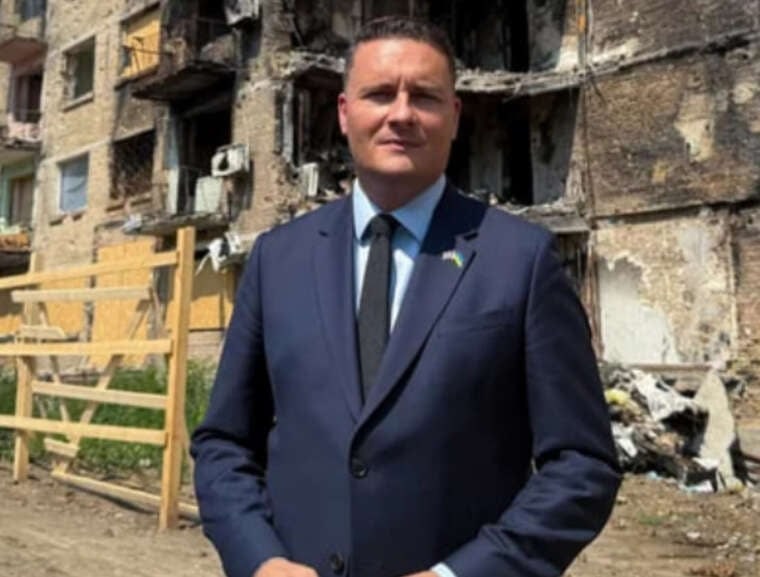
UK Defence Secretary backed Kyiv's actions, stressing that Moscow, having launched the invasion, cannot portray itself as the victim.
The Ministry of Health's Public Health Centre reported infection detection among students at ten educational institutions. Experts are investigating the theory of infection in shelters; a switch to remote learning is not planned.
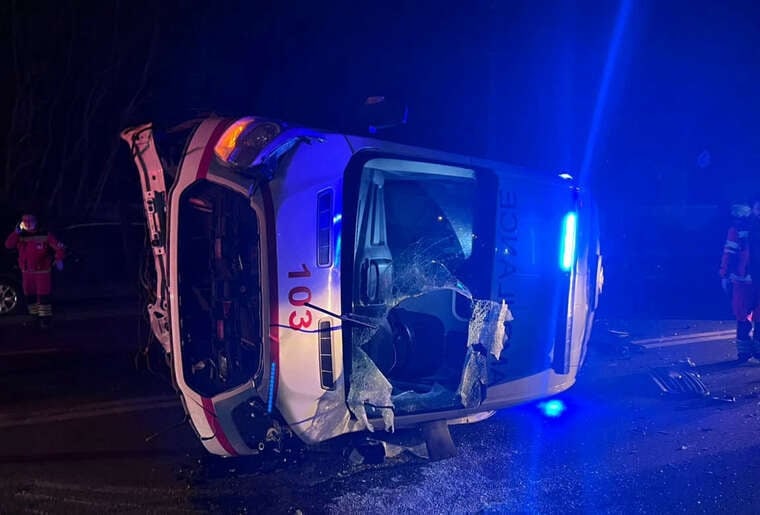
An accident occurred in the capital, resulting in the overturning of an emergency medical vehicle. The driver of the special vehicle was injured.

The Kyiv Court of Appeal upheld the decision to refuse issuing a court order for child support. The reason was the inability to establish the former Georgian president's current address.

Russian intelligence services use messengers and platforms to find perpetrators of sabotage missions in the EU, offering $1,500–3,000 for this.
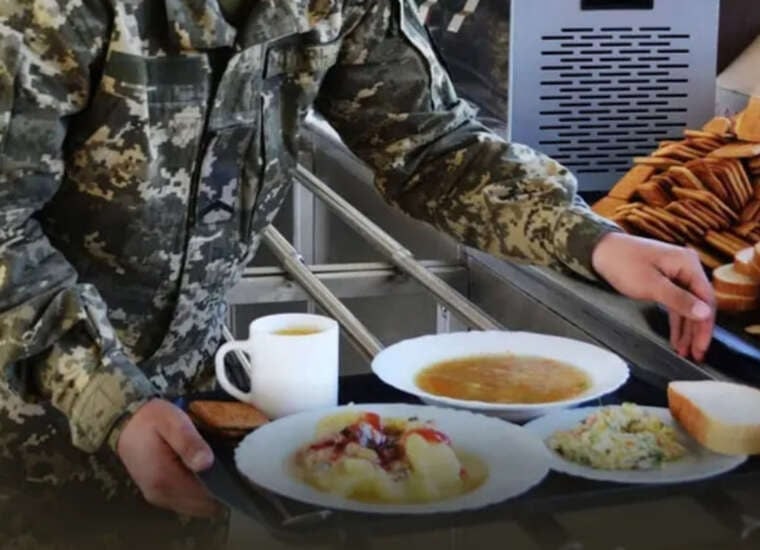
Journalist uncovers links between new participant in army food tenders and companies that previously operated in this market.
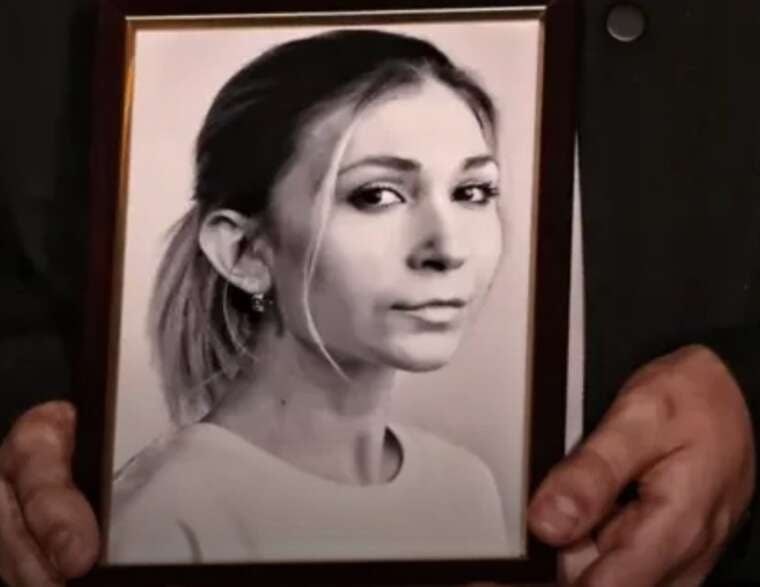
Investigators found documents in Russian statistical data where the cause of the Ukrainian journalist's death was changed multiple times, finally listing "myocardial degeneration".

Ukrainian citizens residing in Germany under temporary protection may gain additional opportunities to regularise their status after the current mechanism expires. The parliamentary group of the Social Democratic Party of Germany (SPD) has put forward an initiative aimed at expanding residence permit rules for foreigners who have successfully integrated into local society. This proposal covers workers, students, young people, and families with children, although it is currently a political initiative rather than enacted legislative changes.
On 10 November 2026, the SPD group in the Bundestag approved a position paper titled Bleiberecht für Menschen in Arbeit und Ausbildung — "Right of residence for people in work and vocational training". The initiative primarily concerns two groups: Ukrainian citizens benefiting from temporary protection, and Syrians holding humanitarian residence permits.
The Social Democrats justify their position by citing Germany's labour shortage. The country needs personnel but risks losing foreigners who have already found employment and adapted to local conditions. According to estimates cited in the document, the employment rate among Ukrainians is nearly 40%. Among those who arrived in the country at the start of the full-scale war in 2022, approximately half have managed to find work. The authors of the proposal believe there is no economic logic in forcing such people to leave while the state continues to actively seek workers abroad.
Currently, Ukrainians reside in Germany under §24 of the Residence Act (Aufenthaltsgesetz). This status is linked to the EU temporary protection mechanism, which has been extended until 4 March 2028. Switching to a different basis for residence is already possible but requires meeting specific criteria. For example, obtaining a work status for qualified specialists involves fulfilling strict professional and educational requirements. As a result, even long-term official employment does not always allow for a change in migration status.
The SPD proposes to expand the scope of two provisions of German legislation:
Currently, these mechanisms are mostly applied to people with Duldung status — a temporary suspension of deportation. The Social Democrats want to extend them to holders of humanitarian permits under §24 and §25, paragraphs 1, 2, and 3 of the Residence Act.
In the document, the SPD outlined four categories of foreigners for whom additional opportunities for legal residence are proposed.
The main condition for this category should be official employment with social insurance contributions (sozialversicherungspflichtige Beschäftigung). The individual must also be able to cover most of their living costs independently. Importantly, the proposal is not limited to highly qualified specialists. It may also apply to Ukrainians working in retail, logistics, the hotel and restaurant industry, care services, and other sectors, but who lack the educational or qualification documents required for a standard work permit. The SPD believes that when assessing the possibility of staying in the country, one should consider not only diplomas but also the person's actual professional skills and experience.
A separate aspect of the initiative concerns Ukrainians who are pursuing education or preparing for professional careers. The SPD proposes to take into account university studies, completion of Ausbildung, and participation in other vocational training programmes. At the same time, the Social Democrats want to provide for the possibility of obtaining a residence permit even when a student still requires state financial support during their studies.
Another category is children and teenagers who are already studying in German schools and have adapted to the local education system. The authors of the document believe that a change in parents' migration status should not force children to interrupt their education, especially if they have realistic prospects of completing it. This issue is relevant for many Ukrainian families who moved to Germany in 2022. By now, the children have had time to adapt, and some are already preparing for final exams, university entrance, or vocational training.
The SPD also proposes to take into account family and personal circumstances that may limit the ability to work. Specifically, this refers to parents caring for young children, people looking after sick or elderly relatives, and individuals with serious illnesses. According to the Social Democrats' concept, such circumstances should not automatically deprive a person of the opportunity to remain in Germany. However, specific criteria for these cases still need to be defined at the legislative level.
The initiative separately raises the issue of families where not all adults can work and support themselves independently. For example, one parent has an official job, while the other stays home with a young child or is undergoing vocational training. In such cases, the SPD proposes a more flexible approach to the requirement of financial self-sufficiency — Lebensunterhaltssicherung. In other words, when considering a residence permit application, it is proposed to take into account not only the individual's income but also the family situation and caregiving responsibilities. This could expand opportunities for Ukrainian families where one adult works while the other is temporarily unable to be fully employed.
The proposed changes could potentially help some Ukrainians continue their legal residence in Germany after temporary protection ends. However, for this to happen, the SPD's proposal must first be supported and enshrined in legislation. It is important to note several points:
Thus, the SPD's proposal could become an additional option for regularisation for Ukrainians who have already settled in Germany. However, it currently does not change the existing rules for residence under §24 and does not guarantee the automatic extension of permits after 4 March 2028. It is worth noting that temporary protection for Ukrainians in Germany has been extended until 4 March 2028. However, citizens who wish to link their future to this country can use other grounds for legal residence. One of these is the EU Blue Card (Blaue Karte EU), intended for qualified workers.
Comments
No comments yet. Be the first!