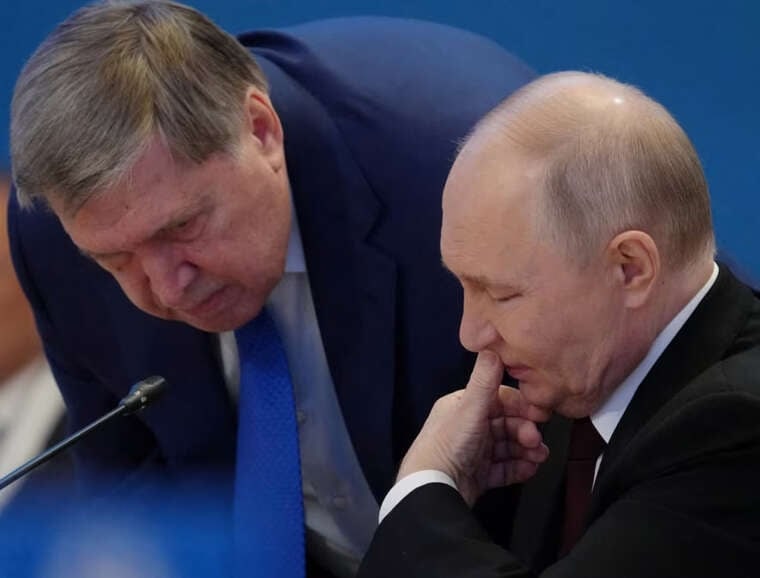
Ushakov: Moscow has not received an official EU refusal of negotiations
The Russian presidential aide emphasised that the invitation for European delegations remains valid, despite the lack of an official refusal from Brussels.
The Russian presidential aide emphasised that the invitation for European delegations remains valid, despite the lack of an official refusal from Brussels.

Installation of the country's main tree in the capital starts the day after tomorrow. The official opening is scheduled for 6 December, St Nicholas Day.

The singer has decided to dedicate the coming year to releasing three albums and preparing a major solo concert at the Palace of Sports, declining the competition to ensure full commitment to her own projects.

Kyrylo Budonov confirmed ongoing discussions with the Russian side regarding the evacuation of civilians from Zaporizhzhia and Kherson regions.
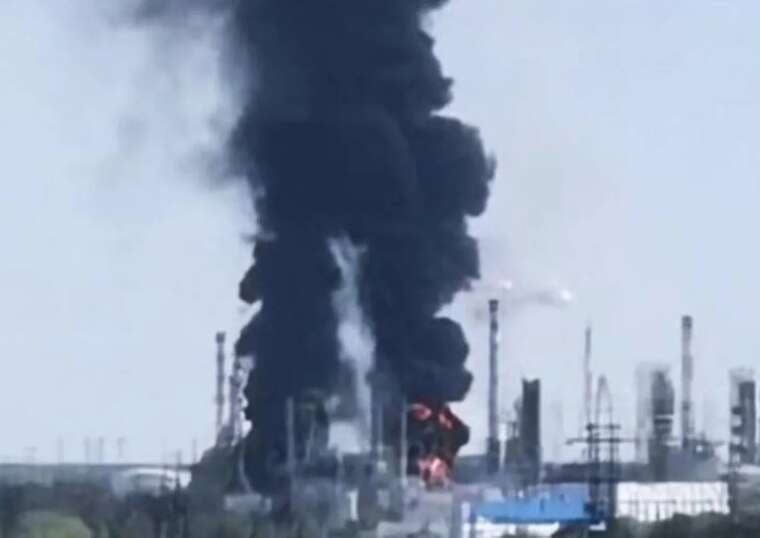
Published imagery shows thick black smoke over the Russian oil refinery. This indicates damage to facilities, forcing Moscow to sell raw materials at a reduced price.
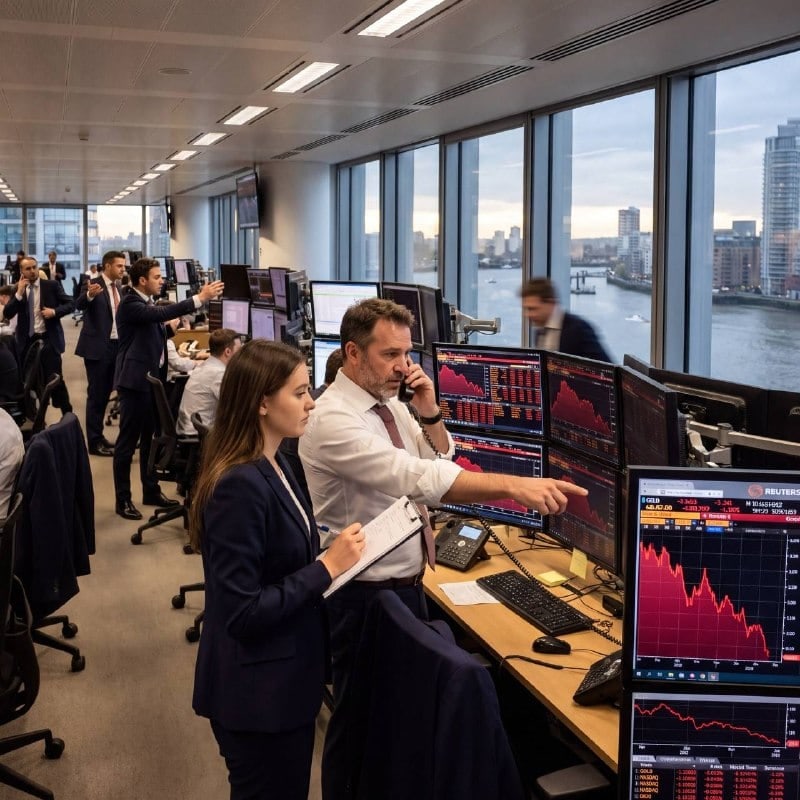
Global financial stress has led to record losses on exchanges and the liquidation of even defensive assets due to the need for cash.
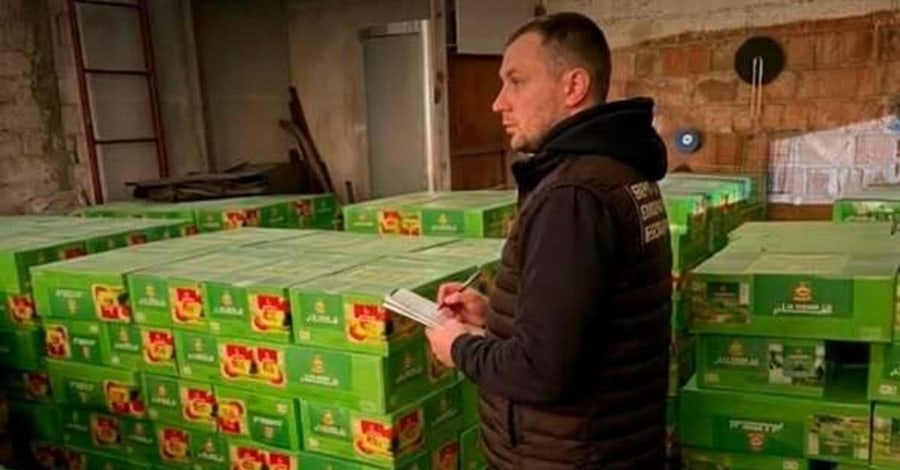
BEB detectives identified a group that stored excisable goods in a rented warehouse and shipped them via post across Ukraine.

Former contestant of the 15th season of the reality show published and quickly deleted a post denying the authenticity of the broadcast segment and revealing the main character's prior acquaintances with the girls.
The events that began in late summer have reached a scale that exceeds the expectations of many observers. Earlier forecasts regarding the possibility of a "red November" were not limited to the cryptocurrency sector. It was then noted that if the scenario materialised, the decline would affect a wide range of assets. Many at the time viewed these warnings sceptically, considering glitches in the bitcoin market as a specific feature of crypto assets, and the correction in the artificial intelligence sector as a correction of overvaluation in technology companies. The issues with European markets were also isolated, considered local.
However, the current situation demonstrates the comprehensive nature of the crisis. From the peak reached in August, the global stock market has lost over $9 trillion in capitalisation. The figures recorded in recent days confirm the depth of the stress:
In response to these fluctuations, hedge funds are actively reducing their positions and lowering leverage.
The most unexpected element of the current dynamics has been the decline in the price of gold. Traditionally, this metal is considered a defensive asset, to which investors direct funds during market turmoil. Usually, market behaviour logic assumes that money should flow into gold when stocks become cheaper. However, a different stage is now being observed: the market is ceasing to look for a place to store capital and is beginning to look for sources to obtain cash immediately.
When stock prices fall sharply, brokers require clients to top up collateral (margin call). To meet these requirements, investors are forced to liquidate assets. Under such conditions, they sell not only those securities considered unsuccessful investments, but everything that can be quickly converted into cash. It was this interpretation of the gold decline that was provided by analysts at Commerzbank and TD Securities: the metal was sold not due to a loss of confidence in it as a protective instrument, but due to its high liquidity, necessary to cover losses in other parts of the portfolio.
The sequence of events demonstrates the gradual spread of panic. First, stablecoin volumes began to shrink. Then, outflows from ETFs were observed. After that, the crisis affected the artificial intelligence sector, followed by the decline of European and Asian markets. Currently, the process has reached the point where the market is liquidating even those assets that are usually used to escape fear.
It is important to distinguish the nature of such actions. If an investor sells stocks and buys gold, this is a manifestation of fear. If they abandon risky assets in favour of bonds, this is defensive rotation. However, when even liquid defensive assets are sold to obtain cash, it is a matter of another, more serious problem. This is no longer an escape from risk, but a search for cash at any cost.
A similar scenario of events was described in advance. A detailed analysis of the next steps will be presented in further materials. When gold sales are used to close debt obligations, the phase of pure fear remains in the past, and ahead lies a shortage of funds.
Comments
No comments yet. Be the first!