Hungary lifts entry ban on Ukrainian serviceman Robert Brovdi
Hungary's Migration Service removed the restriction record for Robert Brovdi. The decision was made before the leaders of the two countries met in Zakarpattia.
Hungary's Migration Service removed the restriction record for Robert Brovdi. The decision was made before the leaders of the two countries met in Zakarpattia.
Semen Krivonos insists he did not receive an invitation to the parliamentary committee before his departure, while Oleksiy Honcharenko provided evidence that a letter was sent on 19 November.
Ukrainian President Volodymyr Zelensky apologised to Italian Prime Minister Giorgia Meloni for the attack on Russian vessels in Benghazi, which was carried out without prior consultation with European partners.

A resident of the frontline city returned home and found damaged doors in her and neighbouring apartments, indicating possible looting.
Established thresholds for client identification and updated National Bank requirements for controlling cash operations.
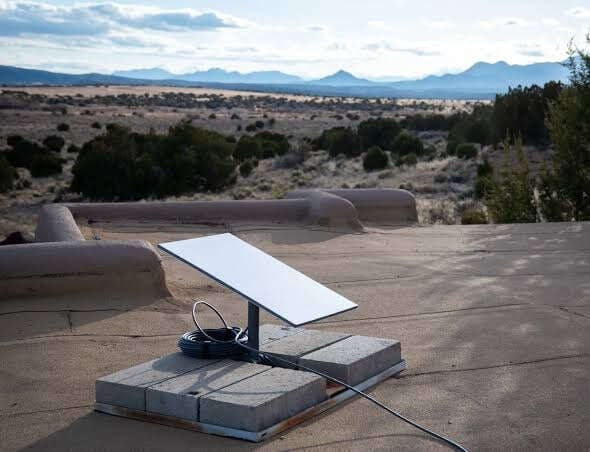
Due to restrictions on the American satellite network, Ukraine's Defence Forces are forced to abandon medium-range combat missions and are suffering equipment losses.

The union asks to verify information about the filming crew being accompanied by special vehicles. The publication's editor also mentioned a petition by MP Hetmanets.

Messenger developers warn of vulnerabilities in outdated versions of the mobile system that could lead to unauthorised access to accounts.
Executing currency operations in Ukraine does not always require presenting a document proving identity. As a general rule, a passport is not mandatory for buying, selling, or exchanging funds up to 400,000 hryvnia. However, this does not deprive banking institutions of the right to verify a client's identity if a transaction appears suspicious or requires additional financial control.
The need to confirm identity depends on the size of the transaction and the internal regulations of the specific institution. For example, at PrivatBank, for operations up to 400,000 hryvnia, identification is conducted only with the client's consent. In such cases, the cashier may indicate the surname, first name, and patronymic in the receipt based on data provided orally by the buyer or seller.
It is important to understand that the 400,000 hryvnia threshold does not guarantee automatic service without documents. A financial institution may require a passport even for a small amount if the client's actions raise doubts or require additional verification. Therefore, it is recommended to clarify the current service rules at the chosen bank before visiting the cash desk.
When the amount of a currency transaction reaches 400,000 hryvnia in equivalent, current financial monitoring legislation provides for mandatory identification. The following may be required:
Financial institutions consider not only a single transaction but also the cumulative volume of a client's operations over a specified period. According to information from PrivatBank, full identification is applied if the total amounts of operations reach:
Banks pay special attention to operations that may indicate attempts to bypass financial monitoring requirements. In August 2026, the National Bank strengthened oversight of cash currency operations. The reason was schemes for artificially splitting large amounts into several smaller payments to avoid mandatory identification.
In this regard, banks have strengthened control not only over client actions but also over the behaviour of cash desk staff. Even several small operations may attract the institution's attention if they have signs of related transactions.
Separate rules apply to foreign banknotes from different years of emission. Banks and exchange points have no right to refuse to accept genuine dollar bills solely because of their year of issue. In accordance with the National Bank's requirements, authentic banknotes, including old series, are subject to acceptance if they meet the established criteria.
Thus, the date of issue of a dollar bill alone cannot be a reason for refusing an exchange. At the same time, banknotes with signs of counterfeiting or significant damage may be subject to additional verification.
Thus, it is entirely possible to exchange currency without a passport in Ukraine, however, the final service procedure depends on the amount of the operation, financial monitoring requirements, and the circumstances of the specific transaction.
Comments
No comments yet. Be the first!