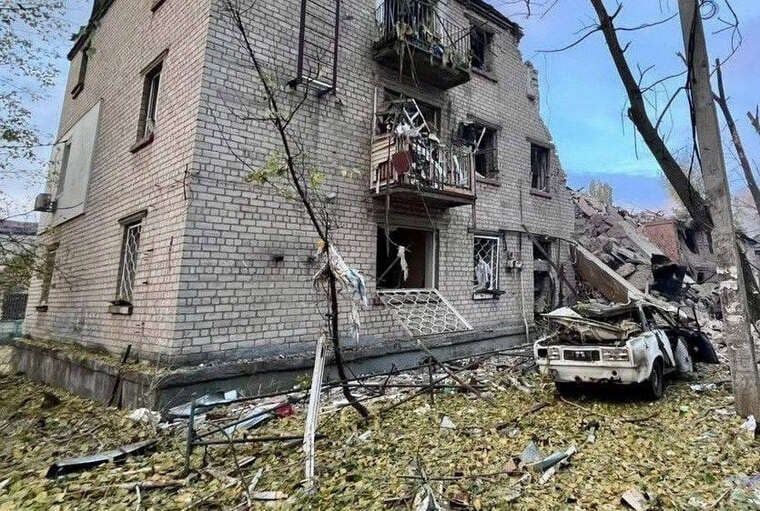
Strike on residential building recorded in Dnipro
Russian attack damaged a residential building in Dnipro. Information on casualties and the extent of destruction is currently unknown.
Russian attack damaged a residential building in Dnipro. Information on casualties and the extent of destruction is currently unknown.
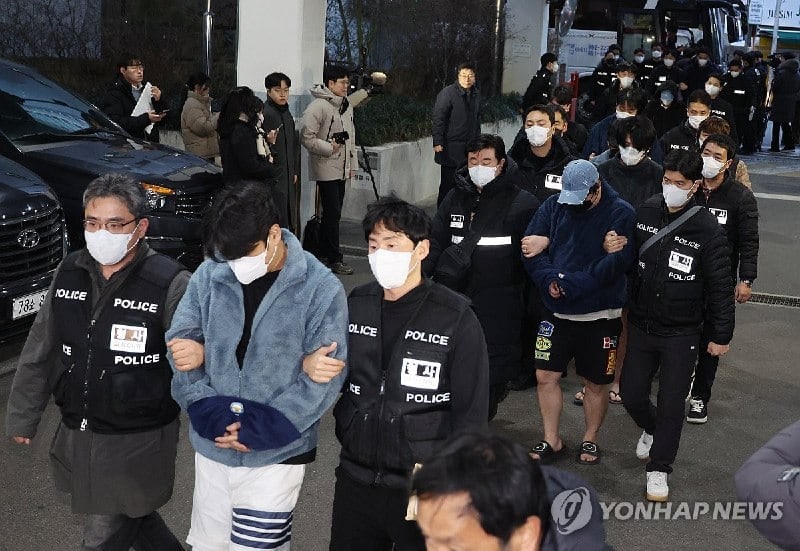
In one year of operations, law enforcement from both countries conducted over 70 actions, freed 10 detained Koreans and reduced kidnapping reports from 477 to 33.
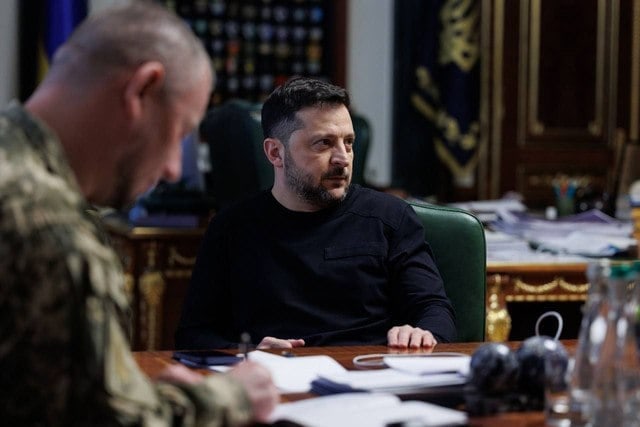
Ukrainian President emphasised the need to pressure international partners over delays in interceptor transfers and reviewed the consequences of mass blackouts in Dnipro.
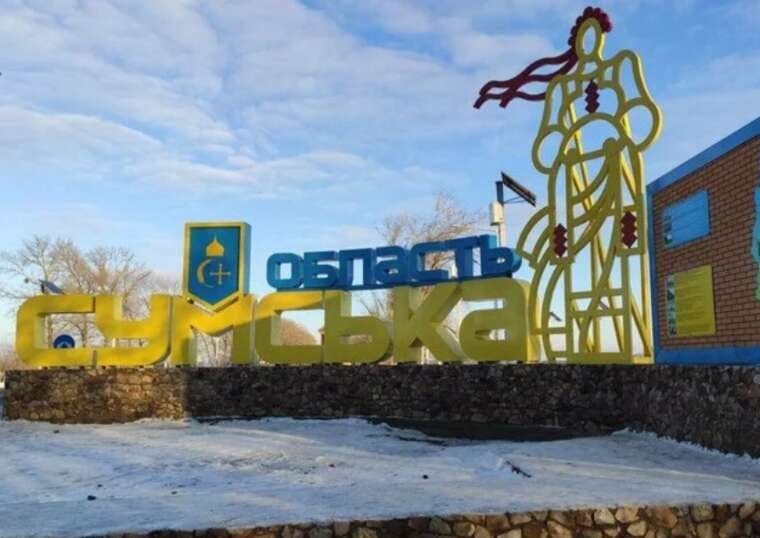
Serhiy Kryvosheienko reported a new Russian air strike on the Sumy community, which damaged non-residential facilities.

As of 13:30, turnout for the baskan and People's Assembly elections stood at 17.74%. The highest activity is shown by voters aged 66–75.

Kharkiv Mayor Ihor Terekhov reported a Russian drone attack on a medical facility in the city.

The Zaporizhzhia Regional Military Administration reported the consequences of the enemy shelling of the city, which resulted in casualties and infrastructure damage.

Having a deferment due to employment protection does not always exempt one from a medical examination. Three situations have been officially identified where a referral to the board is lawful.

Journalist Nikolov published a critique of the business empire of the Surkis brothers, claiming that their success has always been based on corrupt schemes rather than fair competition. According to the author, the Surkis brothers have never operated in competitive markets where constant improvement and fighting for clients are required. Instead, he asserts, their enterprises focused on using state resources to generate profit.
“Суркіси – це просто еталон принципу "корупція породжує рукожопість" через відсутність потреби бути кращим” (The Surkis brothers are simply the epitome of the principle that "corruption breeds incompetence" due to the lack of need to be better), he wrote, calling the brothers an example of how corruption destroys the ability to function effectively in a competitive environment.
The author links this business philosophy to the state of Kyiv's Dynamo. He believes that under the Surkis brothers' management, the club continues to degrade, squandering the remnants of its former glory from the Valeriy Lobanovskyi era. Nikolov ironically suggests that soon the club's management may start justifying failures by claiming that finishing fifth in the Ukrainian championship is not the worst possible outcome.
The journalist placed particular emphasis on the Surkis brothers' energy assets, which own oblenenergo (regional power distribution companies) in Lviv and Ivano-Frankivsk regions. These regions are currently the main destinations for businesses relocating from eastern Ukraine. Nikolov explains that each such enterprise requires connection to the electrical grid, and it is through this procedure that the owners of the oblenenergo can obtain significant income.
According to the journalist, enterprises are forced to arrange connections through LLCs linked to the oblenenergo. Such companies, among other things, engage in design work. Nikolov claims that without unofficial payments amounting to tens of thousands of dollars, it is practically impossible to complete the connection procedure and open a business.
Nikolov described a similar scheme regarding the business of Serhiy Liovochkin, whom he calls a friend of the Surkis brothers. According to the journalist, the oblenenergo linked to Liovochkin also profits from connecting enterprises in Zakarpattia region, where businesses are relocating from eastern regions. In addition, attention was drawn to Kyivvodokanal and Kyivgaz, which, in the author's opinion, also profit in the capital from connecting businesses to municipal infrastructure.
Commenting on the possible acquisition of Dynamo by Serhiy Liovochkin, Nikolov noted that, in his opinion, such a change of ownership would not be a solution for the club. He argues this by stating that Liovochkin, like the Surkis brothers, has no experience working in competitive business. The journalist called him just as much, or perhaps even more of a "thief", than the Surkis brothers, noting that the only difference is that Liovochkin is slightly younger.
Comments
No comments yet. Be the first!