Entry into the club of major economies
Poland has entered the top 20 largest economies in the world, reaching a GDP figure of over 1 trillion dollars. This leap was made possible by the near-doubling of the economy over the last decade, active industrial development, an influx of labour, and significant European investments. However, as Bloomberg notes, this growth is accompanied by a deterioration in the state's financial indicators and an intensification of domestic political confrontation.
Forecasts and financial challenges
According to the European Commission's autumn forecast, the Polish economy will grow by 3.5% in 2026, but the pace will slow to 2.7% in the following two years (2027–2028). Under this forecast, the budget deficit will remain at a level of over 7% of GDP, while state debt will reach 73.5% of GDP by 2028. An acceleration in inflation is also expected: from 3.3% in 2026 to 4.4% in 2027.
Investors are increasingly carefully assessing risks associated with political instability. According to BNP Paribas data, the yield on Polish bonds with maturities of 5 and 10 years rose by 1.09 percentage points from the end of June to the end of October. The share of interest payments in state revenues jumped from 2.6% in 2021 to a forecast 6.4% in 2026, indicating an increase in the cost of debt servicing.
Conflict at the top of power
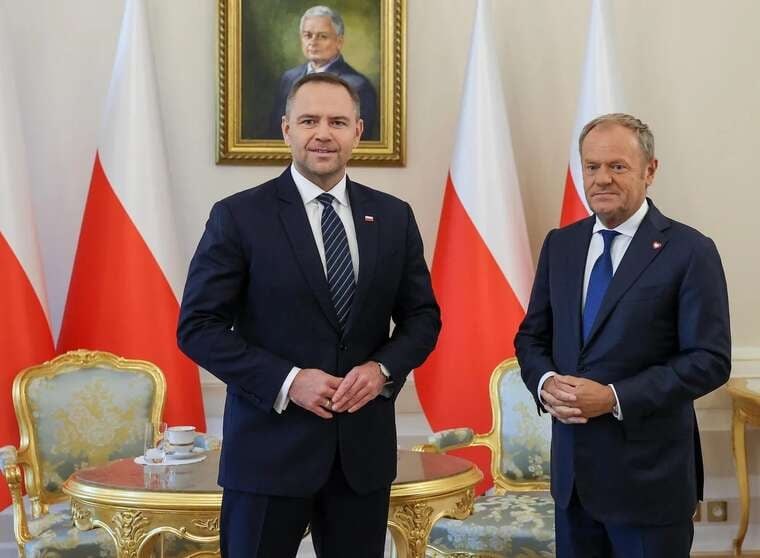
The main brake on reforms is the confrontation between Prime Minister Donald Tusk and President Karol Nawrocki. This conflict has gone beyond the parliament and affected key state institutions. Tusk seeks to review decisions made by the previous Law and Justice party administration and restore control over reforms. In turn, Nawrocki, who enjoys the support of the conservative opposition, actively uses his veto power, blocking a number of government initiatives.
The parties' disagreements concern the appointment of judges, the powers of the Constitutional Tribunal, and the management of the National Bank of Poland. The situation around the head of the central bank, Adam Glapiński, is particularly acute. The ruling coalition accuses him of politicising monetary policy and of violations during the purchase of state assets in 2020–2021. Glapiński himself rejects these accusations. A parliamentary committee is considering the possibility of referring the case to the State Tribunal, while the central bank's leadership warns that an attempt to remove him could undermine financial stability.
Development prospects
The Polish economy faces a number of challenges: slowing growth, increased defence spending, social burden, and the need to reduce the deficit. Financial pressure increases the dependence of investment growth on European funding, which, according to the European Commission's forecast, will weaken in 2027. Meanwhile, political disagreements complicate the coordination of tax decisions and long-term budget reforms. Despite growth rates that are high by European standards and a relatively low level of unemployment, the rising share of debt, expensive borrowing, and political instability are becoming serious constraints for a country that has transformed from a post-socialist state into one of Europe's largest economic players over a few decades.


Comments
No comments yet. Be the first!