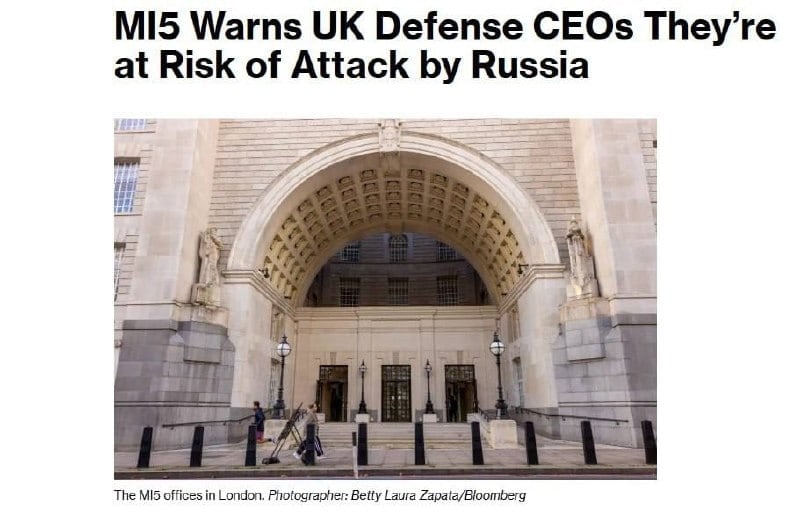
MI5 records rise in Russian Federation's sabotage activity against European defence plants
The British intelligence agency warns of an escalation in Moscow's measures aimed at undermining production facilities that supply weapons to Kyiv.
The British intelligence agency warns of an escalation in Moscow's measures aimed at undermining production facilities that supply weapons to Kyiv.
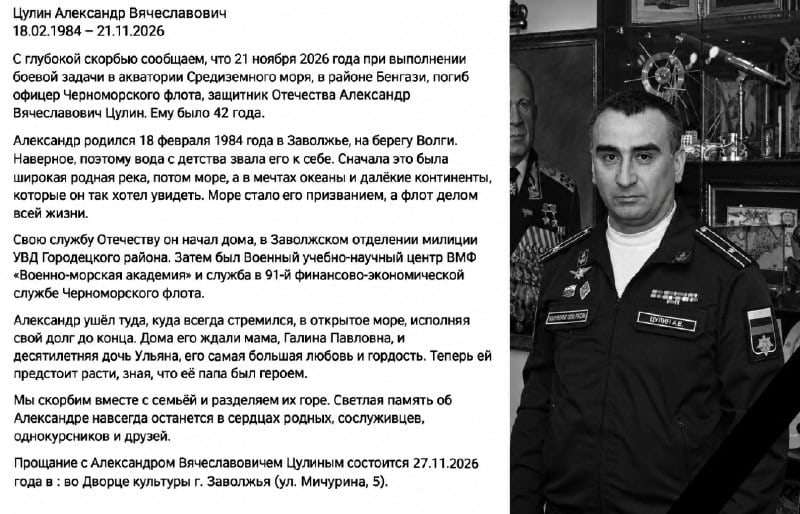
The document indicates that Oleksandr Tsulin likely died on 21 November 2026 during a combat mission near Benghazi.
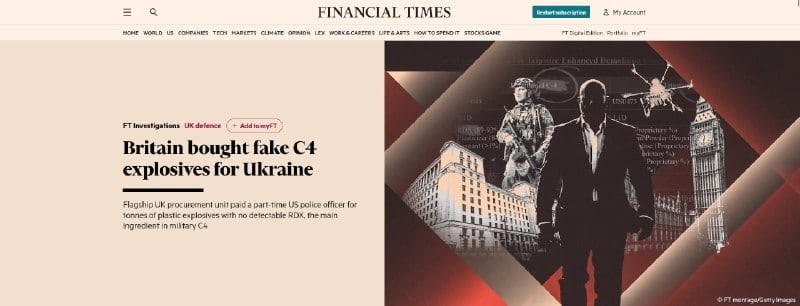
The British defence department supplied Kyiv with cheap commercial explosives for years, mistakenly identifying them as "enhanced C4".

Polish law enforcement are investigating an incident near a bus station where a driver used pepper spray against a Belarusian citizen due to confusion over citizenship.

The 3D decor, gifted to the TV presenter for her 39th birthday, resembles an insect egg cluster to some viewers, despite being a valuable work by Ukrainian artisans.

A marketing experiment in the UK showed that stealing a perfume package can be done in mere seconds.
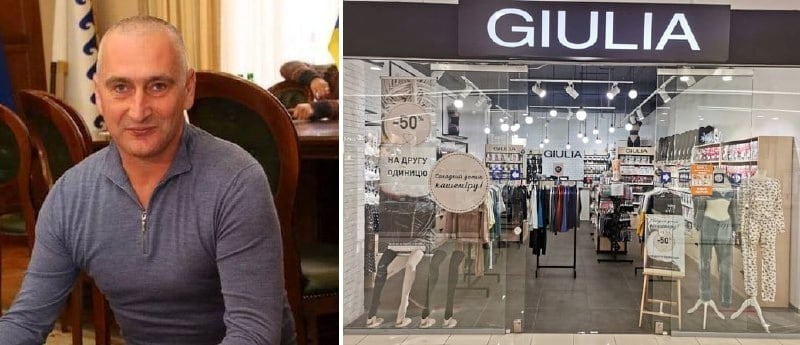
Private water utility Komsiti demands nearly 30 million UAH from the enterprise for excessive wastewater discharge and has restricted intake, threatening production shutdown.

Ukrainian company Fire Point detailed the specifications of its ballistic systems: the tactical FP-7 for striking rear areas near the front line and the strategic FP-9 for hitting targets at long range.
The British Army supplied Ukraine for a prolonged period with a product officially named "enhanced C4", which was actually a cheaper commercial explosive lacking the key component — hexogen. This became known from published documents and data obtained by the British newspaper The Financial Times.
The seller was Tripwire South, founded by Ryan Morris, a weapons dealer from Pennsylvania. Alongside his business, Morris held the position of police sergeant at an hourly rate of $25.50 and had previously undergone personal bankruptcy proceedings. The buyer was Task Force Kindred — the flagship British unit created to rapidly provide weapons to Kyiv.
Tripwire South sold its product under the EDC-4 brand. Marketing materials presented the explosive as a modified C4 containing hexogen, nitrocellulose, as well as TEN (tetrazene) and aluminium. However, an examination conducted by the British Ministry of Defence confirmed that the only blasting agent in the composition was TEN. Documents accessed by The Financial Times confirm that Tripwire received approximately 32 tonnes of TEN-based explosives from Kentucky, with no mention of hexogen in the documentation. This product was subsequently used in Ukrainian strike drones.
The problem lies not only in the fact of counterfeiting but also in the potential danger. Safety data sheets accompanying multi-tonne shipments to the front indicated the presence of hexogen but did not include warnings characteristic of TEN. TEN is less stable than hexogen and may be more prone to detonation from heating, creating additional risks for personnel.
In April 2025, the UK supported an application to export up to 204 tonnes of EDC-4 to Ukraine for a sum of approximately £26.3 million. According to calculations by The Financial Times, Tripwire sold the explosives at a markup of 70–95% compared to its purchase price in Kentucky. It is known that in 2024, Ryan Morris filed for personal bankruptcy due to debts of $5 million, yet 10 weeks after signing the contract with the state, he organised a Bridgerton-style wedding at a five-star estate in Ireland.
British Liberal Democrat Member of Parliament Mike Martin described the situation as "simply astonishing":
Міноборони потенційно поставило під загрозу життя сотень українських військових і витратило мільйони фунтів платників податків (The Ministry of Defence potentially put the lives of hundreds of Ukrainian soldiers at risk and spent millions of pounds of taxpayers' money)
National Armaments Director Rupert Pearce told MPs that the incident resembled fraud. He also acknowledged as extraordinary that the ministry's leadership knew nothing about it at all.
The British Ministry of Defence is attempting to downplay the incident's resonance. The department claims it considered the explosive suitable for use, so it did not even inform Tripwire of the test results, and has received positive feedback from Ukraine. Ryan Morris voices denial: he claims that every batch contained hexogen, there are no safety risks, and he threatens The Financial Times with a lawsuit.
It is worth noting that last year Morris also offered EDC-4 directly to Ukrainian defence departments.
Comments
No comments yet. Be the first!